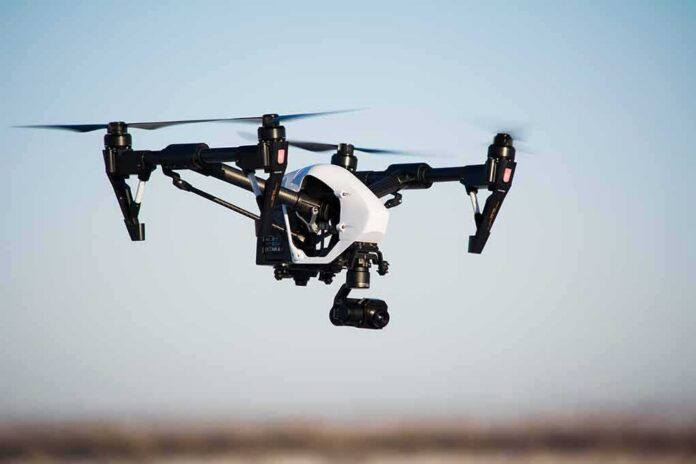
One drone exploded near a major gas pipeline in Bulgaria, while separate drone sightings in Germany kept Europe on edge over airspace security.
Quick Take
- Bulgaria said a drone entered from Romanian airspace and exploded near Kardam with no casualties or damage.
- Bulgarian officials later said the drone may have been a Maya decoy used by Ukrainian forces and had no clear sign of a deliberate attack.
- German forces reported two drones over a military base in Mechernich, but public reports did not identify who controlled them.
- The cases fit a wider European pattern where many drone reports remain unresolved and are often tied to Russia before proof is complete.
What Happened in Bulgaria
Bulgaria’s government said a drone crossed into its airspace from Romania and exploded near the village of Kardam. Prime Minister Rumen Radev said the blast happened about one kilometer from the Trans-Balkan gas pipeline compressor station, and that nobody was hurt and no infrastructure was damaged. That location matters because energy sites are now watched closely across Europe.
Bulgarian media and officials also pointed to a separate drone case near Sofia Airport, where Transport Minister Grozdan Karadjov called the incident either a provocation or a test of airport security. Border Police Director Anton Zlatanov said the airport did not have an anti-drone system. Those comments show how fast one sighting can turn into a larger security concern, even before investigators name a culprit.
Why Attribution Remains Unclear
The strongest official caution came from Bulgaria’s own Defence Ministry, which said its initial analysis suggested the aircraft near Kardam was most likely a Maya decoy drone used by the Ukrainian armed forces. The ministry also said there was no reason to suspect the incident was intentional. Reuters reported that neither Bulgaria nor Romania detected the drone before it exploded. That leaves the operator, route, and purpose unresolved in the public record.
Several other Bulgarian drone recoveries were treated as threats only after they were found. The Ministry of Defence said a drone washed ashore near Ahtopol had no explosives and posed no danger, while Bulgarian National Radio reported another drone on Burgas North Beach in an unguarded area near the sea. Reuters and other reports also described a damaged drone found at sea and later destroyed by the navy. These cases confirm drone presence, but not hostile control.
Germany and the Wider European Pattern
In Germany, a spokesperson for the armed forces said two drones were spotted over a military base in Mechernich on Thursday night. Public reporting in the material provided here says officials were investigating, but no country or operator was named. Reuters also reported later drone disruptions at Munich Airport, where flights were canceled and about 3,000 passengers were affected. The pattern has pushed German leaders to demand stronger defenses.
Recent drone sightings across Bulgaria and Germany are fueling significant concerns regarding the scope of the ongoing conflict in Ukraine.
1/4 pic.twitter.com/9MRX51EEbL
— USA News (@USAtodayX) August 8, 2026
That broader context helps explain why these stories travel so fast. A European review of 61 drone-sighting cases found that most ended without firm attribution, with many later classed as origin unknown or not even confirmed as drones. In that setting, a real security problem can mix with public fear, political blame, and thin evidence. The result is a widening trust gap, where people on both the left and right see governments reacting faster than they can prove.
Sources:
feedpress.me, aljazeera.com, bta.bg, bnrnews.bg, fakti.bg, militarnyi.com, dw.com, sofiaglobe.com, millenniumnews24.com
© patriotsunited.org 2026. All rights reserved.