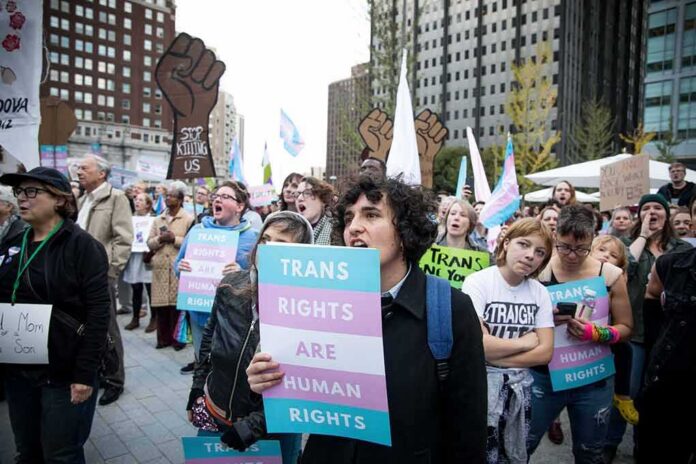
A sharp drop in reported killings of transgender Americans is forcing a hard look at how advocates, media, and officials measure risk and explain it.
Story Highlights
- Reported violent deaths tracked by advocates fell from 53 in 2023 to 27 in 2025, a near 50% drop.
- Human Rights Campaign tallies also show fewer deaths since a 2021 peak, even as it warns danger remains.
- Other datasets point the other way, including a recent congressional brief citing a multi‑year rise.
- Different methods, time windows, and definitions drive the split, not one simple “truth”.
What the new numbers say about recent killings
A Boston Globe opinion piece cited advocate counts showing reported violent deaths of transgender people in the United States fell from 53 in 2023 to 27 in 2025, almost a 50 percent drop. The same piece said Human Rights Campaign figures peaked in 2021 and then declined through 2025, aligning with that trend. These figures come from advocacy trackers. They rely on media reports, community networks, and public records. They are not the same as federal crime or hate crime databases.
Advocacy trackers aim to count every trans or gender nonconforming person killed by any means, not only hate crimes. The Human Rights Campaign’s resources detail who victims are and how they were killed, noting that most deaths involved guns and that victims were often people of color. The group also documents cases over a decade to show patterns. Those patterns matter to families and communities. They also guide lawmakers who want to target risk with better policy.
Why other datasets tell a different story
Other sources point to increases over different periods. A congressional brief citing Everytown for Gun Safety described a 93 percent rise in tracked homicides of transgender and gender‑nonconforming people in the United States and Puerto Rico over four recent years. That window ends before the 2025 decline, so it captures a different part of the curve. Global monitoring by Transgender Europe focuses on murders worldwide and shows separate patterns that cannot be compared one‑to‑one with U.S. counts.
Method differences also matter. Human Rights Campaign reports highlight a gap between Federal Bureau of Investigation (FBI) hate‑crime deaths and advocacy tallies because the FBI counts only bias‑motivated crimes proven and reported through police channels. Many local agencies still struggle to code gender identity bias. Some do not report complete data to the FBI. That undercount changes the picture when people compare across systems. It can turn a rise in one dataset into a decline in another.
How advocates frame risk amid falling death counts
Human Rights Campaign materials say the “epidemic” of violence continues even with fewer deaths since a 2021 peak, stressing that some victims are misgendered or missed in records. That claim reflects concern about blind spots in data, not only totals. It also reflects fears tied to state laws on health care, sports, and bathrooms. Those laws are cited by advocates as drivers of stigma that can fuel harassment, assaults, and instability even if homicide counts dip in a given year.
For readers, the split is frustrating. People on the right see falling deaths and ask why “genocide” language persists. People on the left see rising hate‑crime shares and ask why leaders downplay the threat. Both reactions point to a deeper problem. The government’s crime data is slow, patchy, and hard to match with advocacy lists. That gap feeds distrust. It lets elites talk past each other while families want clear steps that save lives and uphold basic rights.
What would fix the signal in the noise
States and cities can adopt uniform gender identity fields in police records and death certificates. Agencies can train staff to avoid misgendering and to record bias evidence the same way. The Department of Justice (DOJ) and the FBI can expand reporting support for small departments so more data flows into national files. These nuts‑and‑bolts steps would not settle debates overnight. They would, however, give the public a shared baseline and reduce room for spin from any side.
Bottom line for citizens trying to make sense of it
Two things can be true. Reported killings can fall in the near term, and serious risks can persist in daily life. The near 50 percent drop from 2023 to 2025 is real within the advocate datasets that reported it. The earlier multi‑year rise found by other trackers is also real for that period. The tension comes from mixed systems, not a plot. Voters should push leaders to fix the data and to focus on targeted, proven safety measures rather than headlines.
Sources:
thegatewaypundit.com, tdor.translivesmatter.info, losangelesblade.com, congress.gov, hrc.org, reports.hrc.org, translash.org, acast.com
© patriotsunited.org 2026. All rights reserved.