Twenty-five years after 9/11, the record shows President George W. Bush urged Americans to protect Muslim neighbors while hunting terrorists—raising fresh questions about unity, security, and what our leaders owe the public.
Story Snapshot
- Bush drew a clear line between Islam and the 9/11 attackers in early speeches.
- He asked Americans to reject anti-Muslim harassment and hate crimes.
- The White House framed outreach as a defense of religious freedom and civic unity.
- Hate crimes spiked after 9/11, shaping the debate over rhetoric and safety.
What Bush Said in the Days After 9/11
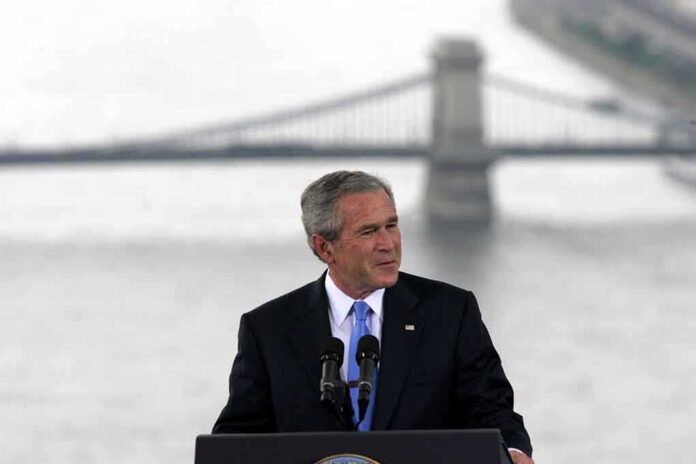
On September 17, 2001, President George W. Bush visited the Islamic Center of Washington, D.C., and said, “Islam is peace.” He called the terrorists “evil” and insisted they did not represent a faith followed by millions of Americans. He told the country to treat Muslim neighbors with respect and said people who mistreated Muslims “should be ashamed”. Three days later, he told Congress the enemy was a terrorist network, not America’s “many Muslim friends”.
These early statements set the government’s tone. Bush said America would use force against terrorists while guarding civil rights at home. The administration framed the conflict as a fight against a violent ideology that tried to hijack a religion, not a war on Islam itself. This stance aimed to hold the country together at a time of fear and anger. It also aimed to keep the world’s Muslims from seeing the United States as an enemy of their faith.
How the White House Framed Outreach and Unity
The White House promoted a sustained outreach plan. Officials highlighted Bush’s mosque visit, meetings with Muslim leaders, and the first White House Iftar and Eid events. They said these steps protected Muslim Americans from hate and showed respect for religious freedom. The administration repeated that the “war” targeted terrorists and those who helped them, not ordinary Muslims at home or abroad. This message matched long-held American values of faith freedom and equal rights.
Supporters argued this approach helped security by building trust with Muslim communities. They said partnership improves tips, cooperation, and public safety. They also said strong words against bigotry were needed as the nation mourned and feared more attacks. The core claim was simple: the United States is strongest when it defends both safety and liberty. The White House saw outreach as part of a whole-of-society response, alongside military and intelligence action.
The Backdrop: A Spike in Hate Crimes and Lasting Divides
Even with outreach, hate crimes against people perceived as Muslim rose sharply after 9/11. Researchers report a surge in 2001, with one summary citing an increase from 28 incidents in 2000 to 481 in 2001, based on Federal Bureau of Investigation data. The Justice Department later described hundreds of cases it pursued in the years that followed, including threats, vandalism, and assaults tied to bias. These numbers show how fear and anger spilled into violence at home.
Today’s debate often returns to the same hard question: did this rhetoric calm the country and aid security, or did it downplay a threat? The public record we have centers on Bush’s own words and official summaries. These materials show clear calls for unity and dignity, not proof of policy harm or benefit. Without internal memos or field data, firm claims about downstream effects remain hard to verify using these sources alone.
Why This Still Matters in a Distrustful Era
Americans on the right and left share a deeper worry: leaders often protect their image more than the people. After 9/11, Washington asked citizens to be both vigilant and fair. That balance is still our test. Many feel the government swings between extremes, failing to level with the public about risks while also failing to defend core rights. The record on Bush’s words shows a choice for unity. The open question is whether future leaders will match unity with transparent, effective action.
Sources:
zerohedge.com, usinfo.org, gilderlehrman.org, en.wikipedia.org, georgewbush-whitehouse.archives.gov, theguardian.com, bostonglobe.com
© patriotsunited.org 2026. All rights reserved.