Two roaring U.S. bombers thundered over Joint Base Andrews as President Trump greeted China’s Xi Jinping on the tarmac, turning a diplomatic welcome into a show of military power.
Story Highlights
- Trump greeted Xi at Joint Base Andrews with a rare airport ceremony and full honors.
- Two U.S. bombers flew over the ceremony as the leaders stood on the red carpet.
- Military pageantry included anthems, cannon fire, and honor cordons alongside the flyover.
- The visit centers on trade, technology, Taiwan, and wider U.S.-China tensions.
What Happened on the Tarmac
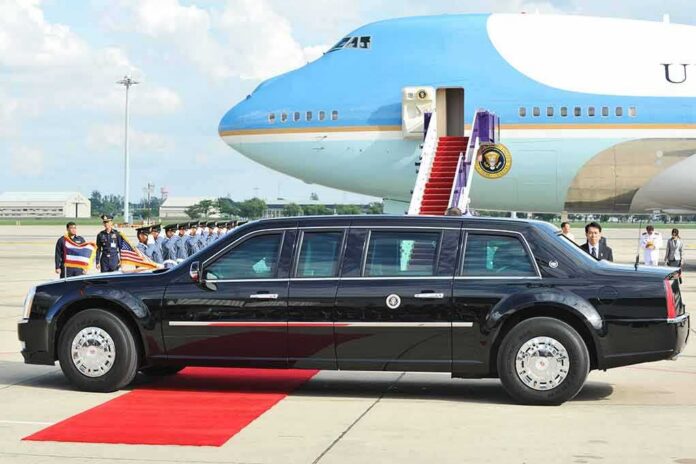
President Trump welcomed China’s Xi Jinping at Joint Base Andrews with a red carpet and formal military honors. Reporters on scene described a rare airport greeting usually reserved for state-level pomp. As the band played and delegations formed honor lines, two U.S. bombers passed overhead in a tight flyover. The flyover drew attention to the ceremony’s tone, blending hospitality with strength. Coverage captured the handshake, the pageantry, and the dramatic sound of heavy jets.
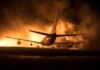
Outlets described the flyover as involving two B-1 bombers, which are long-range U.S. aircraft designed for speed and payload. The timing placed the pass during the formal arrival sequence, when both leaders faced the ceremony. Some reports focused on the leaders’ reactions as the jets roared above. The airpower display was part of a larger welcome, not a stand-alone event, but it quickly became the most watched and replayed moment from the tarmac.
How the Ceremony Signaled Power and Protocol
The event mixed standard honors with unusual lift. Reporting cited anthems, ceremonial cannon fire, a military band, and honor cordons, along with fighter aircraft positioned nearby. Together, these elements formed a state-style welcome that goes beyond a routine airport meet and greet. The scale suggested a message of respect and resolve. Public attention centered on the flyover, yet the full scene showed a choreographed display meant to impress both domestic and foreign audiences.
Media framed the greeting as extraordinary for a visiting Chinese leader. Photographs and video showed the leaders on the carpet, surrounded by flags and service members in formation. The moment stood out because airport greetings of this scope are rare. Officials did not publish an intent statement for the flyover, but the broader ceremony matched established practices where the military showcases capability during high-level visits. The result was a clear, visual signal of American capacity and ceremony.
Why It Matters for U.S.-China Ties Now
The visit connects directly to live policy fights. Reporting tied the summit to trade and tariffs, artificial intelligence, rare earth minerals, Taiwan, and wider U.S.-China competition. Both governments face pressure at home to look tough while keeping talks alive. A muscular welcome can work as pageantry and posture at once. It shows respect to a head of state, while reminding all sides of U.S. reach. That balance reflects today’s uneasy mix of rivalry and negotiation.
🔴 NEW: 🇺🇸🇨🇳
Trump Reacts to B-1 Bomber Flyover During Xi Welcome
Trump appeared to wince at the deafening roar of two B-1 bombers during Xi Jinping’s welcome ceremony.
Xi showed no visible reaction and remained seemingly unfazed.
Source: Videopic.twitter.com/gBfuYhetnn https://t.co/of0ppYLhlK
— Conflict Pulse (@The_RifT_) September 24, 2026
Ceremonial flyovers often stir debate about meaning. By definition, a flyover is a planned, straight pass for ceremonial purposes. But when the aircraft are heavy bombers, the public reads more into it. Here, the symbolism met the moment. The leaders met under bright cameras as jets roared above. Viewers on the right and left may see honor or muscle. Many also see theater from leaders who rarely solve core problems. The optics, however, were unmistakable: America chose to greet with power.
Sources:
thegatewaypundit.com, bbc.com, thesun.ie, rfa.org, yahoo.com, theguardian.com, briefs.co, straitstimes.com
© patriotsunited.org 2026. All rights reserved.