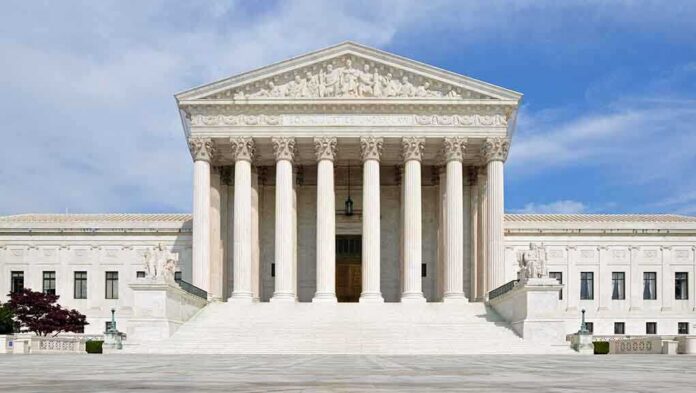
The Supreme Court said schools can keep women’s and girls’ teams for biological females under Title IX, redrawing the national map on school sports.
Story Highlights
- Supreme Court upheld Idaho and West Virginia laws defining female teams by biological sex
- Majority said Title IX permits sex-separated teams and Equal Protection is not violated
- Ruling overturns lower courts and is expected to reach over two dozen similar state laws
- Dissents and advocacy groups signal more lawsuits and policy fights ahead
What The Court Decided And Why It Matters
On June 30, 2026, the Supreme Court upheld Idaho and West Virginia laws that limit women’s and girls’ school sports teams to athletes who are biologically female. Justice Brett Kavanaugh wrote the majority opinion. He said Title IX allows separate men’s and women’s teams based on biological sex. He also said those states did not violate the Equal Protection Clause by keeping female teams for biological females. The Court reversed lower rulings that had favored transgender students.
The majority stressed that males and females have physical differences that affect sports outcomes. The opinion said separate teams protect equal chances for female athletes. It framed the state laws as a way to keep fair play and safety for girls and women. The Court did not cite new data. Instead, it leaned on common physical differences and the original structure of Title IX, which has long allowed sex-separated teams in schools.
How Far The Ruling Reaches
The decision involves Idaho and West Virginia, but its impact is broader. More than two dozen Republican-led states have similar laws. Reporters said this ruling will likely extend to those states as well. That means school districts, athletic directors, and state associations across much of the country will now have firmer legal ground to enforce sex-based team rules. Colleges and high schools will look to align handbooks, eligibility rules, and grievance processes with this standard.
The ruling also clarifies a live federal-state tension. For years, the Department of Education’s Office for Civil Rights issued guidance that leaned toward gender identity in athletics. States went the other way and passed bans. The Court has now sided with states on this question in K through 12 and college settings covered by the challenged laws. That will likely steer future Title IX enforcement and school policy updates in those states.
What The Court Did Not Settle
The decision did not end the legal fight everywhere. Media reports note that lawsuits continue in states with inclusive policies, like Connecticut and California. Those cases raise different facts and rules. They may press new arguments under state constitutions or different readings of federal law. Civil rights groups also plan to test the limits of this ruling in other courts, which could shape how far this standard goes in practice.
The record in these cases did not include fresh, large-scale data about performance gaps at the school level. The majority relied on general statements about physical differences. Critics argue that the states did not file detailed incident logs or affidavits from governing bodies. They also say there was no forensic analysis of speed, strength, and injury data from school meets and games. That leaves room for future evidence battles in other courts.
Why Voters Across The Spectrum Care
Parents, coaches, and athletes want rules they see as fair and clear. Many conservatives view this as a protection of women’s sports and a return to common sense. Many liberals see the outcome as exclusionary and harmful to a small, vulnerable group. Yet a broader frustration unites both sides. People feel national leaders talk past local needs. They worry that insiders push agendas while schools struggle to set practical rules that keep kids safe and respected.
Readers added context
The Supreme Court ruling upholds state bans specifically on transgender girls competing in girls' sports based on biological sex and does not affect the rights of lesbian, gay, or bisexual people.— Metaxia Tzimouli (@bookdevourerGR) July 1, 2026
Trust in government will be tested in the rollout. Schools now need simple steps that match the law and protect students. Districts will review rosters, update eligibility forms, and train staff to handle disputes with care. Clear communication with families will matter. Appeals processes should be fast and transparent. The Court’s ruling set a legal line. Communities now must carry it out in ways that lower conflict and keep focus on learning and play.
What Comes Next For Schools And States
Expect state education agencies to issue updated guidance this summer. Athletic associations will align handbooks before fall sports. Colleges that receive federal funds will review compliance to avoid Title IX risks. Some districts will ask for legal safe harbors and model policies. Others will seek narrow exceptions for non-contact or club sports. Advocacy groups will keep filing suits and public records requests to test enforcement and gather evidence for or against the rules.
Lawmakers in states without clear laws may now move faster. They will cite the Court’s reasoning to pass new statutes. Meanwhile, states with inclusive policies may double down and invite test cases they hope to win on different grounds. That split keeps the national debate alive. For families, the most direct change is local: who can try out, how teams are labeled, and what paperwork schools require. Those details will shape how fair and humane this feels on the ground.
Sources:
reason.com, osvnews.com, aljazeera.com, scholarship.law.umn.edu
© patriotsunited.org 2026. All rights reserved.