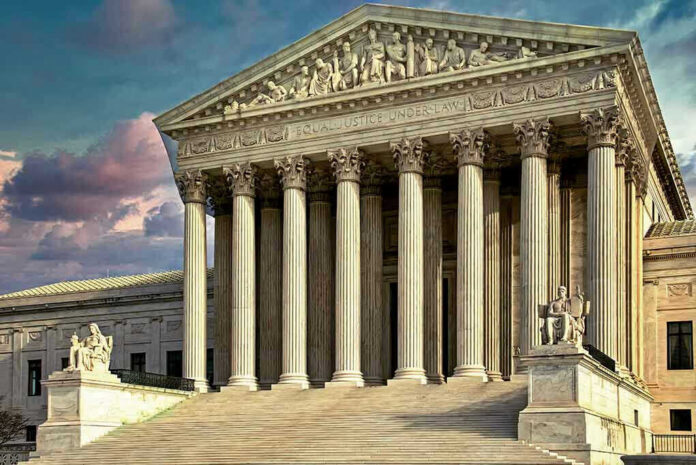
A Utah judge just punished a prosecutor in the Charlie Kirk murder case for talking too boldly about the evidence, raising fresh questions about gag orders, media spin, and whether justice is really being served—or managed.
Story Snapshot
- A Utah judge found lead prosecutor Christopher Ballard in civil contempt for media comments on Tyler Robinson’s guilt.
- The judge said Ballard crossed a gag order by telling outlets like TMZ that the state had “ample evidence” Robinson murdered Charlie Kirk.
- The court will let the death penalty stay on the table and called that requested sanction “grossly disproportionate.”
- Ballard’s narrow corrections about ballistics were allowed, but his talk about overcoming the presumption of innocence was not.
Judge Says Prosecutor Crossed the Line With “Ample Evidence” Claim
Fourth District Judge Tony Graf ruled that Deputy Utah County Attorney Christopher Ballard violated a pretrial gag order when he spoke to national outlets like TMZ, Fox News, and USA Today about the state’s case against Tyler Robinson, the man charged with killing conservative commentator Charlie Kirk on a Utah campus.[2][3] Ballard told reporters that prosecutors had “ample evidence to demonstrate beyond a reasonable doubt that Tyler Robinson committed this murder,” a statement the judge said stepped over clear limits on talking about guilt outside court.[3][5]
Judge Graf’s order was built on Utah’s professional conduct rule on “trial publicity,” which bars lawyers from making public statements that are likely to prejudice a jury, especially opinions about a defendant’s guilt or innocence.[1] The rule allows basic facts, like charges or scheduling, but forbids comments that sound like a verdict before a jury even sits. By framing the evidence as already strong enough to prove guilt, Ballard moved from clarifying facts to telling the country that the state can and will overcome the presumption of innocence in this highly public case.[1][3]
Clarifying Ballistics Was Allowed, But Selling the Case Was Not
The fight started when the defense filed a motion and spoke to media claiming a federal firearms report could not match the bullet that killed Kirk to the rifle Robinson allegedly used.[2][3] Ballard then gave interviews explaining that the Bureau of Alcohol, Tobacco, Firearms and Explosives (ATF) called the ballistics test “inconclusive,” which does not mean the gun is cleared and can still be consistent with the state’s theory.[3][5] Judge Graf said those narrow clarifications fit a “safe harbor” exception that lets lawyers correct misleading coverage they did not start.[3]
The judge drew a bright line, though, between correcting a technical term and turning that media moment into a sales pitch for the prosecution’s whole case.[2][3] When Ballard went on to say there was ample evidence to prove Robinson’s guilt beyond a reasonable doubt and that the state expected to overcome his presumption of innocence, Graf said that “exceeded the scope” of the allowed response and violated both his specific gag order and Rule 3.6.[2][3][5] The judge also found, by clear and convincing evidence, that Ballard knew about the order, could have complied, and still chose to make those extra comments.[2]
Contempt Ruling, Limited Sanctions, and What Stays on the Table
Judge Graf held Ballard in civil contempt, not criminal, stressing that the goal was to enforce a narrow publicity order and protect the fairness of the trial, not to punish political views or weaken the charges.[2][5][18] Civil contempt in this context usually means coercive or corrective steps, not jail time. Graf said he would consider expanding jury selection and allowing the defense to recover its attorney fees tied to the contempt fight, shifting some cost of the misstep back onto the state.[3][18]
A Utah judge on Friday found a prosecutor in civil contempt for violating a pretrial publicity order by publicly stating there was "ample evidence" to prove Tyler Robinson's guilt in the 2025 killing of Charlie Kirk. https://t.co/6cF2pOuAuP
— FOX 5 NY (@fox5ny) June 26, 2026
The defense wanted far more: they asked the judge to strike the death penalty as a sanction for the media comments. Graf flatly rejected that move, calling it “grossly disproportionate” and saying it would improperly intrude on the executive branch’s power to decide what charges and punishments to seek.[3] That means the death penalty remains on the table for Robinson if a Utah jury later finds him guilty of killing Kirk, a result many conservative readers may see as basic accountability for the murder of a high-profile pro-Trump voice.
What This Means for Fair Trials, Free Speech, and Conservative Trust
For many on the right, this case hits several nerves at once: a conservative leader shot on a college campus, a justice system that often feels politicized, and a media environment eager to spin every development. Judge Graf went out of his way to say Ballard did not act with “malicious desire” to poison the jury pool and that his ruling does not touch the strength of the state’s evidence against Robinson.[1][5] Still, the contempt finding shows courts are willing to clamp down when even prosecutors talk too freely to press in hot political cases.
At the same time, the ruling protects two core conservative concerns: the integrity of the jury trial and limits on judicial overreach into charging decisions. Rule 3.6 exists so a defendant—any defendant—faces a jury, not a media mob, and the Constitution’s separation of powers means a judge cannot simply wipe away the death penalty because he dislikes a prosecutor’s quotes.[1][3][18] For readers who back President Trump, this moment is a reminder that the system can still draw lines, but it also shows how fragile high-profile cases become when lawyers chase cameras instead of letting evidence speak in court.
Sources:
[1] Web – Judge holds prosecutors in Charlie Kirk murder case in contempt for …
[2] Web – SCRP Rule 3-3.6 (Supreme Court Rules of Professional Practice)
[3] Web – [PDF] Utah Prosecutors Best Practices – SWAP Home Page
[5] Web – Rule 3.6. Trial Publicity – Louisiana Legal Ethics
[18] Web – [PDF] Inherent Judicial Authority to Appoint Contempt Prosecutors in …
© patriotsunited.org 2026. All rights reserved.