When a sitting president walks off national television mid-interview, the bigger story may be how quickly edited clips and partisan spin replace facts—leaving citizens to choose sides rather than see context.
Story Snapshot
- President Trump ended an NBC “Meet the Press” interview in Wisconsin after repeated questioning about election-fraud claims [4].
- Video clips show the walkout followed sustained requests for evidence that Trump did not substantively provide [2].
- Coverage frames split: accountability for unsupported claims versus proof of media bias [1].
- Clip-first distribution fuels polarized interpretations that outpace full-context review [6].
What Happened In The Wisconsin Interview
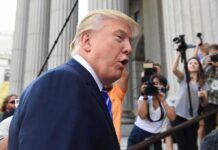
NBC recorded “Meet the Press” with President Trump at Custer Farms in Chippewa Falls, Wisconsin, in June 2024, ahead of a farm roundtable. The session took place inside a barn, where heavy rain on a metal roof intermittently disrupted audio and pacing. Video from the broadcast shows the exchange turned tense as the moderator pressed Trump for specific evidence supporting his election-rigging claims. The president criticized the media and then terminated the interview by walking out of the set [4].
Clips circulating online capture the final sequence: the moderator asks for concrete proof, Trump answers with general assertions, and the back-and-forth escalates. One widely shared segment shows the moderator asking whether he has evidence, followed by a response referencing what he “hears” or “sees,” not documentary proof. The exchange culminates in Trump attacking the press and ending the interview. The framing by video summaries consistently ties the exit to that evidentiary challenge [2].
Why Viewers Saw Two Different Stories
Competing narratives formed immediately. Supporters argued the setting was adversarial and the questioning loaded, pointing to the barn’s disruptive conditions and the tone of the follow-ups as evidence of bias or disrespect. Critics countered that the moderator asked for verifiable facts and Trump declined to provide them, making the walkout a response to accountability rather than mistreatment. Multiple secondary recaps describe the end as triggered by sustained challenges to unsupported claims [1].
Political communication research has long documented this conflict-frame pattern: hard questioning meets confrontational answers, then short clips drive interpretation. In this case, summaries emphasize that Trump left after being pressed on election claims, while other videos portray the moment as proof of a hostile media agenda. A local affiliate write-up likewise states he walked out following a testy exchange on elections, underscoring how quickly headlines condense complex interviews into a single, polarizing beat [6].
What The Evidence Can And Cannot Show
The current public record is dominated by edited clips and commentary rather than full, uncut footage with production audio. That limits firm conclusions about the entire sequence, the number of follow-ups, or whether any off-camera exchanges contributed to the walkout. Still, the available video supports several discrete facts: the location and timing, audible rain interference, repeated requests for evidence on election claims, critical remarks about the press, and Trump’s decision to exit the interview [4].
Trump would rather walk out of an interview than admit California's elections aren't rigged.
That's the same reason he keeps insisting the economy is great while people are falling behind. He can't deal with facts he doesn't like. pic.twitter.com/fA18LEr4eJ
— American Bridge 21st Century (@American_Bridge) June 8, 2026
Two specific claims appear best supported by the clips: that the moderator asked for evidence repeatedly, and that Trump did not provide documentary substantiation before leaving [2]. At the same time, fairness claims—on whether the tone exceeded program norms—remain harder to adjudicate without comparative analysis of similar “Meet the Press” interviews. The gap between what citizens want to know and what the edit reveals feeds a broader distrust that both conservatives and liberals increasingly share about media and political institutions [1].
Why This Matters Beyond One Walkout
For many Americans, this episode reinforces a grim pattern: elites control the lenses through which the public sees power. When networks own the footage and platforms reward outrage, minutes of complex exchange are reduced to seconds of spectacle. Conservatives see confirmation of hostile media gatekeeping. Liberals see confirmation that leaders evade accountability. Both sides see institutions that do not level with them, deepening the belief that the system protects itself first and informs the public second [6].
What Would Clarify The Record
Several steps could move this from heat to light. First, release of full, unedited video with production audio would allow independent review of tone, interruptions, and sequence. Second, a side-by-side content analysis comparing this interview with recent “Meet the Press” sessions could quantify follow-up intensity and interruptions. Third, documented statements from the moderator, producers, and the president’s team could clarify expectations and warnings. These measures would not end disagreement, but they would reduce room for narrative to outrun facts [2].
Sources:
[1] Web – LEGEND: When Trump Walked Out on BS Interview We Missed Something …
[2] YouTube – Donald Trump storms out of NBC interview, tells reporter ‘you’re …
[4] YouTube – U.S. President Walks Out of Tense NBC Interview
[6] YouTube – One of Trump’s ‘most heated’ interviews; media analyst reacts
© patriotsunited.org 2026. All rights reserved.