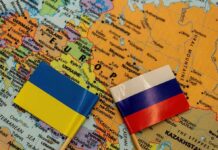

Ukraine says Operation Vivaldi broke a key Russian pincer near Lyman and restored control over multiple settlements — a concrete shift on the map that analysts partly confirm.
Story Snapshot
- Ukraine reports 277 square kilometers and 16 settlements retaken after four phases.
- Independent analysts say the first three phases freed up to 176 square kilometers and blunted a pincer.
- Ukraine names towns retaken in phase four and says 250-plus Russian soldiers were captured.
- Russia disputes the claims and says it is holding ground; it touts shooting down 1,015 drones.
What Ukraine Says It Gained On The Ground
Ukraine’s 3rd Army Corps says four phases of Operation Vivaldi reclaimed 277 square kilometers and 16 settlements around the Lyman axis. The unit reported that phase four restored control over Zelena Dolyna, Lypove, and Kolodiazy, and added 101 square kilometers to earlier gains. These details were released with named command attribution and specific dates, giving the public a clearer record of claimed progress than generic war briefs usually provide.
Brigadier General Andrii Biletskyi, who leads the 3rd Army Corps, described the operation’s phases and said his forces captured more than 250 Russian soldiers in phase three. He also linked the effort to easing pressure on towns to the southwest by changing the local front line. His public brief gave numbers for Russian losses in one phase, but the broad casualty totals remain Ukraine’s estimates and have not been independently audited.
What Outside Analysis Can Verify
The Institute for the Study of War, cited by Euronews, used open-source images and battlefield reports to assess the first three phases. It concluded Ukraine liberated up to 176 square kilometers and broke the northern arm of a Russian pincer that had threatened Sloviansk and Kramatorsk. The analysis described advances along the Ridkodub–Nove–Novomykhailivka and Yarova–Drobysheve–Stavky lines that forced Russian units to shift to defense in that sector.
These findings do not cover the fourth phase, which Ukraine says added another 101 square kilometers. That gap helps explain why public totals differ. Mapping groups often verify front lines with geolocated images before accepting control changes. They can confirm locations and terrain, but they cannot easily verify casualty counts or the durability of each line. That is normal in wartime and keeps some claims in a gray zone until more evidence appears.
How Russia Counters The Narrative
Russia’s Defense Ministry rejects Ukraine’s picture of events near Lyman. It says Russian troops are holding positions or advancing in some areas. Moscow has released videos to support its account, and Russian outlets highlight those clips. During the same period, Russia also claimed it downed 1,015 Ukrainian drones over 15 regions, Crimea, and the Black Sea during large-scale strikes.
Russia also touts larger territorial figures of its own near the contact line, claiming control over far more area than Ukraine reports. However, even some Russian military bloggers acknowledged Ukrainian counterattacks and advances east of Sloviansk and Kramatorsk, warning these moves could have wider effects on Russia’s push in Donetsk. This mix of claims shows why independent mapping and timestamps matter for public trust.
Why This Matters For Americans Watching Washington
Wartime claims arrive faster than independent proof, and officials on both sides shape the story to their advantage. That pattern breeds cynicism at home, where many believe elites hide hard truths. The clearest public facts here are map changes that some analysts can see and vet. Casualty tallies, destroyed gear counts, and grand plans are far harder to confirm and should be treated with care until verified by multiple sources.
What To Watch Next
Watch for updated control maps that show before-and-after lines for each phase. Look for geolocated photos, satellite images, and prisoner records to validate claims of captured troops. Track whether Ukrainian positions hold against counterattacks in the coming weeks. Finally, weigh any big loss or drone-intercept numbers against verifiable evidence. Clear proof cuts through spin and helps citizens judge policy and aid debates on real results, not loud headlines.
Sources:
youtube.com, en.interfax.com.ua, theconversation.com, armyinform.com.ua, kyivpost.com, censor.net, english.nv.ua
© patriotsunited.org 2026. All rights reserved.