
Hidden in the Supreme Court’s birthright citizenship ruling is a little-noticed idea that could someday justify pregnancy tests for millions of women entering the United States.
Story Snapshot
- The Supreme Court kept birthright citizenship but left open how far the government can go to police pregnant travelers.
- Trump’s failed executive order tried to sort newborn citizens by their parents’ status, not by the Constitution’s plain text.
- Any future plan to deny citizenship could push officials toward invasive checks on women’s bodies at the border.
- Both conservatives and liberals see this as another sign that Washington power games come before basic rights.
What the Supreme Court Actually Decided
The case Trump v. Barbara began with an executive order President Trump signed on the first day of his second term, trying to narrow who counts as a citizen at birth. The order said a baby born in the United States would not be a citizen if the mother was here illegally or only on a short-term visa and the father was neither a citizen nor a lawful permanent resident. In plain terms, a child born on U.S. soil to two non‑resident, non‑citizen parents would no longer be recognized as American.
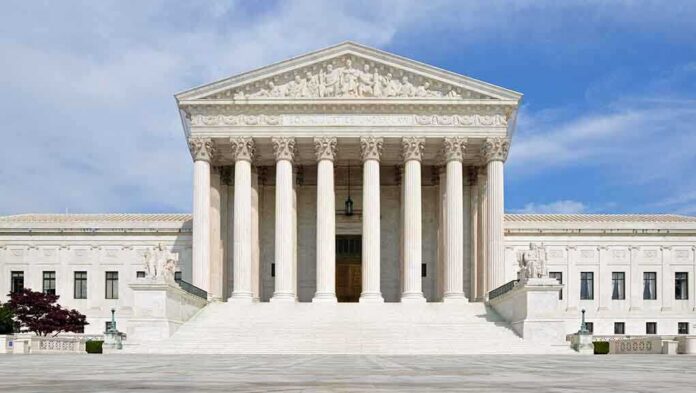
Chief Justice John Roberts, writing for a 6–3 majority, struck down the order as unconstitutional and reaffirmed that the Fourteenth Amendment’s Citizenship Clause still controls. The clause says that all persons born or naturalized in the United States and “subject to the jurisdiction” of the United States are citizens. For more than a century, courts have read that to cover almost everyone born here, aside from narrow exceptions like children of foreign diplomats or hostile invaders. The Court said a president cannot rewrite that rule by executive order.
Why This Fight Matters Beyond Trump’s Loss
For many conservatives, the executive order was a response to anger over “birth tourism,” illegal immigration, and the sense that elites ignore the costs to working Americans. For many liberals, it looked like one more step in a long campaign to devalue people of color and make the ladder to the American Dream even harder to climb. Both sides, though, watched another high‑stakes fight in which leaders in Washington used ordinary families as test cases in a larger power struggle.
The Supreme Court’s ruling stopped this specific order, but it did not settle every question. Justice Samuel Alito called the decision a “serious mistake” in dissent and warned that it locked in citizenship even for children of “birth tourists,” reflecting deep concern on the right that the system can be abused. At the same time, civil rights groups stressed that the order would have stripped citizenship from babies based only on their parents’ papers, clashing with 150 years of law and with basic American promises of fairness. The case showed again how both parties reach for extreme tools instead of fixing real immigration and economic problems.
From Legal Theory to Pregnancy Tests at the Border
If a future administration wants to try again after Trump v. Barbara, it faces a hard choice. The Court made clear that as long as a child is born on U.S. soil and the parents are under U.S. law, that child is a citizen. To get around that, officials would either need a constitutional amendment, which is very unlikely, or a policy that tries to stop certain children from being born on U.S. soil in the first place. That is where ideas like mandatory pregnancy testing for female travelers could appear.
Imagine a rule targeting women of childbearing age from countries that Washington labels “high risk” for illegal overstays or “birth tourism.” To enforce any new limit on birthright citizenship, border agents would have to know who is pregnant, how far along they are, and whether they might give birth in the United States. That kind of system would pressure women to share private medical information, submit to scans or tests, or face denial of entry. It would turn a constitutional debate into a direct intrusion into women’s bodies and family choices.
Shared Fears About Government Power and Elite Games
Conservatives who already distrust “woke” agencies and global bureaucrats see the danger of giving federal officers power to demand pregnancy proof at an airport or land crossing. They worry that once Washington builds such a system, it will not stay limited to immigration and will spread into health, guns, or speech. Liberals who fear “America First” crackdowns and discrimination see the same tools being used to profile women of color and poor travelers, while wealthy insiders move freely thanks to private doctors and special visas. Both sides suspect the rules would hit ordinary people, not the donor class.
Trump pushes Congress for legislation on birthright citizenship after Supreme Court setback https://t.co/MlY4vJWxFV
— Ramaharitha Pusarla (@HarithaPusarla) July 1, 2026
The birthright citizenship fight also shows how elites on every side can use real worries about borders and fairness to grow their own power. Presidents reach for executive orders instead of working through Congress. Advocacy groups raise money by promising to “save” or “end” birthright citizenship. Meanwhile, courts become the only line of defense for basic promises written after the Civil War, like equal citizenship for those born here, no matter who their parents are. Many Americans feel trapped watching distant institutions argue over their lives while the cost of living, health care, and housing keeps rising.
Sources:
bbc.com, youtube.com, stopaapihate.org, aila.org, naacpldf.org, aclumaine.org, asianlawcaucus.org, en.wikipedia.org
© patriotsunited.org 2026. All rights reserved.