Decades of hostile “Death to America” chants and regional aggression proved worthless when Iran faced coordinated U.S.-Israeli military strikes on February 28, 2026, standing utterly alone without a single ally willing to intervene.
Story Highlights
- Operation Epic Fury eliminated Supreme Leader Ali Khamenei and senior Iranian officials in massive coordinated strikes targeting over 1,000 locations
- Iran’s traditional allies Russia and China provided no military support, exposing Tehran’s diplomatic isolation despite decades of anti-American posturing
- Israeli Air Force conducted its largest combat operation in history with 200 fighter jets striking 500 targets alongside U.S. forces
- Iran’s retaliatory capabilities proved limited, with missile stockpiles rapidly depleting while the Strait of Hormuz closure disrupted global energy markets
Trump’s Decisive Action Breaks Decades of Appeasement
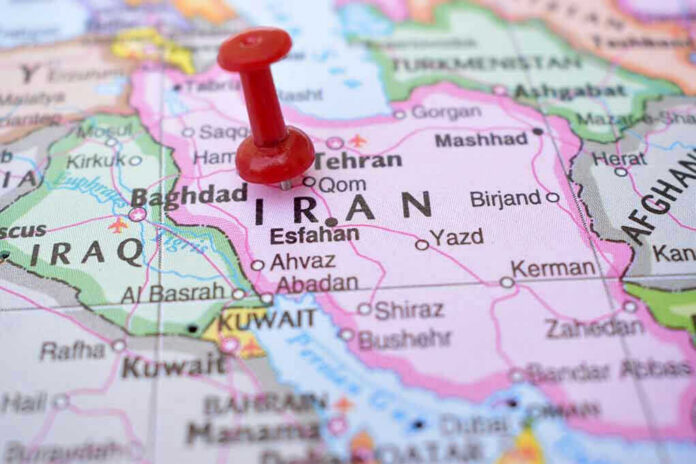
President Trump authorized Operation Epic Fury on February 27, 2026, while aboard Air Force One, marking a decisive break from years of failed diplomatic engagement with Tehran’s regime. The strikes commenced at 1:15 a.m. EST on February 28 across Tehran, Isfahan, Qom, Karaj, and Kermanshah. Trump’s escalatory rhetoric beginning in January 2026—threatening military intervention if Iran killed peaceful protesters and deploying USS Abraham Lincoln and USS Gerald R. Ford battle groups—signaled serious intent that previous administrations lacked. This operation represented the first coordinated U.S.-Israeli strike of this magnitude directly targeting Iran’s leadership.
Iran’s Diplomatic Isolation Exposed
The most striking aspect of Operation Epic Fury was Iran’s complete abandonment by supposed allies. Despite decades of “Death to America” rallies and billions invested in regional proxy networks, no nation intervened militarily on Tehran’s behalf. Russia and China, frequently portrayed as Iranian partners, remained silent as U.S. and Israeli forces degraded Iranian military infrastructure. Even Saudi Arabia’s Crown Prince Salman, while vowing to counter Iranian aggression, closed Saudi airspace to attacking aircraft—revealing regional reluctance to directly participate despite supporting the operation’s objectives. This isolation validates what many conservatives have long recognized: hostile rhetoric without genuine alliances leaves regimes vulnerable.
Overwhelming Military Superiority Demonstrated
U.S. military officials reported striking more than 1,000 targets within the first 24 hours, delivering tens of thousands of pieces of ordnance across all warfare domains. General Dan Caine, Chairman of the Joint Chiefs of Staff, described the Israeli Defense Forces’ trigger event as enabled by U.S. intelligence community coordination, demonstrating seamless operational integration. The Israeli Air Force’s deployment of approximately 200 fighter jets represented its largest combat sortie in history. High-value targets eliminated included Supreme Leader Ali Khamenei, whose compound was destroyed, and Ali Shamkhani, former secretary of the Supreme National Security Council. This precision degradation of command-and-control infrastructure crippled Iran’s ability to coordinate effective responses.
Iranian Retaliation Reveals Weakness
Iran launched Operation True Promise IV, firing approximately 35 missiles at Israel by 5:42 a.m. ET on February 28 and striking 14 U.S. military bases across Bahrain, UAE, Kuwait, Jordan, and Saudi Arabia. Tehran also deployed kamikaze drones against Britain’s Cyprus military base and attacked civilian infrastructure in Kuwait, UAE, Oman, and Azerbaijan. While Iran closed the Strait of Hormuz, disrupting global oil and gas shipments, these responses demonstrated asymmetric desperation rather than strategic strength. By March 4, Iranian ballistic missile launch rates had declined significantly, attributed to stockpile depletion and rationing for prolonged conflict—a clear indication of unsustainable military capacity.
After Years of “Death to America” Rhetoric — U.S. Strikes Demonstrate Iran Has No Allies https://t.co/G0EEU2NVcT
— JaneDoe (@JaneOpines) March 6, 2026
The operation’s stated objectives—preventing nuclear capabilities, dismantling missile programs, neutralizing naval forces, and countering the “Axis of Resistance”—reflected comprehensive strategic goals rather than limited punitive strikes. Trump announced acceptance of an Iranian negotiation proposal on March 1, suggesting potential diplomatic off-ramps while maintaining military pressure. This approach contrasts sharply with previous administrations’ appeasement strategies that emboldened Tehran’s aggression. The elimination of senior leadership creates command disruption that may fundamentally alter Iran’s regional proxy coordination, though Hezbollah’s entry into the conflict indicates continued resistance from entrenched networks built over decades of unchecked expansion.
Sources:
Iran Update Special Report: US and Israeli Strikes – Understanding War
Iran War Timeline: What You Need to Know – Global News