The US Air Force is now deploying F-16s and F-15s as the brain of a revolutionary new drone combat network, but the real story is how you—the taxpayer—are footing the bill for a military-industrial complex that never stops chasing the next shiny toy while our southern border remains a sieve.
At a Glance
- U.S. Air Force F-16s and F-15s are now controlling advanced drones like the XQ-58A Valkyrie in combat tests, paving the way for AI-driven “loyal wingman” warfare.
- The XQ-58A Valkyrie, developed by Kratos Defense, was designed as a low-cost, attritable unmanned system to protect high-value aircraft and reduce risks to pilots.
- Despite early promise, the Air Force has shifted its focus to larger drones, leaving the Valkyrie as a testbed for technology rather than a frontline weapon.
- Taxpayer dollars continue to flow into experimental projects while real-world threats—like unchecked illegal immigration—remain unaddressed.
- Military contractors compete for lucrative contracts, while the average American wonders why their money is spent on gadgets before basic security.
The Rise of Loyal Wingmen: Jets Controlling Drones
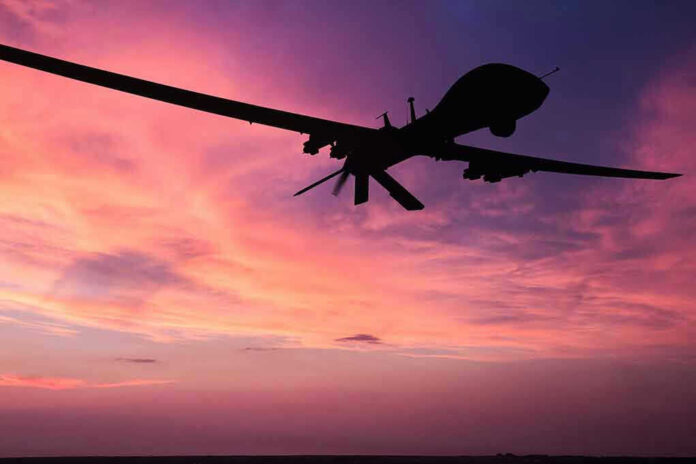
The U.S. Air Force has launched a bold experiment: pairing F-16 and F-15 fighter jets with advanced drones like the XQ-58A Valkyrie. This “manned-unmanned teaming” (MUM-T) allows a single pilot to direct multiple drones, creating a force multiplier that can scout, jam enemy signals, or even draw fire away from human crews. The Valkyrie, developed under the Low Cost Attritable Aircraft Technology (LCAAT) program, was designed to be cheap and expendable, with a price tag low enough to risk on dangerous missions. Its first flight in 2019 marked a milestone in autonomous warfare, but the real test is whether these drones can deliver on their promises—or just drain your wallet.
While the Valkyrie has proven itself in trials, the Air Force has decided it’s not quite enough. Larger, more capable drones are now the priority, leaving the Valkyrie as a technology demonstrator rather than a frontline asset. This pivot underscores a pattern: the military-industrial complex always wants the next big thing, while real-world threats go unaddressed. The Valkyrie’s story isn’t just about innovation—it’s about priorities. Should we be pouring billions into experimental gadgets while our southern border remains wide open?
Contractors, Competition, and the Cost to Taxpayers
Kratos Defense, the company behind the Valkyrie, has invested heavily in production, betting that the Air Force will eventually commit to large-scale orders. But after initial enthusiasm, the Air Force shifted its focus to General Atomics’ XQ-67A, a larger drone better suited to evolving mission needs. Kratos now finds itself in a familiar position: pushing the boundaries of technology, but struggling to secure the kind of government contracts that justify its investment. Meanwhile, the Department of Defense and Congress keep writing checks, chasing the dream of a fully autonomous air force while everyday Americans face inflation, crime, and a porous border.
The defense industry thrives on competition, but the real winners are always the contractors and their lobbyists. The losers? Taxpayers who see their hard-earned dollars vanish into experimental programs, while the most basic functions of government—like securing the border—are neglected. The Air Force’s obsession with cutting-edge tech is understandable, but when will it remember its core mission: protecting Americans from real threats, not just theoretical ones?
Border Security: The Real National Emergency
While the Air Force toys with AI-driven drones, the southern border is in crisis. Under the new Trump administration, border security has tightened, with Customs and Border Protection reporting a dramatic drop in illegal crossings—from 189,359 encounters in March 2024 to just 11,017 in March 2025. This shift comes after a series of executive orders and policy changes, but the real question is: why did it take so long? The federal government has spent years dithering, while states like Texas have been forced to take matters into their own hands, pouring billions into border security measures.
The latest reconciliation bill includes $12 billion for states that have supported border-related immigration enforcement, with even more for border barriers and local law enforcement. But here’s the irony: while the government is finally starting to address the border crisis, it’s also pausing grants for humanitarian aid to migrants, leaving local communities to pick up the pieces. The message is clear: security first, but only after years of chaos and neglect. Meanwhile, the military spends billions on gadgets that may never see combat, while real threats to national security go unchecked.
Priorities, Pork, and the Price of Neglect
The Air Force’s drone experiments are impressive, but they’re also a distraction from the real issues facing America. Inflation, crime, and illegal immigration are the true emergencies, not the latest shiny toy from a defense contractor. The federal government’s priorities are upside down: billions for experimental drones, but pennies for border security until the crisis becomes undeniable. The truth is, no amount of AI or autonomous warfare can replace the basic duty of government: to protect its citizens.
The military-industrial complex will always chase the next big thing, but it’s up to the American people to demand accountability. Why are we spending billions on gadgets that may never be used, while the border remains wide open? Why are states forced to foot the bill for federal failures? The answer is simple: because Washington has lost its way, and it’s time to set things right.