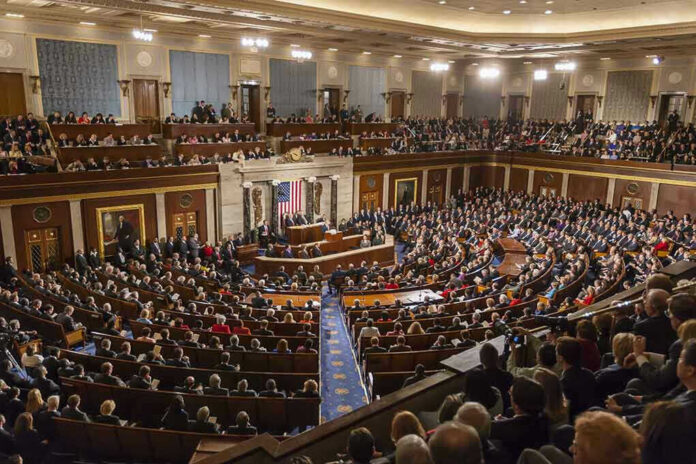
As Congress fumbles a routine spy-law renewal and lets a key vote fail, both parties just proved how easily Washington’s power games can put your privacy and your safety on the line at the same time.
Story Snapshot
- The House blocked a long-term extension of Section 702, a major foreign spying power, after a heated fight over Trump, surveillance, and civil liberties.
- Leaders in both parties say the tool is vital for tracking terrorists, hackers, and drug cartels, yet oversight reports show it also sweeps in Americans’ calls, texts, and emails incidentally.
- Short stopgap extensions and failed votes have become routine, proving Congress will risk brinkmanship with national security and your privacy to gain leverage.
- Left and right critics now warn that the “deep state” surveillance machine and a distracted Congress are both eroding the limits the Constitution was supposed to place on Washington’s power.
What Section 702 Is – And Why Both Parties Say They Need It
Section 702 of the Foreign Intelligence Surveillance Act lets U.S. spy agencies collect the communications of non‑Americans overseas without a warrant, even when those messages travel through American networks.[2] It was created after 9/11 so the government could more easily monitor foreign terrorists using U.S. email and phone systems. Intelligence officials under both Republican and Democratic presidents say it now helps track terrorists, foreign hackers, drug traffickers, sanctions evaders, and other national security threats around the world.[2]
Supporters call Section 702 one of the nation’s most important intelligence tools and warn that letting it lapse would leave the United States “blind” to fast‑moving threats that move across digital networks.[7][3] The National Security Agency says the program has aided operations against groups like al‑Qaeda and helped protect against cyberattacks.[3] For many establishment Republicans and Democrats, this is the classic “don’t tie our hands” argument: in a dangerous world, they say, you keep every tool you can get.
How Americans Get Swept In – And Why Critics See a Backdoor
The government insists Section 702 can only be used to target non‑U.S. persons abroad, and not Americans or anyone located inside the United States. But when a foreign target emails, calls, or texts someone in this country, those messages often get collected too as “incidental” U.S. person data. Once stored in classified databases, analysts can run searches using names, phone numbers, or other identifiers, which can surface Americans’ private communications even though they were never direct targets.[2]
Declassified court material and independent analysis have shown that this incidental collection is not a rare edge case but involves “substantial quantities” of information about people in the United States. Civil liberties groups argue that this creates a “backdoor search” loophole to the Fourth Amendment, allowing the government to read Americans’ emails and texts without getting a traditional warrant from a judge.[4] They also note that Section 702’s use has spread well beyond counterterrorism into areas like narcotics and cybersecurity, turning a temporary emergency power into a permanent, multi‑use surveillance pipeline.[5]
Congress Keeps Playing Chicken With Your Rights and Security
Instead of fixing these problems head‑on, Congress has fallen into a pattern of last‑minute short extensions, cliffhanger votes, and partisan blame games.[1] Lawmakers narrowly reauthorized Section 702 in 2024 with only a two‑year sunset, the shortest renewal ever, after a proposed warrant requirement for U.S. person searches failed in the House on a 212‑212 tie.[1][2] Since then, new fights have broken out over how long to extend the law and whether to close loopholes before giving spy agencies more years of authority.[1][2]
Recent sessions have seen middle‑of‑the‑night votes, failed rules, and abrupt shifts from short extensions to longer ones on the House floor.[1][3] A temporary extension into next year passed only after an earlier, longer reauthorization was defeated in a 197‑228 vote.[3] In the latest round, the House rejected another renewal push outright, even as leaders warned that the underlying authority is creeping toward another expiration date. This cycle confirms what many Americans suspect: Congress will run national security and civil liberties right up to the edge if it thinks doing so might hurt the other side more.
Strange Bedfellows: Populists, Privacy Hawks, and Deep State Fears
The fight over Section 702 has scrambled the usual partisan map. Conservative critics argue the same tool used to hunt terrorists was also part of a broader surveillance culture that helped fuel abuses in Trump‑era investigations. Liberal critics see a massive warrantless spying regime that threatens immigrants, activists, and everyday people who simply talk with family overseas.[6] Both camps point to repeated violations of court‑ordered limits on how agencies handle Americans’ data as proof that the security bureaucracy cannot police itself.[6]
In their latest bout of Trump Derangement Syndrome, Democrats voted today to jeopardize our national security by blocking a clean extension of Section 702 of FISA—a vital tool for detecting foreign terrorist threats.
Make no mistake: Their recklessness endangers American lives.
— Tom Emmer (@GOPMajorityWhip) June 11, 2026
As these concerns grow, more Americans on both sides now see the surveillance state and Congress as part of the same unaccountable elite system. Privacy advocates say intelligence agencies have learned to work around the law by buying location and other sensitive data from private brokers, even as Congress debates tightening formal rules.[1][4] That creates a simple question many citizens are asking: if Washington claims it needs these powers to keep you safe, why does it keep hiding how often your own information is swept in and searched?
What Is Really at Stake as the Clock Keeps Ticking
Security professionals warn that throwing out Section 702 overnight could make it harder to detect plots from foreign terrorists, hostile states, and global criminal networks.[2] Civil liberties experts counter that letting the law roll on without strong reforms teaches future presidents and agencies that mass warrantless surveillance is a normal part of American life.[6] Both outcomes worry people who believe the federal government is already too large, too secretive, and too distant from the Constitution’s limits.
The core issue is not whether America faces real threats; it does. The issue is whether a distracted Congress and a powerful intelligence system can be trusted to balance those threats with your basic right to be left alone unless a judge signs off. Section 702 was supposed to aim outward at foreign enemies. The longer lawmakers delay real reforms, the more it looks like one more tool that points inward as well, in a capital where protecting power often comes before protecting people.
Sources:
[1] Web – US House rejects extension of key spy powers
[2] Web – The national security stakes could not be higher as the FISA Section …
[3] Web – It’s Time to Renew Section 702 of FISA Permanently – Lawfare
[4] Web – Judicial Oversight of Section 702 of the Foreign Intelligence …
[5] Web – FISA Section 702: Reform or Sunset
[6] Web – FISA Section 702’s Reauthorization Era
[7] YouTube – Section 702 of FISA: Privacy and Civil Liberties Reforms
© patriotsunited.org 2026. All rights reserved.