
A Silicon Valley startup founder is facing murder charges after investigators say his Tesla hit stopped traffic at more than 100 miles per hour, yet the public still has not seen the core evidence behind that claim.
Story Snapshot
- Prosecutors say a Tesla driven by tech founder Zachary Chernicky hit stopped cars at over 100 mph, killing a mother and her young daughter.
- The case hinges on vehicle data and crash reconstruction, but key records like the charging affidavit and full telemetry have not been released.
- High‑profile Tesla crashes often spark fierce debate over driver blame versus technology failure, even before facts are fully tested.
- Sensational coverage and social media reactions risk turning a complex legal case into a simple story of “rich tech guy versus grieving family.”
What Prosecutors Say Happened On Highway 87
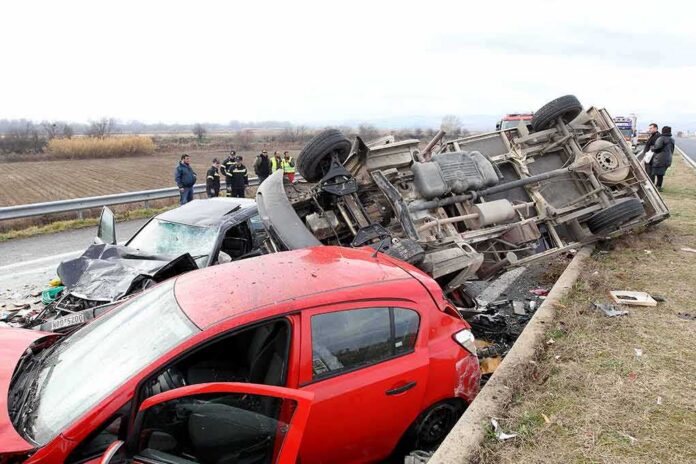
Prosecutors in Santa Clara County say 31‑year‑old software developer and startup founder Zachary Chernicky drove his Tesla at more than 140 miles per hour on Highway 87 in San Jose on December 2, 2025. They allege that vehicle data shows the car at about 142 mph 15 seconds before impact, 126 mph five seconds before impact, and roughly 102 mph when it slammed into stopped traffic, causing a fiery crash. The collision killed a mother and her young daughter, whose father reportedly tried to pull them from the burning wreck.
Prosecutors have charged Chernicky with two counts of murder, not just reckless driving or manslaughter. They argue that this was more than a tragic mistake. In their words, “The Tesla didn’t cause this crash. Chernicky did by driving over 140 miles per hour.” That statement makes clear their theory: the legal focus is on his choices behind the wheel, not on a defect in Tesla’s design or software. It also pushes a strong message to the public before a trial has tested the evidence.
The Missing Pieces In The Public Record
Even in such a shocking case, the public has only seen a thin slice of the file so far. News reports describe the alleged speeds and the fiery impact, but they do not include the actual charging affidavit, detailed crash reconstruction, or raw vehicle event data recorder download. There is no released report laying out brake use, steering input, or possible mechanical issues. There is also no public record yet of toxicology tests, phone records, or statements from witnesses at the scene. That leaves big questions about how prosecutors plan to prove “malice” instead of reckless driving.
This gap matters because the difference between murder and manslaughter often comes down to state of mind, not just speed. Other Tesla cases show how deeply investigators can dig when they want to prove reckless behavior. In a Texas crash that killed a 76‑year‑old woman, court records describe pedal position, speed changes over seconds, lack of braking, and medical tests on the driver. Those details helped support a manslaughter charge instead of blaming Full Self‑Driving alone. In the Chernicky case, similarly rich data may exist, but the public has not seen it yet.
Tesla Crashes, Trust In Elites, And The Battle Over Blame
This San Jose crash is not happening in a vacuum. Tesla crashes have become flashpoints in the wider fight over technology, safety, and trust in elites. In several earlier cases, drivers claimed Autopilot or other driver‑assist features were active when fatal crashes occurred, yet prosecutors still charged them, saying the human driver was at fault. These cases show how much weight officials give to telemetry, event data recorders, and witness accounts when they decide whether a tragedy is a crime.
Silicon Valley developer accused of murder after investigators say Tesla reached 142 mph before fatal crash https://t.co/BoMHHVXecP #FoxNews NOTHING GOOD Happens in California ! California is a State of Evilness/Criminals and Corruptions ! TRUE ☝️
— arlrust (@arlrust777) July 21, 2026
At the same time, the public sees a pattern that feeds anger on both the right and the left. Wealthy tech founders driving expensive cars, huge companies pushing risky technology, and government agencies that often seem slow or selective in sharing facts all deepen the feeling that regular people are not being protected. When headlines scream “145 mph horror crash,” many readers feel the system is either too soft on elites or too eager to make an example out of them, depending on their politics. Both sides share one worry: powerful players may shape the story long before a jury hears the evidence.
Why This Case Matters Beyond One Crash
This case touches bigger questions about how we decide guilt in a high‑tech world. If the murder charges rest mainly on speed, without more proof of intent, it could stretch traditional ideas of what “malice” means in traffic cases. If hidden crash data or sealed records later show deeper problems with driver behavior, that might strengthen trust in the outcome. If they instead show software quirks or unclear readings, the public may feel misled. Either way, both Tesla and the justice system are on trial in the court of public opinion.
For citizens watching from the outside, the key is to demand full, tested facts rather than settle for viral clips or one‑line quotes. That means asking for release of the charging documents, reconstruction reports, and data logs that can confirm or challenge the story prosecutors are telling. It also means seeing past brand wars over Tesla and past partisan fights over tech and regulation. A mother and child are dead. A driver faces the rest of his life on the line. The country needs a process that is careful, transparent, and worthy of the trust so many Americans feel is slipping away.
Sources:
nypost.com, foxnews.com, 6abc.com, abcnews.com
© patriotsunited.org 2026. All rights reserved.