
Authorities found a missing Piper Comanche as wreckage on the Grand Canyon’s remote North Rim, and all three people aboard were dead.
Story Snapshot
- National Park Service teams located the aircraft and debris field with no survivors.
- The crash site was in the Basin area near the North Rim after an overnight search.
- Arizona public safety aircraft used infrared and night-vision tools during the search.
- The National Transportation Safety Board will lead the investigation into the cause.
What Officials Confirmed About the Crash
National Park Service officials said a report of a missing aircraft came in late Sunday night. Rangers and partner agencies searched through the night in rough terrain. Crews found the Piper Comanche and a debris field near the Basin area on the North Rim late Monday morning. Officials said there were no survivors and three people were on board. Authorities withheld the victims’ names to notify families first and to respect privacy during the first hours after the discovery.
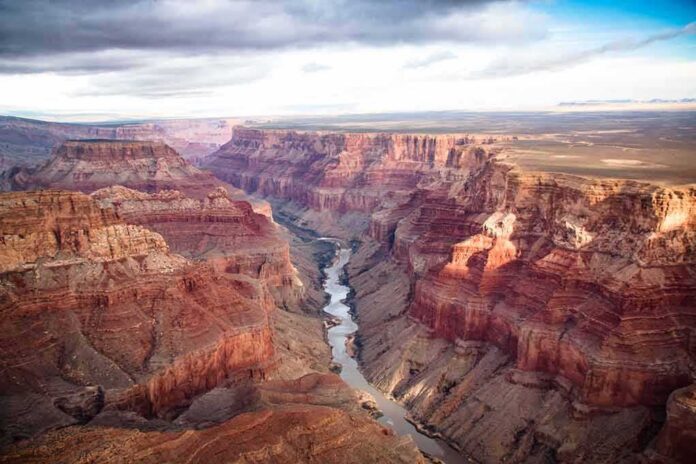
Officials identified the aircraft as a Piper Comanche based on early statements and local reports. That detail matched across outlets that cited park officials and public safety agencies. The location was described as remote and hard to reach, which slowed recovery work. The National Park Service statement placed the last known location and the recovery site near the Basin area. That area sits close to park no-fly rules and steep canyon walls, which can challenge pilots and rescuers alike.
How the Overnight Search Unfolded
Arizona Department of Public Safety crews flew search patterns in darkness using forward-looking infrared and night-vision gear. Those tools can spot heat and shapes in low light and help crews scan large areas faster. After the overnight air search, park crews located the wreckage on the ground late the next morning. The chain of events shows how multiple agencies share tasks in a crisis. Air units sweep first, then ground teams confirm findings and secure the site.
Timeline details varied in early reports. One account put a likely crash time early Sunday evening. The National Park Service logged the missing-aircraft call late that night and the discovery the next morning. That kind of gap is common in remote terrain where radar, radio, and cell coverage can be thin. Early timelines often tighten later when investigators match logs, radar returns, and any tracking data that may exist for the route and altitude.
Who Investigates and What Comes Next
The National Transportation Safety Board will lead the accident investigation, with support from the Federal Aviation Administration and the National Park Service. Investigators will secure the site, document damage, and gather weather, maintenance, and pilot records. A preliminary report will release basic facts from the scene in the coming weeks. The agency says final reports that name the probable cause often take many months, because complex cases need careful analysis before any conclusion is issued.
The National Transportation Safety Board advises newsrooms and the public not to treat preliminary summaries as final answers. Those early documents list who, what, where, and when, but not why. The agency also notes it does not determine a cause while on scene. That approach aims to prevent snap judgments and to protect families from fast but wrong theories during a painful time. It also reflects how small-plane crashes can involve weather, terrain, human factors, or a part failure acting together.
Why This Matters Beyond One Tragedy
Rugged places like the Grand Canyon test search crews and pilots alike. Remote canyons block radio signals and slow rescue work. Families wait for answers while agencies piece together the flight path and impact forces. Many readers across the political spectrum worry that government misses the basics, from air safety to emergency response. In this case, agencies coordinated quickly, used advanced tools, and confirmed hard facts while avoiding early blame. That is how public work should look when lives are at stake.
3 Dead After Plane Crash in the Grand Canyon — Here’s What We Know https://t.co/DgA6rlr8NJ
— People (@people) November 17, 2026
For now, the most useful steps are human ones. Authorities must identify the victims with care and inform their loved ones. Investigators must share timely facts without guessing at the cause. Readers can expect a brief preliminary summary within weeks and a complete analysis much later. Until then, the record shows a clear core: a Piper Comanche crashed in a remote North Rim area, three people died, and a federal investigation is underway to learn what went wrong.
Sources:
nypost.com, azdailysun.com, themirror.com, knau.org
© patriotsunited.org 2026. All rights reserved.