A 240-year-old newspaper will die on May 3 not because readers stopped caring, but because law, labor, and legacy collided in one brutal afternoon.
Story Snapshot
- A Supreme Court decision in a labor dispute was followed within hours by the shutdown announcement of the Pittsburgh Post-Gazette.
- Ownership says two decades of $350 million in cash losses made the paper unsustainable.
- Union leaders say the owners closed the paper rather than follow federal labor law and restore a torn-up contract.
- Pittsburgh now faces the loss of two major local outlets and a looming local news vacuum.
The Day a Supreme Court Order Became a Death Sentence
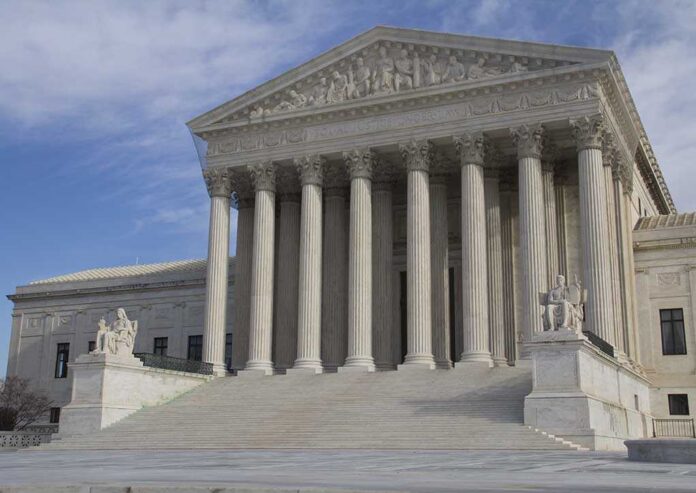
On a January morning in 2026, the U.S. Supreme Court declined Block Communications’ emergency request to pause a federal appeals court order forcing the Pittsburgh Post-Gazette to restore health care terms from its 2014 union contract. By that afternoon, the company announced that the 239‑year‑old paper would cease all print and digital operations on May 3, citing decades of losses and a labor mandate it called outdated and inflexible.
Staff learned about the end of their paper not in a town hall or newsroom gathering, but through a prerecorded Zoom message with no executives available for questions. The union, which had just won at every level of the legal system, called the move a retaliatory shutdown by owners who “couldn’t bust the union, so they shut down the paper,” framing the closure as a choice to avoid following labor law rather than a last stand against market forces.
How a Shared-Sacrifice Newsroom Turned Into a Legal Battlefield
The conflict did not begin in Washington; it began in years of what workers describe as shared sacrifice inside the newsroom. Journalists reportedly went more than two decades without across-the-board raises while agreeing to concessions meant to keep the paper afloat, even as ownership later claimed more than $350 million in cash operating losses over 20 years. In 2020, management unilaterally scrapped the union contract and imposed tougher health and work rules, a step that judges and the National Labor Relations Board would later rule illegal.
Striking editorial workers walked out on October 18, 2022, demanding restoration of the contract and dignified health care, launching what became a rare three-year strike at a major metro daily. An administrative law judge ordered the company in early 2023 to reinstate the earlier terms while bargaining a new deal, a ruling the NLRB upheld and expanded in 2024. The 3rd Circuit Court of Appeals enforced those decisions in 2025, ordering restored health benefits, contract terms, and back pay for costs that had been shifted to workers.
Ownership’s Numbers, the Union’s Narrative, and a Conservative Lens
Block Communications argues that the Post-Gazette’s closure is the unavoidable result of structural pressure on local journalism layered over extraordinary losses, pointing to more than $350 million in cash outlays over two decades and claiming the 2014 contract no longer fits modern realities. That rationale matches a broader national pattern: print advertising collapse, digital disruption, and legacy costs that traditional metro dailies often cannot cover with subscription and digital ad revenue alone.
The union presents a different causal chain: owners refused to open their books, spent millions fighting rulings that found them in violation of federal labor law, and ultimately chose to kill the paper rather than honor a lawfully enforced contract and pay back wages. From a conservative, rule-of-law perspective, that version carries weight because the NLRB, a federal administrative law judge, the 3rd Circuit, and finally the Supreme Court all aligned on one point: management had to comply with existing labor law remedies. When every level of the system delivers the same answer, it becomes difficult to treat compliance as optional.
A City Loses Its Watchdog as the News Desert Spreads
The May 3 shutdown will erase not just a masthead but one of the country’s oldest continuously published newspapers, whose lineage reaches back nearly 240 years to the early Republic. Pittsburgh will lose daily coverage of city hall, school boards, local courts, and civic life at the same moment another major outlet, the Pittsburgh City Paper, is also slated to close after its sale to the same ownership in 2023. Residents now face a sharply thinner information ecosystem with fewer independent eyes on power.
The union stresses that closure does not erase the company’s legal obligations; back pay and restored benefits ordered under federal law still stand, even if the presses stop. Readers, however, do not get retroactive reporting. Research on news deserts consistently ties the loss of local journalism to lower civic engagement and more opportunities for mismanagement, and common-sense conservative instincts about accountability point in the same direction: fewer watchdogs mean more room for abuse. Pittsburgh will now test in real time how quickly that prediction becomes visible on the ground.
Sources:
Pittsburgh Post-Gazette owners couldn’t bust the union, so they shut down the paper
Pittsburgh Post-Gazette to close after 239 years following union dispute
Why is the Pittsburgh Post-Gazette closing?
History of the Pittsburgh Post-Gazette after ownership announces closure
Post-Gazette to publish final edition and cease operations on May 3