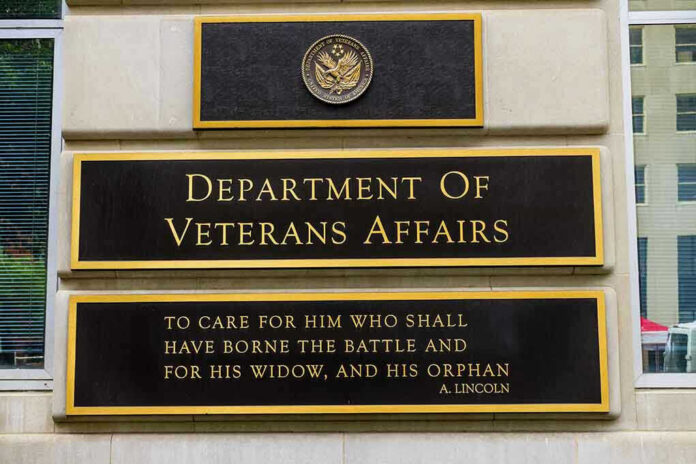
As nearly 18 American veterans a day take their own lives, a new bipartisan bill claims it will finally force Washington to prove what actually works—raising urgent questions about whether veterans will see real change or just more paperwork.
Story Snapshot
- Roughly 17–18 veterans die by suicide every day, with some analyses suggesting the real toll is far higher.
- New legislation would force the Department of Veterans Affairs (VA) to set clear objectives, track data, and rigorously evaluate suicide-prevention programs.
- Supporters say accountability and hard numbers will finally separate effective help from failed bureaucracy.
- Critics warn that process tweaks alone will not fix deep problems like mental health access, transition stress, and homelessness among veterans.
Veteran Suicide: A Crisis That Has Not Let Up
According to the Department of Veterans Affairs 2024 National Veteran Suicide Prevention Annual Report, an average of 17.6 veterans died by suicide every day in 2022, totaling 6,407 veteran suicides that year.[6] Other analyses, including research discussed by advocacy groups, argue that suicide among veterans is undercounted, especially when “self-injury mortality” such as overdoses is included, which could push the true daily toll significantly higher.[1] Veterans account for a disproportionate share of adult suicides compared with their share of the population.[5]
Peer‑reviewed research finds that veterans face a suicide rate about 1.5 times higher than the general United States population, with women veterans facing more than double the risk of non‑veteran women.[5] Those who have served represent roughly 7.6 percent of the population but nearly 14 percent of adult suicides.[5] The Veterans Affairs system identifies multiple drivers behind this tragedy, including mental illness, substance use, traumatic brain injury, chronic pain, and the upheaval of leaving military life.[3][5] For many conservative readers, this is not an abstract statistic; it is the face of friends, family, and neighbors who wore the uniform.
What the New “What Works” Legislation Would Actually Do
Against this backdrop, lawmakers have advanced legislation such as the “What Works for Preventing Veteran Suicide Act,” which explicitly aims to tighten how Veterans Affairs designs, measures, and reports suicide‑prevention efforts.[1] A House summary explains that the bill would require the Secretary of Veterans Affairs to establish “clear and measurable objectives,” improve data collection, and evaluate whether grant programs and pilot projects are actually reducing suicide risk.[1] Instead of rubber‑stamping new initiatives, the department would need a plan to assess success and be transparent with Congress and the public.
Conservative veterans and taxpayers have long watched Washington throw money at problems without proof of results, and this bill speaks directly to that frustration by demanding hard evidence.[1] Supporters, including major veteran service organizations, frame such measures as a needed course correction that will weed out feel‑good projects that do not move the needle on deaths.[1] The requirement for robust evaluation and organized, accessible data could help spotlight what truly helps veterans in crisis and expose programs that are all press release and no outcome.[1] That kind of accountability lines up with conservative priorities of responsible spending and results‑driven government rather than endless bureaucracy.
Why Process Reforms Alone May Not Be Enough
While tightening data and accountability is welcome, the Department of Veterans Affairs itself describes veteran suicide as a complex, system‑wide problem shaped by far more than clinic protocols.[3] Veterans Affairs research lists social support, financial stress, legal problems, substance use, food insecurity, discrimination, housing instability, and access to lethal means among key risk factors that interact in complicated ways.[3][5] The agency’s national strategy emphasizes not only clinical care but also community outreach, crisis lines, and non‑clinical supports that touch family, work, and housing.[3][6] That breadth raises a critical question: can a single “what works” bill significantly change outcomes without broader reforms to how the nation treats its veterans?
Researchers reviewing veteran suicide prevention warn that legislative fixes often focus on reporting, screening, and referrals, while the hardest work involves sustained mental health care, substance‑use treatment, and real‑world support such as housing and employment.[2][5] They note that suicide is preventable when risk is recognized early and veterans receive prompt, effective intervention, but that requires enough providers, shorter wait times, and stronger connections between Veterans Affairs and community health systems.[2][5] State policy analyses echo this, arguing that prevention demands coordination across housing, criminal justice, and local organizations, not just federal rule changes.[7] Without tackling those ground‑level gaps, conservatives may fear that a new law could become another binder on a shelf instead of fewer flag‑draped coffins.
How a Conservative Approach Could Strengthen These Reforms
For readers who value limited but effective government, the current moment offers both a warning and an opportunity. Veteran advocates argue that empowering community organizations, faith‑based programs, and local peers can complement Veterans Affairs care and reach those who never walk through a federal clinic door.[2][6] Evidence shows that many veterans who die by suicide either never used Veterans Health Administration services or had fallen out of care, highlighting a gap that national hotlines and hospital‑based programs alone cannot close.[6] A conservative agenda could push to pair “what works” evaluation with expanded choice, including easier access to trusted local providers outside the federal system.[2][4][6]
At the same time, the heavy use of firearms in veteran suicides—about 70 percent of male veteran suicides—demands a response that safeguards both life and Second Amendment rights.[5] Veterans Affairs’ current strategy focuses on voluntary secure‑storage counseling, not confiscation, and stresses that family, friends, and fellow veterans can play a crucial role in temporarily limiting access during acute crisis.[5][6] That is an area where conservatives can insist on approaches rooted in personal responsibility, family support, and voluntary tools rather than one‑size‑fits‑all gun control. Done correctly, this respects constitutional rights while acknowledging the reality that quick access to a firearm often turns a dark night into a permanent decision.[5][6]
Sources:
[1] Web – Veterans are Dying at About 18 Per Day. New Legislation Aims to Change …
[2] Web – Landsman Introduces Bipartisan Legislation to Strengthen Suicide …
[3] Web – A Practical Review of Suicide Among Veterans: Preventive … – PMC
[4] Web – Suicide Prevention – VA Research
[5] Web – Military and Veteran suicide prevention – AFSP
[6] Web – Himes, Garbarino Reintroduce Bipartisan Bill to Prevent Veteran …
[7] Web – Chairman Moran Introduces Legislation to Improve Efforts to Prevent …
© patriotsunited.org 2026. All rights reserved.