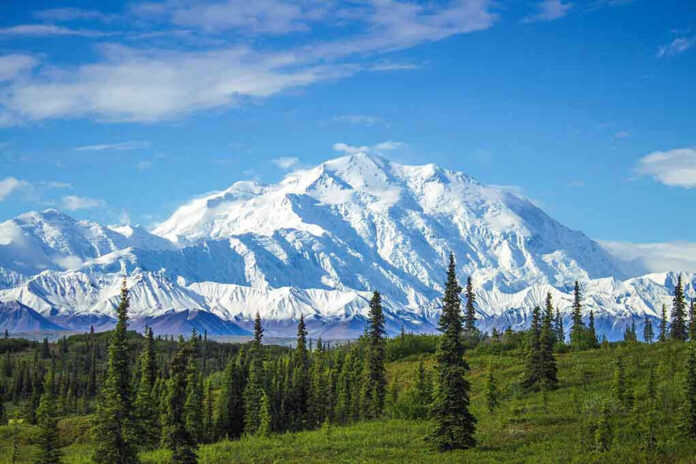
Alaska’s capital faces extreme flooding as glacial dynamics threaten to unleash a record-breaking deluge on Juneau residents.
Story Snapshot
- Governor Dunleavy and tribal leaders issue emergency disaster declarations as Suicide Basin reaches record water levels
- Mendenhall River expected to crest at potentially historic 16.25-16.75 feet, surpassing previous flood records
- Multi-agency unified command activates emergency shelters and evacuation protocols for threatened neighborhoods
- Annual glacial lake outburst floods have intensified since 2011, creating escalating threats to Alaska’s capital city
Emergency Declarations Mobilize Multi-Agency Response
Alaska Governor Mike Dunleavy joined the City and Borough of Juneau and the Central Council of the Tlingit and Haida Indian Tribes in issuing disaster declarations on August 12, 2025. The unprecedented coordination reflects the gravity of the situation as Suicide Basin, positioned above Mendenhall Glacier, reached water levels matching or exceeding previous flood records. This proactive approach demonstrates effective leadership when communities face genuine natural disasters, contrasting sharply with past federal responses that prioritized political theater over citizen safety.
Record-Breaking Glacial Lake Threatens Juneau Infrastructure
Hydrologic monitoring systems detected that Suicide Basin began overtopping on August 10, triggering immediate emergency protocols. The National Weather Service forecasts river crests between 16.25 and 16.75 feet, potentially surpassing the 2024 record of 15.99 feet. The Mendenhall Valley’s residential neighborhoods, public infrastructure, and utilities face immediate risk as floodwaters surge through the basin’s bedrock formation. Real-time data from USGS monitoring equipment provides critical information for evacuation decisions and emergency response coordination.
Glacial Retreat Drives Escalating Flood Patterns
Since 2011, Suicide Basin has generated increasingly severe glacial lake outburst floods as the retreating Suicide Glacier created an over-deepened bedrock basin. The phenomenon, known as jökulhlaups, occurs when accumulated rainwater and meltwater suddenly releases through glacial channels into the Mendenhall River. Consecutive record-breaking years in 2023 and 2024 established a troubling pattern, with 2025 potentially marking the most severe event yet recorded in this cycle.
Scientific Monitoring Enables Coordinated Emergency Response
The unified command structure brings together local, tribal, state, and federal agencies including the Coast Guard, Army Corps of Engineers, and National Weather Service. Emergency shelters, transportation services, and public hotlines activated as wireless alerts reached all Juneau area residents. This coordinated approach demonstrates how proper preparedness and scientific monitoring can protect communities when government agencies focus on their core mission of public safety rather than pursuing ideological agendas that waste taxpayer resources.
Disaster declared in Alaska’s capital due to ‘catastrophic flooding’ threat from glacial lake outburst https://t.co/7Imi0jl9VM pic.twitter.com/ttnwXJyL0V
— New York Post (@nypost) August 13, 2025
The escalating frequency and severity of these glacial outburst floods highlight the need for long-term infrastructure adaptation and community resilience planning. While immediate emergency response addresses current threats, Alaska’s leadership must consider sustainable solutions that protect residents and property from recurring natural hazards without imposing burdensome regulations that stifle economic development and individual liberty.
Sources:
Flooding from Mendenhall Glacier outburst threatens Juneau
US Army Corps of Engineers – Mendenhall Valley Technical Report
2025 Juneau GLOF Unified Command Response to Imminent Glacial Outburst
National Weather Service – Suicide Basin