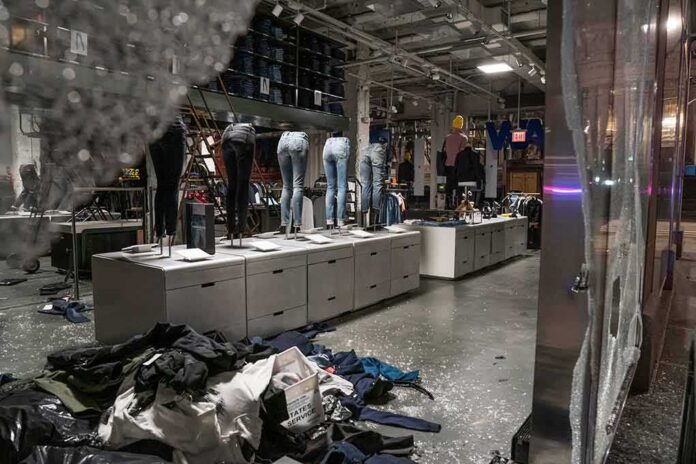
As London shoplifting surges, big-name chains and the police are quietly building a citywide surveillance network inside everyday stores.
Story Snapshot
- Major retailers like Tesco, Boots, and Greggs are rolling out new technology and redesigning stores to fight rising theft.
- A new platform lets shops send camera footage and witness statements straight to the Metropolitan Police, speeding up arrests.
- Chains are also joining shared databases of repeat offenders, raising big questions about privacy and who controls all that data.
- Store layouts are shifting toward “fortress” designs, changing the feel of the high street for honest shoppers as well as thieves.
Police and Retailers Link Up Through New Evidence Platform
The Metropolitan Police have begun using a new digital reporting tool in London that lets shops send camera footage and staff statements directly to officers within minutes instead of weeks. Retailers including Tesco, Boots, Marks & Spencer, and Greggs are already using the platform in several boroughs, with plans to expand to more areas. Police say this faster flow of evidence makes it easier to identify suspects, bring cases to court, and turn more shoplifting reports into real charges and cautions. The force reported that when cases went through the system, enforcement outcomes were roughly four times higher than under the old process, giving hard-pressed stores a reason to buy in. For many owners, this feels like the only way to get action from a justice system they see as slow and overwhelmed.
Tesco’s “VAR-Style” Cameras Watch Every Scan
Tesco is testing overhead camera systems at some self-checkout lanes that replay video when an item is not scanned correctly, a feature many shoppers compare to football’s Video Assistant Referee. The cameras record customers as they scan and bag goods, then use artificial intelligence software to spot items that never made it through the scanner. If the system thinks something is missing, a replay appears on the screen and tells the shopper to remove the item and try again. Tesco and other chains argue this helps honest customers fix mistakes while warning would-be thieves that they are being watched, not just by staff but by machines trained to catch every slip. Supporters say this protects tight margins in a time of high prices, while critics worry that everyday shopping is turning into a monitored event.
Greggs Moves Toward “Fortress” Counters in Theft Hotspots
Bakery chain Greggs has started pulling open self-service cabinets from stores in parts of London and other cities that report the worst theft, replacing them with food served from behind fixed counters. Branches in Croydon, Peckham, Whitechapel, Upton Park, and several sites in Birmingham and Nottinghamshire are trial locations where customers can no longer pick up items freely from front displays. Instead, staff hand over pastries and drinks from secure areas, turning what used to feel like a casual grab-and-go bakery into something closer to a guarded kiosk. The company says it is targeting shops with high levels of antisocial behavior and theft and may expand the model to more places if it works. For many customers, it is another sign that rising crime is reshaping daily life on the high street, with trust giving way to locks and barriers.
Shared Databases and Crime Intelligence Raise Privacy Fears
Alongside cameras and counters, large retailers are joining a shared national crime database run on the Auror loss-prevention platform, pooling images, recordings, and personal data on repeat shoplifters. Chains such as Boots, Greggs, Marks & Spencer, Morrisons, and Primark can upload photos, camera clips, car plate numbers, and details of stolen goods to shared profiles of suspects. Security teams then use these “watchlists” at the door to refuse entry to people flagged as serial offenders, while police gain new streams of digital intelligence for building cases. Backers say this lets stores “join the dots” across cities, catching people who hit many shops for small amounts that add up to big losses. Civil liberties advocates worry that a growing web of private and public databases could track people well beyond proven crime, with little say from voters or shoppers.
A Wider Shift Toward Facial Recognition and Always-On Monitoring
Recent reporting shows the United Kingdom government pouring tens of millions of pounds into facial recognition tools for police and retail use, including mobile units for busy shopping streets. Under a program known as Project Pegasus, major retailers such as Boots and Primark are already using facial recognition systems to run store camera feeds against police databases of known offenders. This means that in some areas, anyone walking into a shop may have their face scanned, matched, and logged before they even pick up a product. Officials say this focuses on the “worst of the worst” violent or repeat thieves and helps protect staff from threats. Yet the same tools could be used in broader ways over time, especially if political leaders or corporate owners push for tougher crackdowns on disorder.
What This Means for Everyday Shoppers and Trust in Institutions
For ordinary shoppers, this wave of new tech and tighter layouts solves one real problem but exposes another: a sense that powerful groups are building big systems over people’s heads. Store workers gain more safety, and small businesses get help from police that once felt far away, thanks to faster digital reporting and shared intelligence. At the same time, customers now walk through doors where cameras watch every move, databases share personal details across chains, and counters wall off what used to be open shelves. Many citizens on both left and right already fear that remote “elites” make decisions that track and control regular people more than they tackle deeper causes of crime. These new tools may cut theft, but they also raise a hard question: who is this growing security network really built to serve, and who gets a voice as it quietly expands?
Tesco, Boots and Greggs among retailers using new tech to crack down on shoplifting in London – The Independent – LONDON shoplifting. https://t.co/DXG19L8jhh
— Paul Dorling (@PaulDorlinw2w2) August 4, 2026
As London’s shoplifting crackdown spreads, it offers a preview for other cities, including those in the United States, where big chains and police are likely to copy any system that promises safer stores and higher profits. For Americans who already distrust distant government and corporate leaders, the lesson is clear. When crime rises, those leaders reach first for technology that watches everyone, not for policies that rebuild local trust, ease rising costs, or give more people a real shot at the American Dream.
Sources:
independent.co.uk, the-independent.com, news.sky.com, bbc.co.uk, bbc.com, lbc.co.uk, metro.co.uk, thetimes.com, youtube.com
© patriotsunited.org 2026. All rights reserved.