

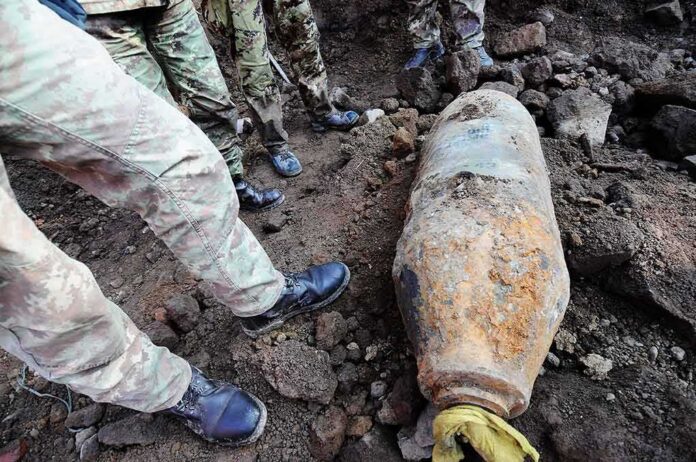
Federal judges froze an emergency permit, and the Army still told the court it may blow up nearly five tons of toxic lead azide in Iowa because it says waiting risks an uncontrolled explosion.
Story Snapshot
- The Army says degraded lead azide is so unstable that a controlled blast is needed now.
- An appeals court paused the Environmental Protection Agency (EPA) emergency permit as lawsuits proceed.
- Justice Department filings cite 68 barrels and about 9,700 pounds of material at issue.
- Environmental groups warn of lead dust over Iowa and parts of Illinois if detonation occurs.
What the Army found and why it wants to act
U.S. Army reviewers said a safety check in March 2026 found old lead azide that had degraded and formed crystals at the Iowa Army Ammunition Plant. Lead azide is a sensitive explosive used to set off larger charges. The Army’s environmental assessment weighs options and selects a controlled, phased “blow-in-place” detonation to avoid moving unstable drums and to remove the hazard from the site. The Army says the material’s condition raises the risk of an unplanned blast if left in storage.
U.S. Department of Justice filings to the Eighth Circuit say there are 68 barrels holding about 9,700 pounds of lead azide. Government lawyers argue a planned detonation is “necessary now” because colder temperatures could trigger an uncontrolled explosion. They told the court the Army aimed to act quickly to prevent a worse outcome, and they described post-blast testing and cleanup steps tied to the plan.
The permit pause and the legal pivot
The Environmental Protection Agency issued an emergency permit on November 13, allowing the Army to detonate the material with testing and cleanup requirements afterward. Soon after, a federal appeals court put that permit on hold as a lawsuit moves forward. That stay blocked action under the permit, prompting the Justice Department to argue the Army could instead rely on a separate emergency exclusion under waste laws to proceed. That shift raised fresh questions from critics about safeguards.
Reporters and court records show the timeline moved fast: permit issued November 13, lawsuits filed, then a court stay, and government filings urging quick action. The rush intensified public doubt about whether the process allowed enough time for transparency. The central conflict now blends risk management with legality: can the Army show that a different legal path meets the same health protections as the stayed permit while the court reviews the case?
Community fears about lead dust and fallout
Environmental groups, local leaders, and residents warn that a blast could spread lead dust across eastern Iowa and into western Illinois. They point to dispersion modeling that shows possible exposure across the Mississippi River. They argue dust could settle on farms, yards, and play areas, remain in soil, wash into water, and harm people and wildlife. They also say officials gave too little notice and did not show that safer alternatives were fully explored.
What we know—and what remains unclear
Facts on the ground are stark. The material is real, degraded, and large in volume, creating a non-theoretical safety problem. The Army’s assessment states it compared choices and chose detonation to cut handling of unstable drums. The Justice Department gives a concrete count of barrels and weight and warns of temperature risks. The EPA permit, now paused, included testing and cleanup, which signals the government expected contamination risks that would need follow-up.
planned detonation, in Middleton, Iowa, of approximately 5 tons of lead azide which is an explosive material used in bombs. Lead is a neurotoxin and is extremely dangerous to children and pregnant women, so much so there are all kinds of federal and state penalties and…
— Nancy Carpenter (@NancyJo57) November 23, 2026
Gaps remain. The public record does not include the full math that ranks detonation as the lowest risk. The filings do not show detailed hazard models, transport risk estimates, or peer reviews. The temperature trigger claim lacks publicly shared data. The alternative legal route after the stay needs clearer proof that it delivers equal or better health protections. Until those records are public, trust hinges on agencies the public already doubts across party lines.
Why this matters beyond Iowa
This fight is bigger than one plant. When old explosives decay, every option is bad in some way. Leaders must pick the least-bad path. People want proof that choice protects families, farms, and rivers, not just the government’s schedule. Conservatives see mission drift and rushed federal power. Liberals see environmental risk and light oversight. Both sides see a system that moves fast when it must and slow when it should listen, with the public left in the dark until alarms are blaring.
Accountability steps to rebuild trust
Officials can cut through the noise with simple actions. First, release the full Army environmental assessment and technical appendices. Second, publish the modeling for air and soil lead, including monitoring plans. Third, put forward independent explosives and public health experts to review the options in public. Fourth, explain the legal basis and health standards for any emergency path used while the court stay remains in place. Clear records, not talking points, are the only path to consent.
Sources:
zerohedge.com, apnews.com, chicago.suntimes.com, nbcchicago.com, nbcdfw.com, d34w7g4gy10iej.cloudfront.net, desmoinesregister.com, storage.courtlistener.com, who13.com, iaenvironment.org
© patriotsunited.org 2026. All rights reserved.