

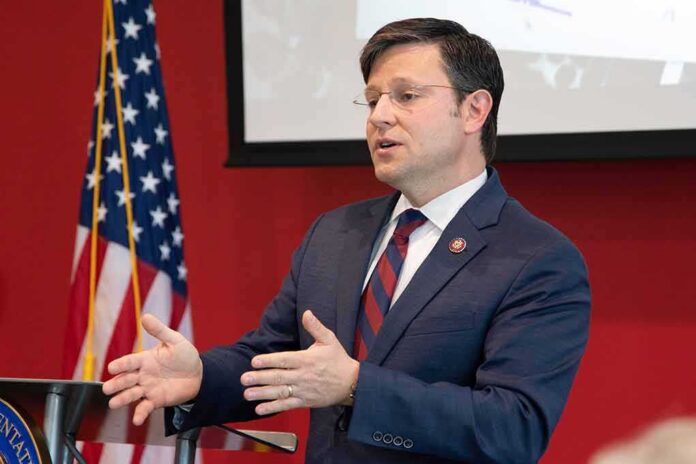
House Democratic Leader Hakeem Jeffries said Congress should pass the Dream and Promise Act this session and called it “the beginning, not the end,” setting up a high-stakes fight over legalization and enforcement.
Story Snapshot
- Jeffries urged action on the Dream and Promise Act as a first step in immigration reform.
- He framed the system as “broken” and linked legalization to America’s immigrant heritage.
- Critics warned that “amnesty” undercuts the rule of law and encourages more illegal immigration.
- Key details remain unclear, including bill text, eligibility rules, and cost estimates.
Jeffries names the Dream and Promise Act as the opening move
House Democratic Leader Hakeem Jeffries said Democrats want to start immigration reform by passing the Dream and Promise Act. He said the bill should move in the current Congress and not wait for the next one. He also called the immigration system “broken” and tied reform to America’s identity as a nation of immigrants. He added the push would be the beginning, not the end, of a larger effort, but he did not outline next steps.
Reporting describes the Dream and Promise Act as a plan to give legal status, and a path to citizenship, for some Deferred Action for Childhood Arrivals recipients and other eligible groups. The coverage does not include the full bill text, number, or official eligibility rules for this version. It also does not include a cost estimate or a vote plan in either chamber. That leaves major parts of scope, timing, and fiscal impact open questions.
Humanitarian framing meets enforcement-first pushback
Jeffries paired his support for legalization with a fairness message. He criticized what he called a “violent mass deportation machine” and spoke about help for law-abiding immigrant families. In other reported remarks, he suggested “remedial assistance” for people he believes were treated unjustly, including some Deferred Action for Childhood Arrivals recipients. The reports do not define what “remedial assistance” would include, such as legal help, status fixes, or reentry options.
Opposition voices moved quickly. Former Acting Director of Immigration and Customs Enforcement Todd Lyons said any amnesty talk clashes with the rule-of-law focus identified with President Trump and would trouble his political base. The Heritage Foundation urged Congress to reject amnesty, arguing it rewards illegal behavior, invites more unlawful migration, fuels smuggling, and could bring large public costs. These critiques set the stage for a hard fight in both chambers.
What we know, what we do not, and why it matters now
Today’s dispute echoes a long national argument over how to treat people already here without legal status. Supporters say clear rules to earn legal status bring people out of the shadows and stabilize communities. Critics warn that legalization without tough and proven enforcement can invite new illegal entry. Research and budget scores from past bills show complex labor, tax, and benefit effects, but those numbers vary across proposals and enforcement designs.
The Streets Are Talking: 🚨 HAKEEM JEFFRIES’ AMNESTY EXPRESS: DEMOCRATS WANT TO DEFUND ICE AND ROLL OUT THE RED CARPET! 🇺🇸
Hakeem Jeffries is already drawing up the Democrats’ immigration wish list for the next Congress! If Democrats retake the House, he wants to push the Dream… pic.twitter.com/OkvAUbCQBG
— Decory Davis (@DavisDecory) November 18, 2026
Congressional math is the immediate hurdle. Republicans control both chambers. Many Republicans oppose what they call amnesty and want strong enforcement first. Democrats are signaling legalization as their first move, but they have not published a full package that pairs status with enforcement and border changes. Without bill text, a whip count, or committee action, the path to passage is unclear. That gap gives both sides room to frame the stakes for public opinion and for 2026 politics.
Sources:
thegatewaypundit.com, amnesty.nl, americanimmigrationcouncil.org
© patriotsunited.org 2026. All rights reserved.