Newly declassified FBI memos confirm that, in May 2017, agents opened a criminal case to test whether President Trump fired James Comey at Russia’s direction—a step that lays bare how far federal power can reach when suspicion outruns trust.
Story Highlights
- Declassified records show the FBI launched a May 2017 probe into whether Trump acted at Russia’s direction after firing James Comey.
- The stated goal was to assess if the president was directed by, controlled by, or coordinating with Russia.
- The release revives long-running fights over “predication” and whether officials overreached during the Russia investigations.
- Past watchdog findings faulted James Comey’s handling of Trump memos, adding to institutional credibility concerns.
What The Newly Released Memos Say
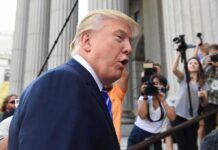
The White House says the declassified memos show the Federal Bureau of Investigation (FBI) opened a criminal probe in May 2017 focused on whether President Trump acted as, or at the direction of, Russia after he fired FBI Director James Comey. The stated objective was to determine if Trump was “directed by, controlled by, and/or coordinated activities with, the Russian Federation”. The release puts in plain view an “asset-theory” predicate that earlier public records only hinted at, intensifying debate over the FBI’s grounds for such a case.
The memos arrive amid years of rolling disclosures on the Russia investigations. Prior declassification waves, including those ordered around the end of Trump’s first term, exposed internal doubts and errors, while also documenting how counterintelligence officials worked through leads in real time. These new records fit that pattern. They reveal what investigators considered possible, not proof the theory was true. That distinction—what justified opening a case versus what was ever proven—sits at the center of today’s political reactions.
Why Predication Fights Keep Returning
Members of Congress and past officials have spent years arguing over “predication,” the standard for opening an investigation. Supporters of past probes say the bar is lower at the start of a counterintelligence case and rises with each step. Critics say the bar was ignored, especially when facts were thin or disputed. Past releases and hearings show this tug-of-war: one side citing process, the other citing abuse. The late-term declassifications underscored that divide and made it a public fight.
This new tranche adds fuel because it centers on a sitting president’s intent. Opening a case to test if a president acted under a foreign state’s influence is rare and rattles trust. Many Americans already believe powerful insiders bend rules to protect their turf. Others fear foreign threats and want swift action. These memos land in the middle, inviting both reactions at once: alarm at possible foreign leverage, and alarm at government overreach that can target anyone at the top.
Institutional Scrutiny And Public Confidence
Independent oversight has already flagged serious lapses linked to this era. The Department of Justice Office of Inspector General found former FBI Director James Comey broke policy by keeping and sharing memos about his talks with Trump, though prosecutors declined charges. Those findings did not settle the wider debate but did damage the bureau’s image for rule-following. The new memos arrive in that shadow, making it harder for the public to separate careful counterintelligence work from avoidable mistakes.
At the same time, official declassifications have continued under claims of transparency. Past releases, including document sets tied to the Crossfire Hurricane inquiry, aimed to show what the government had and when it had it. Supporters see sunlight as a cure for distrust. Critics see selective release and politics. Either way, declassification has become the only shared language left for explaining contested history, and it will likely shape the next round of congressional and legal reviews.
How This Fits Today’s Bigger Concern: Government Versus The People
Conservatives see these memos as proof that insiders stretched their power against an outsider president. Liberals see them as proof that institutions were at least willing to test whether a leader could be compromised by a foreign state. Both groups share a deeper worry: leaders in Washington may protect their own more than they protect the public. The memos stoke that worry because they show the government will probe even the presidency while still struggling to police itself.
For citizens, the practical questions are simple. What evidence triggered the probe? Who checked the facts as the case advanced? When did leaders update Congress and the public? The memos answer only part of that. They show the theory on the table in May 2017 and the scope investigators claimed. They do not, by themselves, resolve whether the predicate was strong or the steps that followed were fair. More records and hearings will be needed to close those gaps.
Bottom Line
The declassified memos confirm that the FBI opened a 2017 criminal case to test whether President Trump’s firing of James Comey served Russian interests. That fact is not in dispute. What remains contested is whether the bureau had sound grounds to take that step and whether later actions matched the evidence. In a time of low trust, both sides see a warning here. Power without strong guardrails can miss the mark, and foreign threats do not wait for perfect proof.
Sources:
cbsnews.com, abc7news.com, politico.com
© patriotsunited.org 2026. All rights reserved.