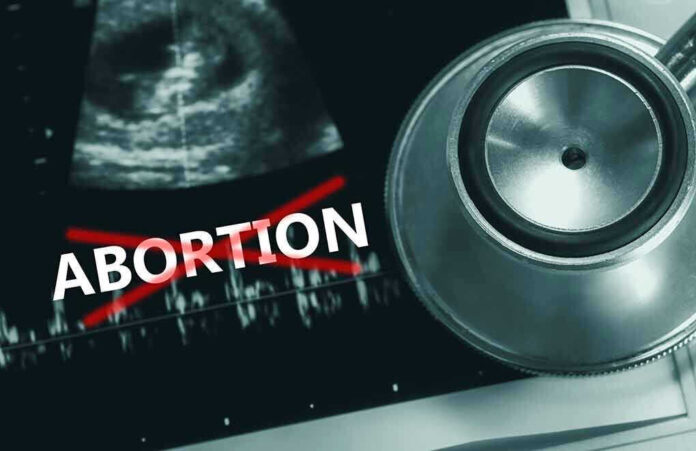
Texas lawmakers advance a sweeping civil-enforcement bill to choke off abortion-pill pipelines, arming parents and the attorney general with powerful tools—and $100,000-per-violation penalties—to hold out-of-state suppliers and facilitators to account.
Story Snapshot
- SB 6 lets private Texans sue makers, mailers, prescribers, and distributors of abortion pills with a $100,000 minimum per violation.
- Parents, including fathers, gain standing to bring wrongful-death suits tied to aborted fetuses or maternal death.
- The Texas attorney general gains authority to enforce against out-of-state actors and test shield laws.
- The model mirrors SB 8’s private enforcement, designed to withstand pre-enforcement injunctions.
What SB 6 Does—and Why It Matters Now
Texas Senate Bill 6 builds on the post-Roe framework by creating a private right of action against abortion-pill manufacturers, distributors, prescribers, mailers, and deliverers, setting statutory damages at a minimum of $100,000 for each violation. The measure mirrors the civil-enforcement architecture pioneered in 2021’s SB 8, which survived early injunction attempts by shifting enforcement to private lawsuits. Sponsors frame the bill as targeting pill supply chains that bypass in-person care and Texas licensing rules through telemedicine and mail-order channels.
Supporters highlight that after Dobbs, cross-border telemedicine services and mail distribution expanded, funneling mifepristone and misoprostol into ban states. SB 6 responds by focusing liability not only on in-state actors but also on out-of-state prescribers and platforms that aid access into Texas despite state prohibitions. The bill’s design aims to deter illegal shipments, raise compliance costs for intermediaries, and reduce reliance on shield laws that have encouraged remote prescribing into prohibition states.
Wrongful-Death Expansion and Who Can Sue
SB 6 expands wrongful-death standing to parents—explicitly including fathers—to bring claims for the death of an unborn child and, in certain cases, maternal death associated with abortion-inducing drugs. Coverage of the measure notes a lengthy limitations window reported up to six years for suits tied to fetal or maternal death, which would broaden the time horizon for litigation. By enlarging the pool of potential plaintiffs, lawmakers intend to increase accountability and deter actors profiting from pill distribution to Texans.
The statute’s wrongful-death pathway aligns with Texas law defining an unborn child as an individual from fertilization, a framework already invoked in recent litigation involving abortion pills. Legal strategists have paired these state provisions with arguments under the federal Comstock Act regarding mailed abortion drugs, signaling how SB 6 could intersect with dormant federal statutes. If enacted, expect immediate tests of jurisdiction, damages, and conflict-of-laws questions in both state and federal courts.
Attorney General Powers and Interstate Clashes
SB 6 equips the Texas attorney general to sue distributors and facilitators, including out-of-state actors, establishing a state-level counterpart to private enforcement. National reporting indicates the AG could challenge shield-law protections that attempt to insulate telemedicine prescribers and platforms beyond Texas borders. The Senate advanced a related bill earlier in 2025, while the House was described as a tougher path; SB 6 moved into a special-session committee in August, keeping pressure on cross-border suppliers.
If courts sustain this framework, enforcement could reach internet hosts, payment processors, and other intermediaries that knowingly aid pill access into Texas. Companies may respond by geofencing services, tightening compliance for Texas traffic, or exiting the market to avoid liability. Health systems and pharmacies may likewise restrict services. Short term, legal threat volume will rise sharply; long term, other ban states may replicate the model, escalating state–state standoffs over shield laws and FDA approval defenses.
Contested Risk Narratives and Practical Limits
Medical authorities recognize mifepristone and misoprostol as FDA-approved and generally safe when used as directed, while SB 6 proponents emphasize safety concerns from unsupervised, mail-order use without in-person evaluation. That clash frames likely defenses: opponents will cite FDA approval and shield statutes; proponents will point to state police powers and civil remedies. Differences between regular-session SB 2880 and special-session SB 6 iterations remain possible, and final House action was uncertain as of the August committee hearing.
For conservatives focused on life protections and state sovereignty, SB 6 represents a strategic next step: a durable civil toolset to hold remote prescribers and their enablers accountable, limit the flow of abortion drugs into Texas, and reinforce recognition of unborn life in civil courts. Watch for swift lawsuits over personal jurisdiction, limitations periods, damages floors, and preemption claims pitting FDA approval against state civil liability—and for the attorney general to test shield laws in high-profile cases.
Sources:
Wide-ranging crackdown on abortion pills passes Texas Senate
Texas bill would allow Texans to sue manufacturers and distributors of abortion pills