
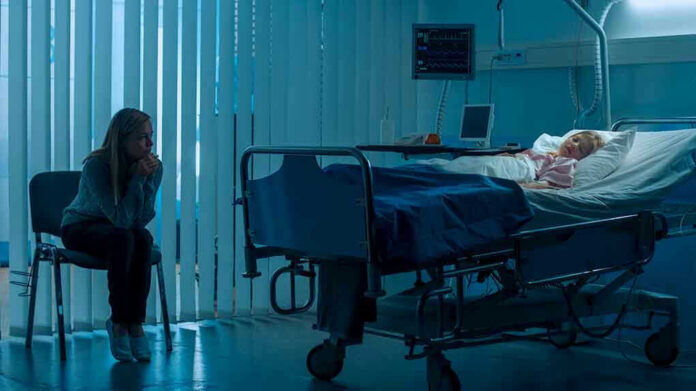
A 28-year-old’s harrowing account of dying twice during a routine hospital procedure shines a spotlight on a rare but documented medical phenomenon that challenges everything we think we know about the boundary between life and death.
Story Highlights
- Lazarus syndrome, or autoresuscitation, describes the spontaneous return of circulation after CPR has failed and a patient is declared dead — a phenomenon documented in roughly 76 cases worldwide through 2022.
- Medical literature shows circulation typically returns within 10 minutes after CPR stops, though the condition remains severely underreported and occurs in fewer than 0.1% of cardiac arrests.
- Cases span 27 countries and involve patients of varying ages, often following overdoses, hypothermia, or routine hospital procedures gone wrong.
- Physiological explanations include pressure buildup in the lungs, hyperventilation effects, and residual drug activity — but many cases remain medically unexplained.
When “Dead” Isn’t the Final Word
Lazarus syndrome — clinically termed autoresuscitation after failed cardiopulmonary resuscitation — occurs when a patient’s heart spontaneously restarts after CPR has been discontinued and death has been declared. Named after the biblical figure raised from the dead, the condition was formally recognized in medical literature and has since been documented in peer-reviewed journals, including a 2022 review published by the National Institutes of Health covering cases from 27 countries over several decades.
The condition is rare by any measure. Researchers estimate it occurs in fewer than 0.1% of cardiac arrest cases, partly because many instances go unreported and partly because strict diagnostic criteria must be met before the label applies. Most documented cases involve circulation returning within 10 minutes after resuscitation efforts cease, though outlier cases have stretched considerably longer, raising serious questions about how and when death is formally declared in clinical settings.
The Science Behind Spontaneous Revival
Medical researchers have proposed several physiological mechanisms to explain autoresuscitation. One leading theory involves auto-PEEP, a condition where air becomes trapped in the lungs during CPR, building pressure that temporarily prevents the heart from beating. Once CPR stops and that pressure releases, the heart can resume function. Other proposed causes include the delayed effects of administered drugs like epinephrine, or the body’s response to hyperventilation during resuscitation efforts.
The Cleveland Clinic notes that Lazarus syndrome most frequently occurs in patients who experienced cardiac arrest linked to drug overdose, hypothermia, or electrolyte imbalances — conditions that may temporarily suppress cardiac function without causing irreversible damage. This distinction matters enormously in emergency medicine, as it suggests some patients declared dead may retain a narrow physiological window for spontaneous recovery that current protocols do not always account for.
Real Cases, Documented Outcomes
High-profile cases have periodically drawn public attention to this phenomenon. A U.S. woman was declared clinically dead for 24 minutes before regaining consciousness and later described her experience. A Texas man reportedly showed no signs of life for 36 hours before reviving. These accounts, while extraordinary, align with the broader medical record. Healthline and Wikipedia’s medical entries both confirm that Lazarus syndrome cases have been reported globally, with survivors sometimes experiencing neurological effects and sometimes recovering with little lasting damage.
The broader implication for American patients and families is significant. When a loved one is declared dead following a cardiac event in a hospital setting, the assumption is that the determination is final and authoritative. Lazarus syndrome cases challenge that assumption — not to create panic, but to push the medical community toward more rigorous post-resuscitation observation protocols. Several researchers have called for a mandatory waiting period of at least 10 minutes after CPR is stopped before death is formally declared, a standard not universally adopted across U.S. hospitals.
What Patients and Families Should Know
For everyday Americans navigating an increasingly complex and often impersonal healthcare system, understanding that medical declarations of death carry a small but real margin of uncertainty is not cause for hysteria — it is cause for informed advocacy. Asking hospitals about their post-resuscitation monitoring protocols is a reasonable and responsible step. Medical accountability, transparency, and patient advocacy remain essential pillars of a healthcare system that should serve individuals, not bureaucratic convenience. Cases like this 28-year-old’s remind us that those standards must be continually upheld and scrutinized.
Sources:
US Woman Declared Clinically Dead Wakes Up After 24 Minutes …
What’s the longest someone has been clinically dead – Live Science
Lazarus Phenomenon or the Return from the Afterlife—What We …