

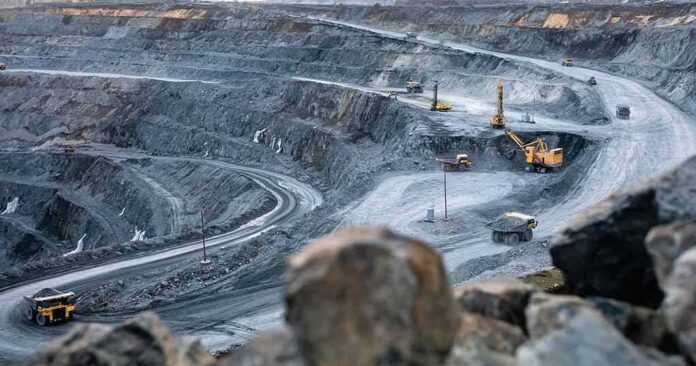
A massive lithium deposit buried beneath the Appalachian Mountains could free America from decades of foreign battery material dependence, but the real battle—turning geological treasure into usable supply—has only just begun.
Quick Take
- The U.S. Geological Survey confirmed 2.3 million metric tons of economically recoverable lithium in Appalachia—enough to replace 328 years of current U.S. imports.
- Southern Appalachian deposits (primarily the Carolinas) hold 1.43 million metric tons; northern regions (Maine, New Hampshire) contain 900,000 metric tons.
- The lithium could power 130 million electric vehicles or supply 1.6 million grid-scale batteries, directly supporting national electrification goals.
- Permitting, processing infrastructure, and workforce development remain critical hurdles before domestic production can meaningfully reduce reliance on foreign suppliers.
A Domestic Lithium Jackpot Emerges
On April 28, 2026, the U.S. Geological Survey released a groundbreaking assessment revealing 2.3 million metric tons of undiscovered, economically recoverable lithium locked within pegmatites—coarse-grained igneous rocks—across the Appalachian Mountains. This discovery, spanning Maine through New Hampshire and down through the Carolinas, represents a potential game-changer for American energy security and manufacturing independence. USGS Director Ned Mamula emphasized the find’s significance: “This research shows that the Appalachians contain enough lithium to help meet the nation’s growing needs—a major contribution to U.S. mineral security, at a time when global lithium demand is rising rapidly.”
Breaking Down the Regional Distribution
The resource divides into two distinct zones. The southern Appalachians, concentrated in North and South Carolina, contain approximately 1.43 million metric tons of lithium oxide—the lion’s share of the deposit. The northern Appalachians, with highest concentrations in Maine and New Hampshire, hold roughly 900,000 metric tons. These figures represent median (50% confidence) estimates, meaning actual reserves could be equally higher or lower. The northern region alone carries a 10% probability of containing up to 7.4 million metric tons, underscoring the upside potential of future exploration.
Powering America’s Clean Energy Future
To grasp the scale of this discovery, consider the possibilities: the lithium deposit contains enough material to power 130 million electric vehicles, supply 1.6 million grid-scale batteries capable of stabilizing electrical grids, or provide a 1,000-year supply of laptops at current global consumption rates. These projections arrive as global lithium production capacity is expected to double by 2029, driven by surging demand from technology companies and the EV sector. Currently, the United States imports nearly half its lithium, a vulnerability that leaves the nation exposed to supply chain disruptions and geopolitical leverage by foreign producers.
A Geological Gift from Ancient Mountain-Building
The lithium-rich pegmatites in the Appalachian belt formed over 250 million years ago during the creation of the supercontinent Pangea. Extreme heat and pressure from ancient mountain-building events melted crustal rocks into magmas enriched with lithium, which then crystallized into the coarse-grained pegmatites that persist today. This geological stability contrasts sharply with modern lithium sources like South American salt flats or Australian hard-rock mines, positioning Appalachia as a domestically controlled asset with centuries of potential supply.
The Road from Discovery to Production
While the USGS assessment provides a scientific foundation, significant hurdles remain before Appalachian lithium reaches batteries and power grids. The deposits are classified as “undiscovered,” meaning exploration drilling and feasibility studies lie ahead. Permitting processes at state and federal levels, environmental reviews, and the development of processing infrastructure represent formidable challenges. Mining operations in rural Appalachian communities will require workforce training and economic planning. Yet the potential payoff—reducing reliance on foreign suppliers and securing domestic control over a critical mineral—aligns with bipartisan recognition that American energy independence demands strategic investment in domestic resources.
Sources:
US hits jackpot, 2.3 million metric ton of lithium deposit discovered
Lithium in Eastern States Could Replace Imports for a Century or More
Appalachian lithium cache enough to power 130 million EVs, USGS …
Where Exactly Are the Newly Discovered Lithium Deposits?
USGS Appalachia Lithium Potential: Key Supply Risks