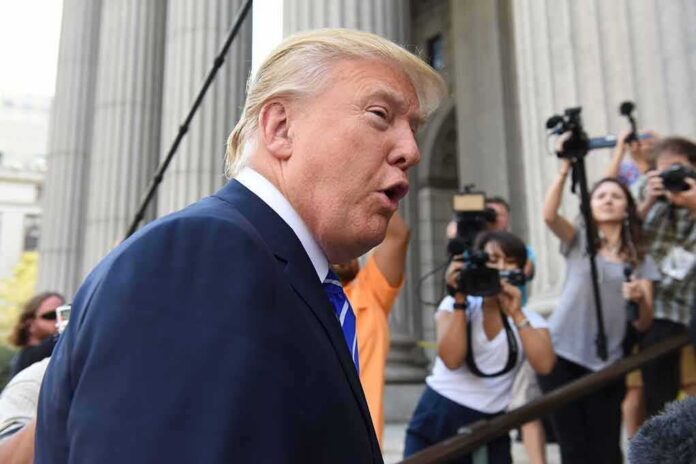
In a single week, the Supreme Court, a federal judge, and the Federal Reserve each blocked or defied key goals of President Trump.
Story Snapshot
- The Supreme Court rejected Trump’s bid to restrict mail-in voting ahead of the midterms.
- A federal judge barred adding Trump’s name to the Kennedy Center without an act of Congress.
- The Kennedy Center board then voted to close for renovations soon after the ruling.
- The Federal Reserve moved against Trump’s push on rates, adding policy tension.
Courts Reject Mail-Ballot Restrictions Before Midterms
The Supreme Court rejected President Trump’s attempt to restrict mail-in voting ahead of the midterm elections. The ruling preserved broader access to mail ballots that states already allowed. Trump criticized the Court within hours, saying it failed to “do the right thing” and was pressured by the left. The decision denied a core election goal for the White House. It also set the tone for a week where independent branches pushed back on presidential priorities.
Mail voting has been a recurring legal fight across several cycles. States control election rules, and federal courts often avoid late changes close to voting. This ruling fit that pattern. It kept systems stable for election officials who had already prepared. It also echoed earlier cases that treat absentee voting as a state-managed method, not a separate constitutional right, which limits sweeping federal claims in last-minute disputes.
Judge Blocks Trump Name on Kennedy Center, Citing Congress’s Role
United States District Judge Christopher Cooper blocked efforts to add “Donald J. Trump” to the Kennedy Center’s facade and public spaces. The opinion said the center is a national memorial created by Congress, and only Congress can rename it or add memorials. The judge wrote that board actions “buck” both a prior court order and a federal statute, and therefore could not proceed without congressional approval. The order repeated and strengthened a similar ruling issued months earlier.
Trump and his allies had linked a major renovation to recognition on the building. After the court ruling, the Kennedy Center board, chaired by Trump appointees, voted to close the venue for renovations. That vote came less than two hours after the judge’s decision, drawing attention to timing and process. Reporting noted that the sequence created a sharp contrast: the court halted a naming push, and the board advanced a costly closure plan anyway during live litigation over authority.
Federal Reserve Undercuts White House Rate Push
The Federal Reserve maintained its independence and opposed Trump’s long campaign for easier money. Coverage described the central bank’s action on rates as an implied rebuke to the White House agenda. Trump had spent months urging lower rates to boost growth and cut borrowing costs. The move instead signaled the Fed’s focus on inflation and financial stability over near-term political pressure, deepening a visible policy rift inside Washington.
The clash with the Federal Reserve added to a pattern that week: courts and independent bodies were not moving in step with the president. For many Americans, this looked like checks and balances at work, even if messy. For others, it confirmed fears that powerful institutions answer only to themselves. Both views tap a shared worry that elites make choices far from public input, while everyday costs, like mortgages and tickets to a reopened arts center, still hit household budgets.
Why This Cluster Matters Beyond the Headlines
The three setbacks carried different stakes but one theme. The Supreme Court kept voting rules steady before an election. The district court enforced Congress’s control over a national memorial. The central bank put inflation control ahead of political demands. None of these are minor. Together, they show that guardrails can still slow a president, even when his party runs Congress, and even when supporters expect quick, sweeping change.
BBC News reports: "Analysis: Trump escalates media fight after week of setbacks. President Donald Trump has infused his ongoing feud with the White House press with a new level of acrimony." See: https://t.co/OitOxp4t5l
— CIoJ (@CIoJournalist) September 19, 2026
For conservatives, the mail-vote loss and the Kennedy Center ruling may feel like more red tape and disrespect. For liberals, the week may look like overdue limits on personal branding and pressure campaigns. For most families, the bottom line is simpler: stable elections, clear rules for public institutions, and steady prices matter more than drama. The evidence from this week shows how those goals depend on institutions doing their jobs, even when it frustrates the White House.
Sources:
themirror.com, npr.org, theatlantic.com, reuters.com
© patriotsunited.org 2026. All rights reserved.