A newborn pulled from Venezuelan earthquake rubble has become a viral “miracle” story that says as much about broken institutions and media spin as it does about courage and luck.
Story Snapshot
- An 18-day-old baby was rescued alive from La Guaira earthquake rubble and reunited with the father, in a moment seen worldwide.[1][3]
- The baby was reportedly trapped for about 32 hours yet showed no clear injuries, raising hard questions about building safety and rescue speed.[3][4]
- Foreign and local teams are saving lives, but tens of thousands remain missing, exposing deep failures in disaster planning and governance.[10][11]
- The viral “miracle” highlights how emotional stories can mask systemic negligence that leaves ordinary families paying the price.[3][17]
A Viral “Miracle” Rescue in a City of Rubble
Video posted from La Guaira, a coastal city north of Caracas, shows rescuers lifting an infant from broken concrete and twisted metal as people cheer in the dark.[3] Social media users and several outlets report the baby was only 18 days old and had been buried in the remains of a collapsed building after the twin earthquakes.[3][4] The child is carried through the debris and handed to a crying father, a scene replayed online as proof that hope can survive even in total destruction.[1]
Reports say the baby was trapped for about 32 hours before rescuers reached the tiny pocket of space that kept the child alive.[3] A witness, Andreina Quintero, who shared the clip online, said the newborn appeared uninjured despite the long hours under rubble.[3] In a follow-up video, a hospital worker tells the recovering mother that her baby shows no obvious damage, and suggests the mother shielded the child with her own body or another object as the building came down.[3]
Mother’s Survival and the Wider Rescue Effort
About an hour to ninety minutes after teams freed the baby, crews managed to pull the child’s mother from the same collapsed building.[1][3] Later footage shows her in a hospital bed, exhausted but alive, as staff explain that her baby seems physically fine.[3] International and local media have framed the family’s survival as one of the most uplifting stories to come out of the disaster, a rare complete rescue in a week dominated by images of mass graves, crushed homes, and families searching for missing relatives with their bare hands.[1][6]
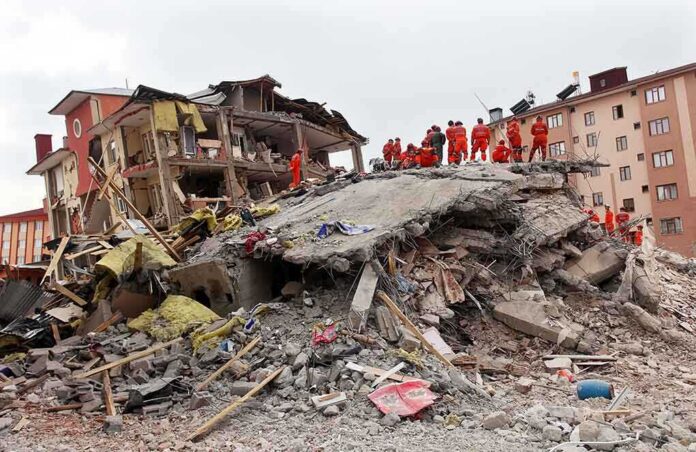
At the same time, foreign and Venezuelan teams are racing across northern coastal cities to find other survivors. United States urban search and rescue specialists from Fairfax County, Virginia, working with local firefighters, filmed a separate rescue of a nine‑month‑old baby and the child’s mother “days” after the earthquakes.[5] Both had only minor injuries, but the context was grim: more than 1,400 people dead, thousands injured, and hundreds of buildings weakened by years of poor construction and weak enforcement of safety codes.[5][17]
Numbers Behind the Miracle: Survival Windows and Missing People
Scientists who study earthquake medicine note that most survivors are pulled out in the first one to two days; one review of past quakes found that 85–95 percent of people rescued alive were found within 24 hours.[19] Still, survival at 32 hours is well within the known window, especially for victims who land in small air pockets instead of being crushed.[19][23] That is why this baby’s rescue, while dramatic, fits within what experts consider a possible, if unlikely, outcome rather than a supernatural event.
💔 A newborn baby has been miraculously rescued from the rubble 32 hours after twin earthquakes struck Venezuela’s La Guaira.
Rescue teams are continuing search operations as the devastating disaster has reportedly claimed nearly 1,000 live#Venezuela #Earthquake #rescuehospital pic.twitter.com/86ZiR7dMHT
— Techup Pakistan (@Cloth1S2229) June 28, 2026
Yet the wider numbers show why many Venezuelans feel abandoned by those in power. One report described 33 people pulled alive from rubble over a weekend, but nearly 50,000 still missing as the “survival window” quickly closed.[10] Another account said more than 900 dead, over 3,300 injured, and 243 people rescued as foreign teams tried to help.[11] Families had listed tens of thousands missing, but official figures shifted day by day, underlining a pattern citizens in many countries know too well: when disaster hits, the counting is chaotic and those in charge rarely give straight answers.[10][11]
Why These Stories Hit a Nerve for Americans
Older buildings and weak rules left Venezuelan neighborhoods dangerously exposed to strong shaking, making collapse far more likely.[17] In that sense, the baby’s survival is not only a story of bravery by local crews and foreign teams; it is also a sign of how much was left undone long before the ground moved. For Americans watching from afar, the pattern feels familiar: leaders promise safety, budgets get spent, but when crisis finally arrives, ordinary families discover that basic protections were never really in place.[17]
Emotional rescue clips now spread at high speed, pushed by social platforms and secondary outlets hungry for hopeful content.[1][3] These scenes matter, and they honor real courage. But they can also distract from deeper questions that both conservatives and liberals in the United States increasingly ask: Who allowed unsafe buildings to stand? Who failed to prepare hospitals and local search teams? Why do rescue crews rely on foreign aid instead of strong local systems built years earlier? Those questions echo far beyond Venezuela.[22][27]
Miracles, Mistrust, and the “Deep State” Debate
In many disasters, “miracle survivor” stories appear before official records, sometimes with conflicting details about timing or identity.[18][19] The Venezuela baby clips fit that pattern. Different posts mention 32 or 48 hours under rubble, and not every outlet clearly names the rescuing team, the family, or the hospital.[2][3] Yet no serious source has produced evidence that the rescue was staged, and trusted organizations confirm that babies and children are being pulled alive from collapsed buildings in La Guaira and other cities.[5][6]
For Americans who distrust what they call the “deep state,” these mixed signals feed a familiar worry: governments and major media will highlight feel‑good moments while hiding incompetence or corruption. The hard truth in Venezuela is that both things are happening at once. Brave crews and neighbors are saving lives in ruined streets. At the same time, poor planning, weak building rules, and unclear reporting have turned a natural disaster into an even larger human catastrophe, leaving tens of thousands at risk while the world clicks on a single viral baby rescue.[10][17][26]
Sources:
[1] YouTube – Baby rescued ‘against all odds’ from earthquake rubble in Venezuela
[2] Web – 18-day-old baby rescued from rubble of Venezuela quake
[3] Web – 18-Day-Old Baby Defies Death, Rescued Alive After 48 … – Instagram
[4] Web – An 18-day-old baby was rescued in La Guaira, Venezuela after she was …
[5] Web – An 18-day-old baby was rescued from the rubble of a building … – …
[6] Web – An 18-day-old baby was rescued from the rubble of a building … – …
[10] Web – Miracle in Ruins: 18-Day-Old Baby Emerges Alive From Venezuela …
[11] Web – Survival window desperately fading with nearly 50000 missing
[17] Web – Satellite images revealed substantial damage to several areas of the …
[18] Web – Older buildings and substandard construction left Venezuela …
[19] YouTube – Top 5 Miracle Rescues Offer Hope After Deadly Earthquakes
[22] Web – Understanding post-disaster population recovery patterns – PMC – NIH
[23] Web – Resilience Against Earthquakes: Some Practical Suggestions for …
[26] Web – Advances in earthquake and cascading disasters – ScienceDirect.com
[27] Web – While stories of miraculous rescues briefly buoyed spirits, the grim …
© patriotsunited.org 2026. All rights reserved.