
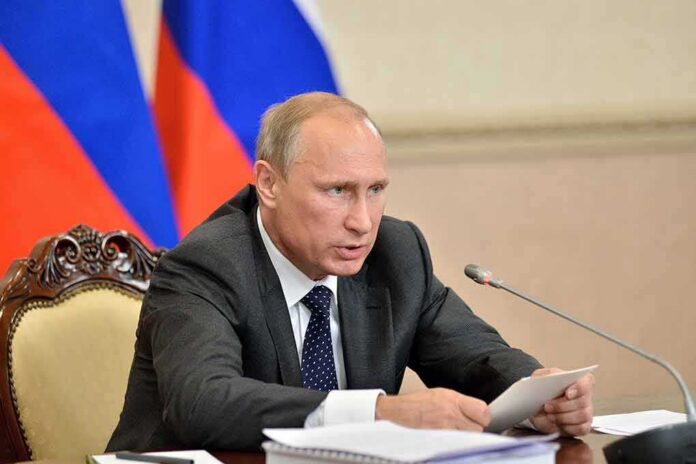
Putin personally hosted President Trump’s envoys Steve Witkoff and Jared Kushner in the Kremlin for marathon talks on a possible Ukraine peace, yet no compromise was reached.
Story Snapshot
- The Kremlin confirmed a high-level meeting with Witkoff and Kushner focused on ending the war.
- Talks reportedly lasted hours and produced no immediate breakthrough, Russian aides said.
- The White House said the meeting was “productive” and envoys later briefed President Trump.
- Moscow has tied any deal to wartime “realities,” including territorial control, complicating progress.
Kremlin Confirms Direct Channel and Long Session
The Kremlin published a formal readout naming Vladimir Putin, presidential aide Yury Ushakov, and envoy Kirill Dmitriev as participants, along with Steve Witkoff and Jared Kushner. The public record establishes a direct, high-level channel. Reuters reporting described the session as lasting several hours and focused on routes to end the war, underscoring the gravity of the talks. This level of access is rare. It signals both sides see value in testing options, even if the path is narrow and politically risky.
Russian officials said the talks did not produce a compromise. Ushakov told reporters that “compromises have not yet been discovered,” making clear that core disputes remain. That message aligns with past patterns, where Moscow casts discussions as constructive but anchors outcomes to battlefield “facts.” Meetings can be real and serious, and still stall. That is common when territory, sanctions, and security guarantees all collide at once, and each side fears giving ground without clear returns.
U.S. Messaging: Optimism About Process, Not Terms
The White House emphasized that the discussion was substantive. Officials said Witkoff and Kushner briefed President Trump and updated Ukrainian counterparts after the Kremlin session. Public comments from Washington have focused on progress in refining a draft framework, avoiding detailed terms while keeping momentum alive. That stance fits back-channel diplomacy. It keeps options open and lowers the political cost of trial balloons that may not survive contact with the other side or domestic critics.
Public readouts from Washington were limited right after the meeting. U.S. outlets noted the absence of an immediate, detailed summary, which also tracks with sensitive negotiations. When many actors hold veto power, early leaks can kill fragile ideas. Officials often share only process notes until they have something both sides can defend. That approach can frustrate voters who want clarity, but secrecy can sometimes be the price of a real shot at de-escalation without grandstanding.
What Likely Blocks a Deal Right Now
Kremlin statements have connected any future talks to the 2022 Istanbul draft and to “realities on the ground,” a phrase linked to Russia’s current territorial claims. That linkage is the heart of the impasse. Ukraine rejects ceding land seized by force, while Russia seeks recognition of gains. Each step toward a ceasefire layout touches sanctions relief, security lines, and future force limits. Those trade-offs are hard to sell at home, especially after years of loss, anger, and distrust.
Americans across the aisle see familiar red flags. People worry about secret deals cut by elites, photo ops without results, and leaders who protect their jobs before the national interest. This meeting fits that tension. A high-profile sit-down promised movement but delivered no terms. The upside is that a channel exists and both sides stayed in the room for hours. The downside is that big issues remain stuck, and the public still lacks firm answers on what any peace would cost.
Why This Matters for U.S. Voters
Energy prices, defense spending, and aid debates all hinge on the war’s length and endgame. A deal that freezes lines could lower some risks but might lock in future conflict. A broader settlement would need credible security guarantees and clear enforcement. That is expensive, complex, and slow. Today’s facts show contact and effort, not closure. Until core terms move, families will keep feeling the squeeze at the pump and in the budget, while allies watch for signals from Washington and Moscow.
The optics of that Kremlin meeting are exactly why the next leg matters so much. Witkoff and Kushner have left Moscow, landed in Rzeszów, and are likely heading to Kyiv by train — where they’ll have to explain what Putin actually offered after three hours of talks.… pic.twitter.com/eX5sxP1gME
— UNN Media (@unn_inc) September 6, 2026
The channel is open, the session was long, and both sides framed it as serious. Yet Russia’s conditions and Ukraine’s red lines still clash. The result is a careful dance: cautious optimism from Washington, guarded realism from Moscow, and a public that wants straight answers. Progress will look like small, verifiable steps on security and territory, not grand claims. If those steps begin, the next readout will not talk about “productive talks.” It will name what actually changed on the ground.
Sources:
theamericanconservative.com, reuters.com, thehill.com, themoscowtimes.com, pbs.org
© patriotsunited.org 2026. All rights reserved.