The Trump administration’s aggressive stance against Venezuela’s Maduro regime has sparked a global debate on the efficacy and legality of military interventions.
Story Snapshot
- Shift from diplomacy to military action against Venezuela under Trump’s leadership.
- Deployment of a U.S. naval fleet near Venezuelan waters as a show of force.
- Sanctions targeting Venezuelan officials and alleged drug trafficking networks.
- Mixed international reactions with allies showing support and others condemning the move.
Military Strategy and Implementation
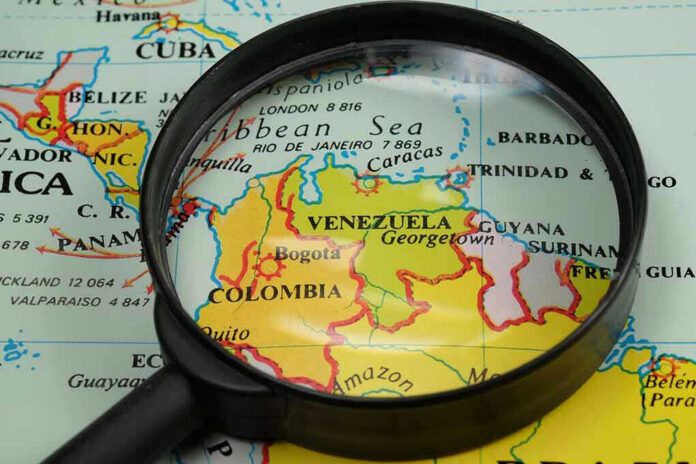
The Trump administration marked a significant departure from previous U.S. strategies by authorizing military force against Venezuelan President Nicolás Maduro. This includes deploying a naval fleet with over 4,500 sailors and Marines toward Venezuelan waters and conducting airstrikes in the eastern Pacific. The arrival of the USS Gerald R. Ford in the Caribbean Sea demonstrates the U.S.’s commitment to escalating pressure. This aggressive military posturing aims to dismantle alleged drug trafficking operations linked to the Maduro regime.
While military operations intensify, Trump has ordered an end to negotiations previously led by envoy Richard Grenell, citing Maduro’s alleged ties to drug trafficking. This shift from diplomacy to military action raises questions about the long-term goals and potential repercussions of U.S. involvement in Venezuela.
Sanctions and Diplomatic Fallout
Alongside military measures, the U.S. has expanded sanctions against the Maduro regime. These include targeting three of Maduro’s family members, six shipping companies, and six ships involved in supporting Venezuela’s “narco-terrorist regime.” The Venezuelan oil tanker seized off the country’s coast further exemplifies the U.S.’s commitment to economic pressure. However, these actions have not been without controversy. Mexico has criticized the military operations as violations of international law, emphasizing the complex legal and diplomatic challenges the U.S. faces.
The broader international community remains divided. While the European Union, UK, and Canada have aligned with U.S. sanctions, Mexico and other Latin American countries have voiced concerns about the legitimacy of military interventions without U.N. authorization.
Political and Regional Implications
Trump’s actions have provoked a strong response from within the U.S. Congress, with bipartisan senators threatening to block military action without congressional authorization. This raises constitutional concerns about executive power and the need for legislative oversight in matters of military engagement. The potential for direct military confrontation in the Caribbean region poses risks of escalation and regional destabilization, affecting neighboring countries like Colombia.
Additionally, the sanctions on Colombian President Gustavo Petro and his family complicate U.S.-Colombia relations, potentially hindering regional cooperation. The implications of these strained diplomatic ties could have far-reaching effects on the stability and economic health of the region.
Long-Term Consequences and Analysis
The Trump administration’s aggressive stance against Maduro has not yielded immediate regime change, as the foundation of Maduro’s government remains intact. This raises questions about the effectiveness of military pressure as a tool for political transformation. Mexico’s criticism and the potential for international law conflicts further complicate the narrative, posing challenges to the legitimacy of U.S. actions.
The mixed reactions from the international community, combined with the threat of increased military actions, highlight the precarious balance between assertive policy measures and diplomatic engagement. As the situation unfolds, the U.S. must navigate these complexities to achieve its strategic objectives without undermining its standing on the global stage.
Sources:
Wikipedia: United States Sanctions