The United States just fired the opening salvo in the latest global scramble for critical minerals, daring to bypass international “consensus” and take a direct shot at China’s grip on the world’s resource supply—and if you think the Beltway crowd will grasp the stakes, think again.
At a Glance
- The U.S. issued an executive order to accelerate deep-sea mining, sidestepping UN oversight to counter China’s minerals dominance.
- China continues to leverage its control over the International Seabed Authority and advances deep-sea mining tech.
- Environmental concerns clash with national security and economic imperatives as the U.S. and China race to exploit the Pacific’s mineral-rich seabed.
- The U.S. decision signals a broader challenge to international regulatory norms and a new phase of geopolitical tension.
The U.S. Breaks the Mold: Executive Action Against China’s Critical Minerals Monopoly
On April 24, 2025, President Trump signed an executive order that’s left the globalist clique in a panic, authorizing U.S. companies to ramp up deep-sea mining for nickel, cobalt, copper, and rare earths—without waiting for a green light from the United Nations’ International Seabed Authority. That’s right: while the rest of the world dithers in endless committee meetings and “consensus-building,” the United States is finally making a play to break China’s stranglehold on the minerals that power everything from electric vehicles to advanced weapons systems. For decades, China has played the international system like a fiddle, dominating supply chains and leveraging its ISA influence to keep everyone else perpetually behind. Now, with this executive order, the U.S. is signaling it’s done playing by rules written in Beijing and rubber-stamped in Turtle Bay.
The move puts the United States on a collision course with both the ISA—an organization it never signed up for—and the environmental lobby, which is already clutching its pearls over imagined ecological Armageddons. But the stakes are clear: whoever controls these seabed minerals controls the future of energy, electronics, and security. If the U.S. wants to avoid being at China’s mercy every time a new battery factory breaks ground or a defense contractor needs critical components, deep-sea mining is no longer an option. It’s a necessity.
China’s Deep-Sea Ambitions and the Global Power Play
China is not just sitting back and watching. The country has spent years embedding itself in the ISA bureaucracy and pouring billions into state-backed companies ready to vacuum up the Pacific’s mineral wealth. In July 2025, Beijing secured approval to test its next-generation deep-sea mining vehicles in the Clarion-Clipperton Zone—a stretch of the Pacific so mineral-rich it makes Silicon Valley look like a lemonade stand by comparison. Every ton of cobalt or nickel hauled from these depths is another brick in China’s wall of global industrial dominance.
American officials and industry experts know the risk: relying on China for critical minerals is like handing your house keys to a burglar and hoping for the best. Supporters of the new U.S. strategy point to the $20 trillion opportunity waiting beneath the waves, arguing that the only thing more dangerous than environmental uncertainty is strategic paralysis. Critics, meanwhile, warn of environmental damage and ballooning costs, conveniently forgetting that land-based mining—much of it in China—has already devastated entire regions with little international outcry or regulatory control.
International Norms Upended: ISA, Regulation, and the Coming Resource Storm
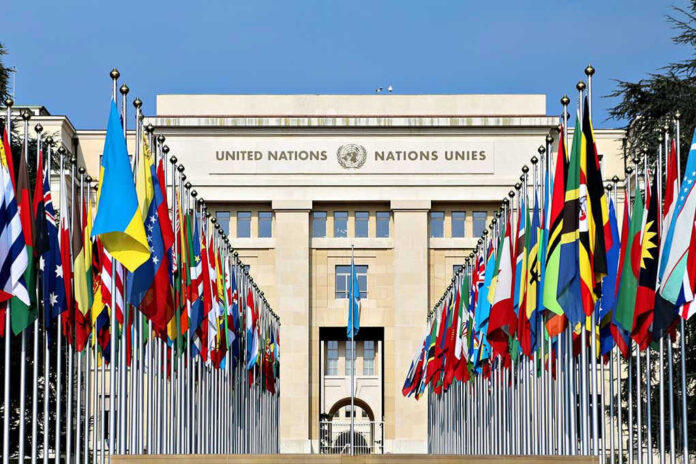
The International Seabed Authority was supposed to be the world’s traffic cop for seabed mining, but the U.S. never ratified the United Nations Convention on the Law of the Sea, and frankly, it’s a good thing. Why should America let a bunch of bureaucrats in Kingston, Jamaica, decide who gets to mine resources critical to our national survival? The U.S. move to bypass the ISA isn’t just about minerals—it’s about reclaiming sovereignty over our future and refusing to let transnational organizations dictate terms that always seem to benefit Beijing.
Other countries are watching. If the U.S. succeeds, expect a stampede of nations eager to ditch the ISA’s red tape and chase their own interests. Of course, the environmental lobby is already warning of a “race to the bottom,” as if the alternative—ceding total control to China—wouldn’t be far worse. The reality is that the world is entering a new era of resource competition, and the old rules no longer apply. America can lead, or it can whine about process while adversaries build the future.
Sources:
US Accelerates Deep-Sea Mining Bid to Counter China’s Critical Minerals Dominance
Trump’s Deep-Sea Mining Executive Order: The Race for Critical Minerals Enters Uncharted Waters
Can US Seize China’s Mineral Throne With Deep-Sea Mining? Here’s What Experts Say
Diving into the Critical Minerals Era: Deep-Sea Mining is Upon Us