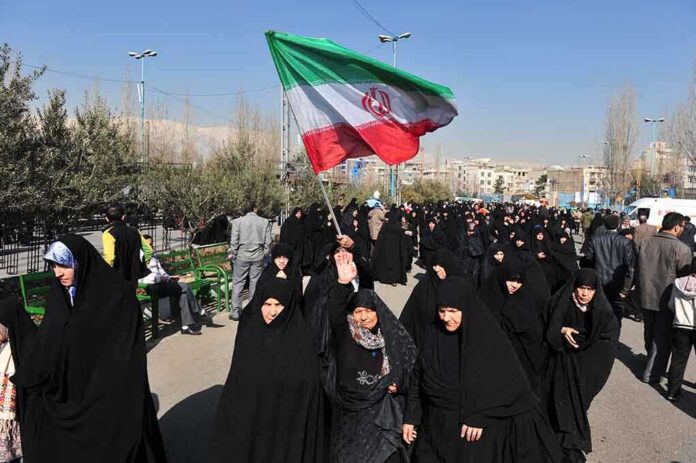
A viral claim that Iranian women were “slut-shamed as hookers” for celebrating freedom collapses under scrutiny—because credible reporting points to a much bigger story: a nationwide uprising met with deadly regime force.
Quick Take
- No credible reporting supports the specific “antisemitic Karen”/“hookers” shaming narrative described in the claim.
- Verified coverage instead centers on the 2025–2026 Iranian protests, including women publicly defying the Islamic Republic’s social controls.
- Protests began in Tehran’s Grand Bazaar in late December 2025 and spread nationwide, with strikes and university participation reported.
- Death-toll claims vary widely across sources, highlighting the fog created by repression, blackouts, and propaganda.
- For Americans, the episode is a reminder of what state power looks like when “morality” policing and political control override individual liberty.
The “hookers” narrative isn’t backed by credible sourcing
Reporting and research summaries tied to the viral framing do not document a specific, verifiable episode where Iranian women “celebrating freedom” were widely branded as “hookers” by an “antisemitic Karen” figure or movement. Instead, the sourced material points to broader events: mass protests, state repression, and symbolic acts of defiance by women. When a headline-grade allegation cannot be matched to credible coverage, the responsible conclusion is that the claim is unverified or exaggerated.
Iranian Women Celebrating FREEDOM Take Nasty, 'Antisemitic Karen' Slut-Shaming Them As HOOKERS Apart https://t.co/4BbdzLhDXZ 😠😠👎👎👎👎👎
— Jouel (@Jouel50779032) March 3, 2026
The gap matters because sensational labels can distract from what’s actually provable and consequential. The available documentation describes women participating in defiant protest imagery—such as videos interpreted as rejecting state control over women’s freedoms—within a nationwide protest wave. None of the supplied research corroborates the specific slut-shaming storyline as a defining event. Limited, hard-to-verify viral posts may exist, but they are not a substitute for documented facts.
What’s actually happening: protests, strikes, and a regime fighting for control
Coverage of the 2025–2026 Iranian protests describes a major wave of unrest beginning December 28, 2025, with early sparks linked to economic grievances in Tehran’s Grand Bazaar and rapidly expanding into political demands. The research indicates the protests spread across multiple provinces and included broad participation, from students to merchants. University involvement and strike activity are repeatedly cited as signs of nationwide reach rather than a one-city disturbance.
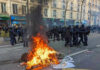
The Iranian state’s response, as described in the provided sources, includes violent crackdowns, arrests, and coercive tactics such as forced confessions, along with information controls like internet restrictions. Estimates of casualties vary sharply by source, which is common in closed systems where the regime controls internal messaging. Even with uncertainty around exact numbers, the overall pattern reported is consistent: intense repression designed to deter public dissent and preserve the ruling structure.
Women’s defiance is real—and it’s aimed at the theocracy, not Western culture wars
The research highlights women’s visible role in symbolic protest acts that reject the Islamic Republic’s social controls, including compulsory hijab enforcement and broader “morality” policing. That context traces back through earlier unrest, including the 2022 “Woman, Life, Freedom” movement following Mahsa Amini’s death in custody. The 2025–2026 unrest is presented as a continuation of deep grievances—economic hardship, lack of liberty, and state violence—rather than a single viral moment.
For American readers, the clearest through-line is the nature of centralized power. Iran’s model uses state force to police speech, behavior, and family life under an ideological banner, then crushes dissent when citizens resist. Conservatives who distrust government overreach don’t have to agree with every protest slogan to recognize the principle at stake: when a state claims authority over your body, your conscience, and your words, it rarely stops there.
Competing narratives, propaganda, and why verification matters
The sources emphasize uncertainty around key metrics such as death tolls and the scale of specific incidents, which reflects the realities of repression, censorship, and competing information channels. Analysts also describe protest demands as sometimes fragmented, which can limit revolutionary momentum even amid widespread anger. Those realities create an opening for viral narratives—on any side—to fill gaps with emotionally loaded claims that may be impossible to confirm.
The more reliable takeaway is to separate what’s evidenced from what’s shareable. The supplied research supports a serious, ongoing national crisis in Iran with major human rights implications and mass participation, including women’s public defiance. It does not support the specific “antisemitic Karen” slut-shaming storyline as a documented, central event. If Americans want to understand the moment, focus on the verified pattern: economic stress, regime brutality, and citizens risking everything for basic freedoms.
How DARE Iranian women show their bodies after spending decades being suppressed by Islamic terror?
Iranian Women Celebrating FREEDOM Take Nasty, 'Antisemitic Karen' Slut-Shaming Them As HOOKERS Aparthttps://t.co/Vw80BpRnmV pic.twitter.com/pDxi5NuZHl
— Twitchy Team (@TwitchyTeam) March 3, 2026
Sources:
Iran’s 2025–26 protests: resilience and political containment
2026 Iranian diaspora protests
What happened at the protests in Iran?
Why the latest Iran protests started in the Tehran bazaar
Uprising in Iran: a comprehensive Q&A on what needs to be told