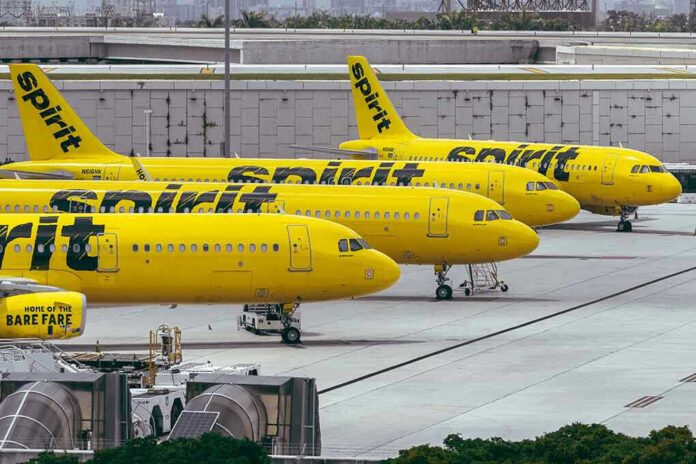
Spirit Airlines, fresh from escaping bankruptcy, is set to furlough 270 pilots and demote 140 captains, raising questions about the airline’s future and the wider implications for the industry at large.
At a Glance
- Spirit Airlines plans to furlough 270 pilots and demote 140 captains by fall 2025.
- The airline recently emerged from Chapter 11 bankruptcy, signaling ongoing operational struggles.
- Spirit’s financial woes include persistent losses, failed mergers, and increased operational costs.
- These developments may lead to further industry consolidation and workforce challenges.
Spirit’s Ongoing Turbulence
Spirit Airlines, a company once celebrated for shaking up the airline industry with its ultra-low-cost model, is now navigating through intense turbulence. Despite having just exited Chapter 11 bankruptcy in March 2025, the airline is once again making headlines, this time for its decision to furlough 270 pilots and demote 140 captains by fall 2025. These moves come in the wake of financial struggles that have plagued Spirit since 2019, culminating in over a billion dollars in losses by the end of 2024.
The decision to cut down its workforce so soon after bankruptcy raises eyebrows. The airline industry, still reeling from the pandemic’s impact, has seen a fair share of bankruptcies, but Spirit’s case is particularly concerning. Not since American Airlines’ bankruptcy over a decade ago has a major U.S. airline found itself in such dire straits. The implications of Spirit’s actions are far-reaching, affecting not only its employees but also its customers and the broader industry.
Impact on Pilots and Labor Relations
The pilots facing furlough and demotion are at the center of this storm. For these individuals and their families, the financial and emotional toll is significant. The demotions from captain to first officer positions not only translate to reduced income but also affect career trajectories and morale. Unions representing these pilots have expressed concern, pointing to the potential long-term damage such actions might inflict on labor relations and operational reliability.
With the airline industry already facing a pilot shortage, Spirit’s decision could exacerbate the issue. The loss of skilled pilots might lead to operational disruptions, affecting service quality and customer satisfaction. In an industry where reliability is paramount, Spirit’s financial woes might trickle down to customers through delayed or canceled flights, further tarnishing the airline’s reputation.
Financial Struggles and Strategic Missteps
Spirit’s financial troubles are not new. The airline’s aggressive expansion in the 2010s left it vulnerable to market shifts. High operational costs, a failed merger with JetBlue Airways, and a drop in aircraft utilization all contributed to its precarious position. Exiting bankruptcy was supposed to be a new beginning, but the latest workforce cuts suggest persistent operational challenges.
Industry analysts point out that Spirit’s reliance on high aircraft utilization and ancillary fees made it particularly vulnerable to recent market disruptions. As competitors like Frontier Airlines make acquisition overtures, questions arise about Spirit’s ability to remain independent. The airline must now focus on restoring profitability and stabilizing operations amidst intense competition in the ultra-low-cost carrier segment.
Broader Industry Implications
The ramifications of Spirit’s actions extend beyond its immediate workforce. The airline’s struggles highlight broader issues within the ultra-low-cost carrier model, prompting other airlines to reconsider aggressive expansion and debt strategies. As Spirit grapples with its financial realities, the industry may witness further consolidation, impacting market dynamics and consumer choices.
Spirit’s situation also underscores the importance of financial resilience and operational efficiency in the post-pandemic era. Airlines must balance cost-cutting measures with the need to maintain a skilled workforce to avoid service disruptions and protect their brand reputation. The coming months will reveal whether Spirit can navigate these challenges or if it becomes a cautionary tale for others in the industry.
Sources:
Spirit Airlines Investor Relations