A newly revealed CENTCOM letter tells 50,000 deployed U.S. troops the time for “deterrence” is over—America is now in “active combat” against Iran.
Story Snapshot
- Adm. Brad Cooper II’s message to troops frames Operation Epic Fury as a shift from posture to action, stressing “relentless lethality” and discipline.
- The letter surfaced publicly after Washington Post reporter Dan Lamothe shared it on X, and it quickly spread across outlets.
- Secretary of War Pete Hegseth issued a parallel statement emphasizing a “warrior” mindset and sustained focus despite political “noise.”
- Background reporting points to failed 2025 diplomacy over Iran’s nuclear program and a major U.S. force buildup in the region.
- Regional retaliation and air-travel disruption underscore how quickly the conflict can widen beyond military targets.
Cooper’s Message Signals a Clear Shift to Combat Operations
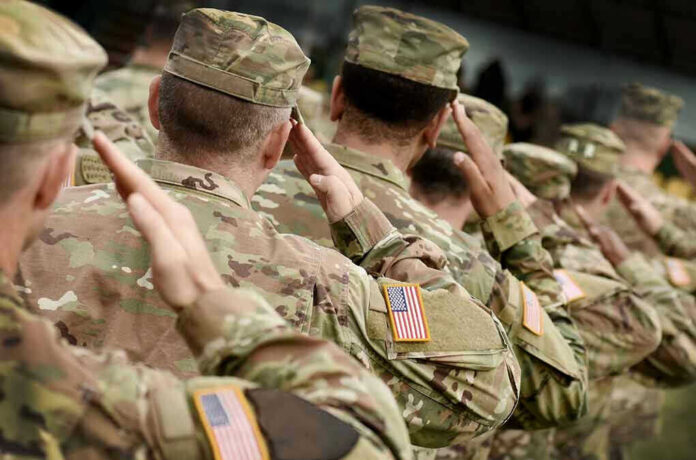
Adm. Brad Cooper II, commander of U.S. Central Command, authored a letter addressed to roughly 50,000 U.S. troops involved in Operation Epic Fury against Iran. The core theme is transition: the force is no longer simply “deterring” but moving into active combat. Cooper’s language emphasizes being “relentlessly lethal” while staying professional, disciplined, and committed to taking care of teammates. The letter frames U.S. troops as both shield and sword for the free world.
Letter reportedly sent by Adm. Brad Cooper, Commander of U.S. Central Command (CENTCOM), to American servicemembers across the Middle East on February 28, 2026, before strikes against Iran as part of Operation Epic Fury:
To America's remarkable sons and daughters deployed… pic.twitter.com/i9TdFnFYrK
— Raj Yadav (@RajYadav873) March 3, 2026
Dan Lamothe, a Washington Post correspondent, shared the letter publicly on March 2, 2026, creating an unusual moment where internal military motivation and messaging became a widely debated political and cultural flashpoint. Partisan reactions predictably followed, but the letter’s operational significance is the part that matters for families watching deployments: it communicates intent, tempo, and mindset for a force already forward-positioned across major Middle East bases. The research does not provide casualty figures or battle damage assessments.
Hegseth Reinforces the Chain-of-Command Narrative: Focus, Resolve, and “Terms”
Secretary of War Pete Hegseth circulated a similar message that aligns closely with Cooper’s framing. Hegseth’s emphasis, as summarized in the research, is on identity—“We are Warriors”—and on finishing the mission on the president’s terms. That coordination matters because it shows a unified public posture from the top of the chain of command: the White House sets strategic direction, the Pentagon reinforces readiness and resolve, and CENTCOM delivers the operational execution message to troops.
The research also highlights a political dispute that typically follows major military action: questions about authority, precedent, and congressional involvement. Sen. Tom Cotton is cited defending the legality by pointing to a long history of U.S. military operations conducted without formal congressional declarations of war. That reality may be historically common, but it remains a constitutional pressure point—especially for conservatives who want strong national defense without surrendering Congress’s core war powers or normalizing open-ended conflicts.
Why the Middle East Force Posture Was Already at a 2003-Scale Level
Reporting summarized in the research traces the present moment back to 2025 negotiations over Iran’s nuclear program and the IAEA’s concerns about enriched uranium levels. That diplomatic track coincided with a U.S. military buildup to roughly 50,000 troops in the region and what is described as the largest U.S. air presence there since the 2003 Iraq invasion. The negotiations reportedly included U.S. demands that Iran dismantle key nuclear sites, which did not produce a lasting agreement.
By late February 2026, the research describes the launch of U.S. Operation Epic Fury alongside Israel’s operation, with strikes targeting Tehran, IRGC-related facilities, and nuclear and missile sites. Iran’s reported retaliation—described as attacks reaching U.S. bases and civilian areas in multiple Gulf states—illustrates the central risk: once state-on-state strikes begin, escalation does not stay neatly confined to military installations. The research notes disruptions such as airport and airspace impacts but does not quantify overall damage.
What This Means for Americans Watching the Constitution and the Home Front
Cooper’s letter focuses on combat performance, but the bigger takeaway for U.S. voters is governance under pressure. A major overseas operation puts stress on budgets, readiness, and civil-military trust—especially after years when many Americans felt leadership prioritized ideological projects at home over national security basics. The available research indicates the administration’s stated objective is neutralizing nuclear and missile threats, but it remains unclear how “success” will be measured or how long active combat will last.
Uncertainty is not the same as failure, but it should shape expectations. The research does not provide confirmed data on casualty totals, leadership outcomes inside Iran, or a detailed timeline for de-escalation. What it does show is a government-wide messaging push—Cooper to the force, Hegseth reinforcing, and Trump presenting the operation as a decisive response. For a conservative audience, the constitutional questions, mission clarity, and avoidance of an endless commitment will be the key tests to watch next.
Sources:
CENTCOM Commander Invokes the Warrior Ethos With Letter to 50,000 U.S. Troops Involved in Iran Ops
2025–2026 Iran–United States negotiations
Dawn Dispatch: March 3rd, 2026