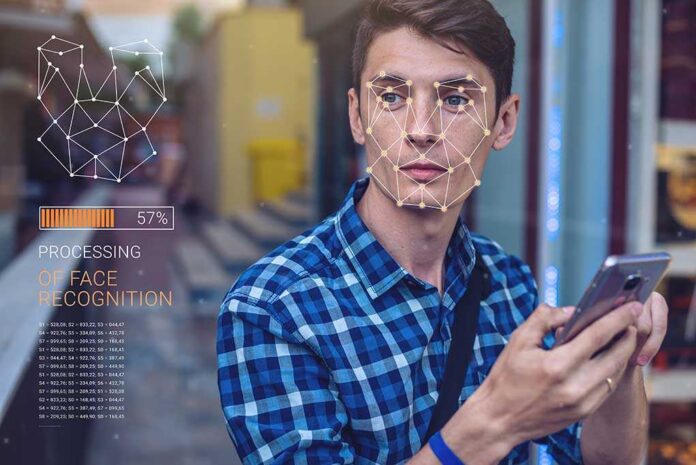
A private tech network that scans your eyes is racing to become the default “human check” for everyday life—from dating to business logins—raising new questions about who controls digital identity.
Quick Take
- Sam Altman’s World (via Tools for Humanity) is expanding its World ID system beyond crypto into mainstream services like Tinder, Zoom, DocuSign, and ticketing.
- World ID relies on an “Orb” device that scans irises to create a cryptographic proof of personhood, alongside lower-tier verification options like selfies and government IDs.
- The project says biometrics are processed locally and paired with privacy tools like zero-knowledge proofs, but regulators in multiple countries have still scrutinized biometric collection.
- World is open-sourcing parts of its protocol and pushing “AgentKit” to let verified humans delegate actions to AI agents—adding a new layer to online trust and accountability.
World ID’s Big Push: From Niche Tech to Everyday Gatekeeper
Tools for Humanity announced a major expansion of Sam Altman’s World project at an event in San Francisco, describing World ID as a scalable way to separate real humans from bots and deepfakes. The rollout targets places where fraud has become routine: dating apps, ticketing, workplace identity checks, and e-signatures. Partner names tied to the expansion include Tinder, Zoom, DocuSign, and Concert Kit, signaling an effort to embed verification across consumer and business life.
World’s pitch is simple: as AI-generated impersonation improves, the internet needs a stronger “prove you’re real” layer than passwords or CAPTCHAs. In practice, that means “verify once, use everywhere,” rather than repeating identity checks in every app. For many Americans—already tired of account takeovers, fake profiles, and scam calls—this sounds like overdue modernization. The catch is that an identity layer powerful enough to stop fraud can also become a choke point.
How the Orb and Tiered Verification Are Supposed to Work
World ID’s distinguishing feature is the Orb, a dedicated device that scans a person’s iris and generates an irreversible cryptographic representation—designed to prove uniqueness without storing raw biometric data on servers. The project also describes multiple verification tiers, allowing organizations to choose different levels of certainty depending on risk. Reporting around the rollout highlights options ranging from basic selfie-style checks to government ID (including NFC-based reads) and the Orb for higher assurance.
The privacy argument is central to World’s messaging. World promotes techniques such as local processing and zero-knowledge proofs, aiming to confirm “this is a real, unique person” while revealing as little as possible about who that person is. If those guarantees hold under independent scrutiny, the approach could offer a middle ground between today’s surveillance-heavy ad-tech ecosystem and the rising need for strong anti-fraud tools. Still, the underlying reality remains: biometrics are permanent, and mistakes are hard to undo.
Why Conservatives and Liberals Both Distrust the Next Identity System
Biometric verification collides with a bipartisan skepticism that Washington and major institutions no longer serve ordinary citizens. Conservatives worry about centralized control being weaponized—especially if identity becomes a prerequisite for speech, financial access, or employment in online marketplaces. Many liberals share a different fear: discrimination or unequal access if verification becomes mandatory in ways that disadvantage certain communities. World’s plan tries to avoid direct identification, but the scale of adoption matters as much as the technology.
Regulatory attention is also part of the story. Reporting referenced investigations and restrictions in at least 10 countries tied to biometric privacy concerns, a sign that governments see this category as high-risk even when companies promise safeguards. For Americans who already feel the “deep state” operates through public-private partnerships, the optics are complicated: a private company building an identity layer for core services, while regulators argue over limits. The underlying policy question is whether citizens get meaningful choice.
Business Integrations, Open Source, and the Rise of “Verified” AI Agents
World is also moving quickly to make integration easy. The project has discussed open-sourcing parts of the World ID protocol and launching a standalone app for credential management, which can speed adoption across platforms and developers. That matters because identity systems tend to become sticky: once employers, retailers, and popular apps standardize around one method, consumers follow. Convenience can be a feature, but it can also narrow competition if a single verification brand becomes the default.
The newer frontier is “AgentKit,” a tool meant to let verified humans delegate actions to AI agents while preserving a proof that a real person stands behind the agent’s authority. Reports cited rapid registration of AI agents after launch, alongside a broader user base in the millions. This could reduce anonymous bot swarms, but it also normalizes a future where AI agents transact at scale on behalf of individuals. That raises fresh accountability questions for contracts, scams, and workplace decisions.
For policymakers and citizens, the core issue is governance: who sets the rules for access, appeals, interoperability, and deletion—and what happens when a “proof of human” tool expands into a broader identity credential. The technology may help rebuild trust online, but Americans across the political spectrum are wary of systems that quietly turn into infrastructure. Any wide rollout will need transparency, independent audits, and clear limits—or it risks becoming another institution people feel they never consented to.
Sources:
World Verification Revolution: Sam Altman’s Ambitious Plan to Authenticate Humanity in the AI Era
Worldcoin-zoom-shopify-retail partnership