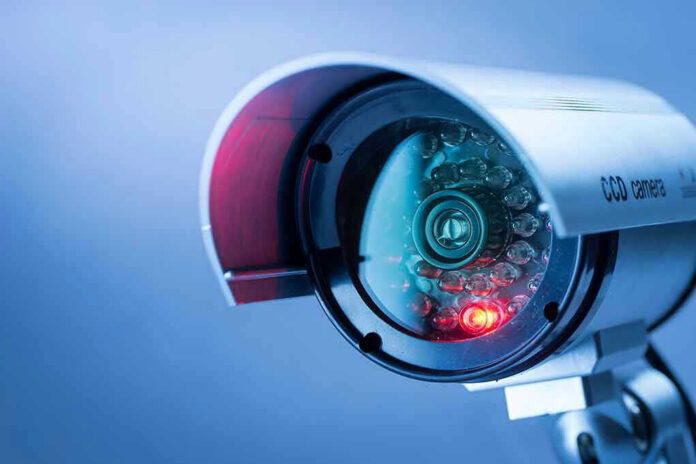
San Jose’s vast network of nearly 500 ALPR cameras tracks every driver’s movements without warrants, igniting a federal lawsuit that exposes a chilling threat to Fourth Amendment freedoms cherished by patriots.
Story Highlights
- Three San Jose residents filed a class-action lawsuit on April 15, 2026, challenging the city’s 474 Flock Safety ALPR cameras as unconstitutional mass surveillance.
- The system captured over 360 million images in 2024 and saw 2.5 million warrantless searches in late 2025, accessible to 1,000+ police employees and 300 agencies.
- Plaintiffs demand data deletion after 24 hours without warrants, citing Supreme Court precedents like Carpenter v. United States requiring judicial oversight for tracking.
- This intrusive technology catalogs innocent Americans’ daily routines, fueling bipartisan fears of a deep state eroding privacy and the American Dream of freedom from government overreach.
Lawsuit Challenges Massive Surveillance Network
Three San Jose residents, Tony Tan, Scott West, and Colin Wolfson, filed a federal class-action lawsuit in U.S. District Court for the Northern District of California on April 15, 2026. Represented by the Institute for Justice, they target the city’s 474 Automatic License Plate Reader (ALPR) cameras operated by Flock Safety. These cameras blanket 178 square miles, averaging 2.7 per square mile, capturing license plates, vehicle makes, models, colors, and even bumper stickers. The suit alleges this creates a searchable database enabling unrestricted tracking of drivers’ movements without probable cause, violating the Fourth Amendment.
Scale of Data Collection Alarms Privacy Advocates
San Jose’s ALPR system recorded over 360 million images in 2024 alone. By the second half of 2025, the database faced nearly 2.5 million searches, averaging 15,000 per day. Over 1,000 San Jose Police Department employees and nearly 300 California agencies access this data warrantlessly. Institute for Justice attorney Michael Soyfer highlighted the abuse risk from such volume. The technology retains data for 30 days to a year, far longer than many peers, integrating AI and external databases for comprehensive vehicle tracking across the car-dependent city.
Supreme Court Precedents Underpin Constitutional Claims
The lawsuit invokes landmark rulings including Katz v. United States (1967), United States v. Jones (2012), and Carpenter v. United States (2018). These decisions mandate warrants for prolonged GPS or cell phone tracking, shattering reasonable expectations of privacy in public movements. Unlike targeted policing of suspects, San Jose’s system indiscriminately surveils all drivers, building retrospective catalogs of routines to sensitive sites like clinics, churches, and protests. National reports document ALPR abuses such as officer stalking and retaliation, amplifying concerns over unchecked power.
Plaintiffs seek class certification for all scanned residents over the past year and future victims. Remedies include declaring the program unconstitutional, purging data after 24 hours absent a warrant, and nominal damages. A parallel state suit by the Electronic Frontier Foundation challenges one-year retention under California’s constitution.
City Defends Amid Bipartisan Frustrations
City Attorney Susana Alcala Wood asserts the publicly mounted cameras comply with law, featuring robust policies against misuse and barring private or federal access. San Jose adopted Flock Safety for crime prevention, acknowledging most data proves irrelevant to enforcement. Yet conservatives decry this as deep state overreach eroding individual liberty, while liberals fear elite control widening divides. Both sides increasingly agree federal and local governments prioritize power over people, departing from founding principles of limited oversight.
San Jose's 'Creepy' and 'Deeply Intrusive' ALPR Camera System Is Unconstitutional, a New Lawsuit Says https://t.co/eUXAFr8POI via @reason
— Margaret (@teragramus) April 17, 2026
Potential Impacts Echo Nationwide
Victory could halt warrantless access, force data deletion, and mandate judicial warrants for ALPR use nationwide, mirroring Carpenter’s cell data revolution. San Jose commuters face immediate effects in this driving-reliant region, with statewide agencies losing easy tools. Economically, compliance hikes costs for Flock contracts; socially, it curbs creepy tracking at potential expense to crime-solving. Politically, the case fuels privacy versus safety debates, spotlighting how surveillance networks challenge traditional American values amid 2026’s Republican-led reforms against government excess.
Sources:
San Jose License Plate Readers Spark Federal Class-Action Lawsuit Over Warrantless Tracking
Three San Jose Residents File Federal Class Action Lawsuit Over City’s Mass Surveillance of Drivers