
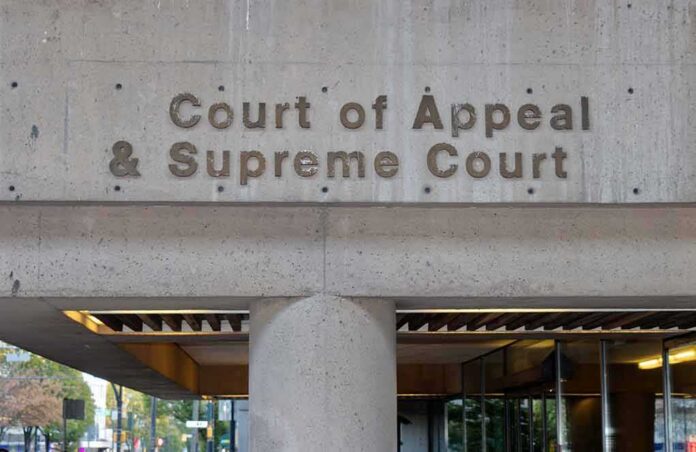
A federal judge ruled that President Trump’s Federal Communications Commission (FCC) likely broke the First Amendment when it tried to fast-track a review of ABC’s broadcast licenses years early.
Story Snapshot
- U.S. District Judge Loren AliKhan blocked the FCC from reviewing eight Disney-owned ABC stations’ licenses before they were due.
- The judge called it “not a close case” and said the FCC’s early review looked like retaliation tied to President Trump.
- FCC Chairman Brendan Carr says the review was about a DEI investigation and equal-time rules, not about punishing speech.
- The ruling is a preliminary injunction, not a final decision, so the fight over ABC’s licenses is not over.
Judge Blocks FCC’s Early Review
Judge AliKhan granted Disney’s request to stop the FCC from moving forward with early renewal hearings on eight ABC-owned stations. The stations’ licenses were not due for renewal for years, but the FCC ordered them to apply early anyway. Reuters reported the injunction stops the FCC from holding a hearing that could have pulled stations off the air.
The judge said losing a broadcast license is such a severe punishment that even the threat of it could scare a station into changing its coverage. She also found the case against the FCC unusually strong, writing it was “not a close case” and describing the action as retaliation connected to President Trump. Reporting tied the dispute to criticism of ABC programming, including late-night host Jimmy Kimmel’s jokes.
FCC Says DEI Investigation, Not Speech, Drove Action
Chairman Carr has repeatedly denied that speech had anything to do with it. He said the early review came from a yearlong investigation into whether Disney’s diversity, equity, and inclusion (DEI) practices broke federal discrimination rules. “This action is driven by investigation into DEI conduct, not any speech at all,” Carr said.
The FCC also said it was looking into whether ABC’s talk show “The View” broke the rule requiring equal airtime for political candidates. Carr argued broadcasters have a duty to serve the public interest and that the agency was simply enforcing that standard. He said Disney would be held accountable only if the DEI claims proved true. Carr also denied the White House pushed him to act.
Those competing explanations have not been fully tested in court. The judge’s ruling is a preliminary injunction based on what seems likely to happen at trial, not a final verdict on whether the FCC broke the law. The FCC’s full written order and complete case file were not made public in the reporting reviewed here, so the agency’s detailed evidence for its DEI and equal-time claims remains largely unseen.
What Happens Next
This case lands at a touchy spot in American law. The government controls who gets to use broadcast airwaves, and that power can be used fairly or as a weapon against disfavored coverage. Legal scholars have long warned that even the threat of losing a license can push broadcasters to censor themselves, whether or not the government ever follows through.
Judge blocks FCC from early license review for ABC, which network says has had a chilling effect https://t.co/yHPbPwApi4
— Chicago Tribune A&E (@ChiTribEnt) November 26, 2026
For now, ABC’s eight stations keep operating under their current licenses while the lawsuit continues. Whether the FCC’s DEI and equal-time concerns were a genuine regulatory matter or cover for punishing disliked coverage is still an open question. Both sides agree on the facts of what happened this week. They strongly disagree on why it happened, and that fight is headed back to court.
Sources:
cbsnews.com, apnews.com, reuters.com, nbcnews.com, ew.com, edition.cnn.com, thehill.com, kcentv.com
© patriotsunited.org 2026. All rights reserved.