

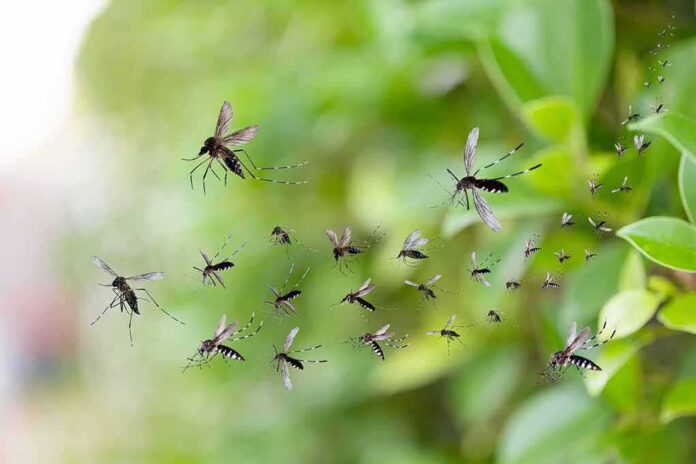
Scientists found that not a single person attracted all three major mosquito species, upending the idea of universal “mosquito magnets.”
Story Snapshot
- A 119-person study showed species-specific attraction: no one drew all three species.
- Researchers used a controlled odor test to measure how each species responded to each person.
- Each species linked to different skin odors and bacteria, with some shared signals across species.
- Public data and code allow outside checks of the results and methods.
What The New Study Actually Found
Florida International University scientists tested 119 volunteers against three common mosquitoes: Aedes aegypti, Aedes albopictus, and Culex quinquefasciatus. The team reported that not a single participant attracted all three. This result points to species-specific preference, not a single, universal “mosquito magnet.” The finding fits years of work showing that human smell and skin microbes shape mosquito behavior. But this study stands out for testing multiple species against the same people in a single design.
Researchers used a uniport olfactometer, a lab device that presents human scent to mosquitoes in a controlled way. This tool let them compare attraction rates for each species and each person, without bias from movement, clothing, or swatting. Because the test isolates odor, it better connects smell chemistry to behavior. The team deposited their data and code so others can examine the raw attraction scores and the links to skin compounds and bacteria.
How Odors And Bacteria Differ By Species
The data tied each species to a different odor profile. Aedes albopictus tended to favor people with higher levels of certain ketones. Aedes aegypti and Culex quinquefasciatus trended toward people with less overall skin odor. Even with these splits, some signals overlapped: all three species were more drawn to people with more ethyl 2-methylbutanoate and less drawn to people with more 1-penten-3-ol, suggesting both shared and species-specific cues.
Skin bacteria also tracked with attraction patterns. The study associated Aedes aegypti with greater Staphylococcus levels. Aedes albopictus aligned with higher amounts of microbes such as Streptococcus intermedius and Anaerococcus octavius. Culex quinquefasciatus showed its own distinct microbial links. These are associations, not proof of cause, but they match a growing body of research that ties human microbes, their odors, and mosquito behavior together across settings and species.
What This Means For Bite Risk, Health, And Policy
Species pick different people, so bite risk can shift with which mosquito lives in your area and season. A city with more Aedes albopictus may see different “mosquito magnets” than a town with more Culex quinquefasciatus. That matters for disease control, since these species spread different illnesses. Smarter repellents and lures could target species-specific odors while avoiding broad claims that do not hold across all mosquitoes and all people.
A new Florida International University study finds each mosquito species is drawn to its own mix of human skin odors, chemicals, and bacteria, challenging the idea of a universal mosquito magnet and pointing toward better repellents. 🦟 pic.twitter.com/sQcl6XP8KV
— Bio DNA (@biodnaa) November 11, 2026
Health agencies and the public can use this nuance. Basic steps still help across the board: remove standing water, fix screens, wear protective clothing, and use Environmental Protection Agency-registered repellents. But cities might also test local mosquito populations against local odor profiles to guide traps and public messaging. The authors note lab limits: these tests measure attraction to scent, not real-world biting. Field trials can connect these lab rankings to landing and bites in everyday conditions.
Why This Study Stands Out In A Crowded Space
Popular headlines often say some people are “mosquito magnets.” This research shows the story is more complex and more useful. Different species want different scents, and some signals are shared. The clear design, participant count, and public dataset offer a stronger base than single-species anecdotes. Independent teams can now probe the code, re-run analyses, and test larger, more diverse groups to see how stable these species-specific patterns are across places and seasons.
Sources:
wusf.org, news.fiu.edu, pmc.ncbi.nlm.nih.gov, discovermagazine.com, datadryad.org, sciencenews.org
© patriotsunited.org 2026. All rights reserved.