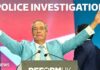
House lawmakers publicly tied CodePink to suspected foreign influence networks, then ejected its activists from a hearing built around that claim.
Story Snapshot
- House panel spotlighted “Trojan horse” influence operations and removed CodePink activists during the hearing.
- Committee and allied letters cite donations allegedly linked to Neville Roy Singham flowing to CodePink.
- Reports say a State Department message to Congress flagged CodePink as part of Chinese influence efforts.
- CodePink forcefully denies any foreign-government funding or direction and rejects foreign-agent claims.
What Prompted The Clash In Congress
House Foreign Affairs members held a hearing titled “Trojan Horses: Covert Foreign Malign Influence Operations in America.” The theme focused on how foreign states try to sway U.S. debates through nonprofits and advocacy groups. During the session, Capitol Police removed CodePink activists, including co-founder Medea Benjamin, after disruptions. Lawmakers used the moment to argue that influence campaigns are already inside the gates of Congress, not just outside it.
The panel’s frame matched long-running fears that hidden money and messaging shape U.S. policy. Members argued that China, Cuba, and Iran exploit open civic spaces to push talking points that look organic but are not. They said some U.S. groups act as unknowing carriers, while others benefit from aligned funders. The disruptions risked shifting focus from evidence to theater, but they also underscored how charged this fight has become.
The Money Trail Lawmakers Point To
House oversight material and aligned reports say a donor network tied to businessman Neville Roy Singham has sent large sums into a web of U.S. nonprofits. One committee letter stated that since 2017, about a quarter of CodePink’s donations—more than $1.4 million—came from two Singham-linked groups. Lawmakers argue this pattern supports a broader narrative about foreign-influence pipelines that do not look like classic lobbying but can still shape policy debates.
Separate reporting says a State Department message to Congress identified CodePink among nonprofit “vectors” for Chinese influence operations tied to Chinese Communist Party-connected networks. That message, as described in coverage, fed committee claims that aligned funding and messaging can blend into activism, masking the source of ideas and money. The report’s details remain filtered through media accounts, which heightens calls for primary documents.
CodePink’s Firm Denial And The Legal Gap
CodePink says it receives no money from China or any foreign government and has no contact with the Chinese Communist Party. The group says its work is funded by individuals and U.S.-based foundations, and it is not a foreign agent under the Foreign Agents Registration Act. These denials set up a direct clash with committee rhetoric, and they highlight that no court ruling or Justice Department charge has labeled CodePink a foreign agent in this matter.
Medea Benjamin, Two Activists Escorted From House Foreign Influence Hearing
A House Foreign Affairs hearing on foreign influence turned into a protest scene Tuesday when CodePink co-founder Medea Benjamin and two fellow activists were escorted from the room by U.S. Capitol… pic.twitter.com/AhkBz1ThyQ
— CSB News USA (@csbnewsus) September 16, 2026
The gap between accusation and legal finding matters. The Foreign Agents Registration Act demands disclosure when U.S. actors work under the direction or control of a foreign principal. Legal scholars describe the law as sweeping and often unevenly enforced, which can tempt selective use. That history fuels skepticism on both left and right: people want transparency, but they fear that “foreign influence” becomes a catchall to target unpopular speech or activism.
Why This Fight Resonates Beyond One Hearing
Americans across the spectrum think powerful networks call the shots while citizens pay the price. This hearing hit that nerve. If nonprofit money masks foreign agendas, voters lose trust in open debate. If Congress blurs the line between aligned views and directed propaganda, activists get chilled and the public loses real voices. Either way, the process breaks faith unless evidence is clear, rules are even, and findings are shared in full, not by headline.
What would build confidence now is sunlight. Release the hearing transcript, exhibits, and any agency memos cited to support the claims. If the government has bank records or donor ledgers that prove direction or control, show them. If not, say so. A transparent record protects national security without trampling civic space. It also gives citizens something too rare in Washington fights: facts they can read and judge for themselves.
Sources:
facebook.com, foxnews.com, wfmd.com, codepink.org, nypost.com, civicintelligence.news
© patriotsunited.org 2026. All rights reserved.