

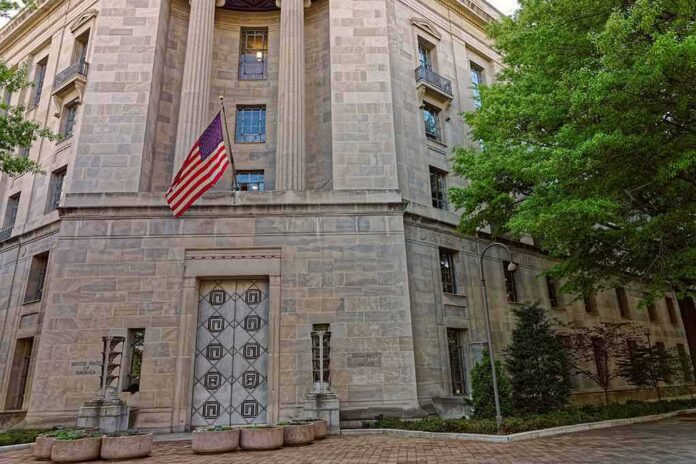
Justice Department investigators are now questioning officials tied to the Mar-a-Lago search, testing whether a broader anti-Trump conspiracy claim holds up under sworn interviews.
Story Highlights
- Justice Department team seeks interviews with law enforcement involved in the 2022 Mar-a-Lago search.
- Search warrant materials show a probe into improper handling of government and classified records.
- A federal appeals court earlier let the Justice Department use seized classified files in its inquiry.
- Claims of politicization persist, but public filings describe a conventional criminal predicate.
What Investigators Are Doing Now
Justice Department investigators have asked to interview law enforcement officials who took part in the Mar-a-Lago search. According to people familiar with the effort, the Florida-based inquiry is examining whether there was a conspiracy against President Trump and how the search was planned and run. This step suggests the department is collecting first-hand accounts, timelines, and records from the agents and managers involved. Interviews can clarify procedures, approvals, and any disputes inside the chain of command.
Officials often use interviews to test claims that a probe was slanted or improper. By hearing directly from people on scene, investigators can confirm what orders were given, what concerns were raised, and whether protocols were followed. If the facts line up, the review could close gaps that fuel public distrust. If contradictions appear, they could prompt further steps, including document requests or internal discipline. The department has not announced charges tied to this specific inquiry.
What Triggered the Mar-a-Lago Search
Department of Justice filings tied the original search to a criminal investigation into improper removal, storage, and concealment of government and classified records. The warrant materials said agents had probable cause to find evidence of those crimes at Mar-a-Lago. The affidavit and related reporting described a standard process with a judge approving the warrant and agents seizing materials marked classified, including some at a high level. These steps fit the usual playbook for records and obstruction cases.
A federal appeals court later allowed the department to keep using the classified files it seized. Judges rejected arguments to block investigators from reviewing those items as evidence. That ruling kept the criminal inquiry moving and reinforced that the court saw legal grounds for the search and review of materials with classification markings. While legal fights continued on separate issues, the core search authority and evidence use held in place under that decision.
Why This Review Matters Across Party Lines
Americans across the spectrum worry that the powerful play by different rules. Conservatives see a system that targets political outsiders. Liberals see a system that lets the well-connected skate. This review tries to answer both by checking the government’s own work. If interviews show the search followed policy and law, that supports equal enforcement. If they show shortcuts or bias, that supports reform and accountability that many voters demand.
Public records also set the frame. The affidavit and filings show a clear criminal predicate tied to government records and classified information. That does not settle every concern. But it places the case on known legal ground used in other matters, not only this one. Claims that the search was purely political still circulate. Fact-focused reviews can cool that debate by putting sworn statements and paper trails ahead of spin, leaks, or cable talk.
Limits Of What We Know Today
Much of the record remains sealed due to classified content and ongoing matters. That means the public cannot read every memo, chain of custody log, or internal email. Investigators often withhold such details to protect sources and methods. This secrecy frustrates many citizens who want full sunlight after years of clashing narratives. For now, the clearest facts come from court rulings, the warrant file, and careful reports that cite named documents and officials.
JUSTICE DEPARTMENT INVESTIGATORS have sought to interview law enforcement officials related to the FBI search of Donald Trump's Mar-a-Lago estate as part of an inquiry aiming to establish a conspiracy against the Republican president, AP sources say. https://t.co/iLOHGsHkts
— WPLG Local 10 News (@WPLGLocal10) August 21, 2026
The next signals to watch are simple but telling: which officials sit for interviews, whether the department expands the witness list, and if any findings become public. A short, quiet wrap would suggest policies were followed. A deeper round of document demands or referrals would suggest new concerns. Either path will test whether the justice system can police itself in a case that has become a proxy fight over trust in government.
Sources:
apnews.com, usnews.com, en.wikipedia.org, pbs.org
© patriotsunited.org 2026. All rights reserved.