Southern states face renewed peril as power crews battle ice-damaged grids from Winter Storm Fern, exposing chronic infrastructure weaknesses just as President Trump’s administration braces communities for more deadly cold.
Story Snapshot
- Winter Storm Fern triggered widespread power outages in Texas, Louisiana, Mississippi, and Tennessee from ice accumulation and downed trees, straining southern grids ill-equipped for such events.
- Dozens dead nationwide; heavy snow up to 16 inches buried Midwest, while Carolinas saw up to 0.3 inches of ice, halting travel and closing schools and airports.
- FEMA issued federal disaster declaration on January 23; states like Indiana declared emergencies, with crews racing to restore power and clear roads amid incoming extreme cold snap.
- Storm echoes 2021 Texas grid failure, highlighting need for resilient infrastructure to protect families and local economies from government mismanagement of energy preparedness.
Storm Origins and Rapid Intensification
Winter Storm Fern formed January 22 as a cold-core low over the Pacific, moving toward Baja California with NOAA launching a reconnaissance flight. The system strengthened over the Great Plains by January 23, bringing sleet and freezing rain to northern Texas, southern Oklahoma, and Arkansas. Federal disaster declaration followed immediately. This rapid cyclogenesis, including a coastal low off the Southeast on January 25, amplified impacts unlike typical northern blizzards. Southern regions, less prepared for ice, suffered heaviest from tree damage and outages.
Devastating Impacts Across Regions
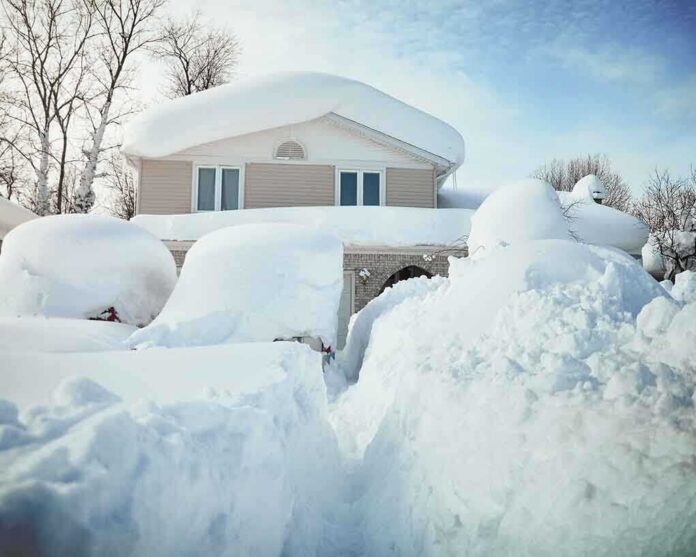
Heavy snow of 6-13 inches and ice up to 0.80 inches struck Ohio Valley on January 24, prompting Indiana Governor Mike Braun’s state of emergency. Columbus, Ohio, set a daily snowfall record at 11.9 inches on January 25, surpassing 1988 marks. Freezing rain hit Carolinas with up to 0.3 inches ice, while Midwest saw accumulations to 16 inches in Indiana, Illinois, Missouri, and Ohio. Rural communities bore brunt of downed power lines, isolating families and disrupting daily life.
Recovery Efforts Under Pressure
Utility crews in Texas, Louisiana, Mississippi, and Tennessee worked urgently on January 26 to restore electricity amid ice-encased trees in Nashville. Roads and sidewalks cleared in Kansas City, Missouri, but schools and airports remained closed in Southeast. National Weather Service issued final bulletins, noting warm aloft temperatures fueling freezing rain. Dozens of fatalities reported nationwide from exposure and accidents, underscoring vulnerabilities in power infrastructure.
Post-storm, another blast of dangerous cold loomed, testing restoration progress. Midwest snow cleanup continued as southern teams braced for prolonged freeze.
Crews race to restore power, open roads as the South braces for another blast of dangerous cold @WashTimes https://t.co/MHN27sz9nt
— Washington Times Local (@WashTimesLocal) January 29, 2026
Stakeholders and Lessons for Resilience
FEMA provided resources after the January 23 declaration, coordinating with state governments and power companies focused on public safety. National Weather Service tracked accumulations via Louisville and other offices, issuing timely watches from January 21. NOAA’s Gulfstream IV-SP flights enhanced forecasts. Tensions arose over southern grid preparedness, reminiscent of 2021 Texas failures under prior mismanagement. President Trump’s emphasis on energy independence now demands hardened infrastructure to shield conservative heartland values of self-reliance.
Short-term effects include economic hits from closures and restoration costs; long-term calls for grid upgrades and FEMA reimbursements to prevent future overreach burdens on taxpayers.
Sources:
CRS/FEMA report on winter storm response
NWS Louisville Winter Storm bulletin
Wikipedia: January 2026 North American winter storm
NWS Ilm Ice Storm January 2026
ABC News: Winter Storm live updates
Wikipedia: January 22–26, 2026 nor’easter
Fox Weather: Timeline of massive winter storm