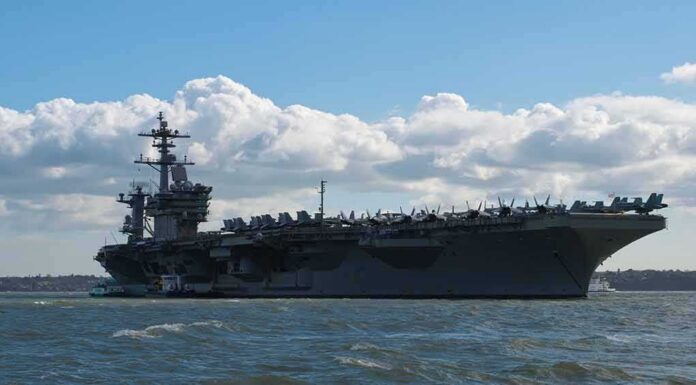
A century-old, bargain-priced sea mine nearly broke a U.S. warship in half and triggered the Navy’s biggest fight since World War Two.
Story Highlights
- USS Samuel B. Roberts struck a mine on April 14, 1988, suffering massive damage.
- The blast broke the frigate’s keel, tore a 21-foot hole, and started major fires.
- The strike came amid the “Tanker War,” where cheap mines menaced global trade.
- Days later, the Navy hit back in Operation Praying Mantis against Iranian targets.
What Happened In The Gulf That Day
On April 14, 1988, the guided-missile frigate USS Samuel B. Roberts hit a naval mine in the central Persian Gulf while returning from escort duty. The explosion broke the ship’s keel, blew a 21-foot hole in the port side, flooded key engine spaces with thousands of tons of water, and sparked a major fire. Ten sailors suffered serious injuries. The crew fought the damage for hours and saved the ship from sinking, despite crippled power and wrecked systems.
Pentagon officials told reporters a mine most likely caused the blast soon after the incident. Nearby, U.S. teams later found and destroyed additional mines believed linked to the same field. The strike occurred near known minelaying routes used during the Iran-Iraq War’s “Tanker War,” when both sides tried to pressure shipping with low-cost, hard-to-trace weapons rather than open naval battles.
Why A Cheap Mine Can Cripple A Billion-Dollar Fleet
Naval mines wait in silence and strike ships at their most fragile point, the hull below the waterline. The device that hit the Roberts was a contact mine design that dates back decades but still packs a blast that can break major warships. Moving and repairing a frigate after such damage cost tens of millions of dollars and took many months out of service, while the mine itself was cheap and easy to lay in busy sea lanes. Asymmetric tools like these bend the cost curve against modern fleets.
This strike fit a broader pattern that U.S. forces faced in 1987 and 1988. After reflagging Kuwaiti tankers to keep oil flowing, American warships had to counter hidden threats across the Gulf. The U.S. Navy later documented that the Roberts entered a recently laid minefield in a main shipping channel. The incident highlighted how even a well-led, capable crew can be put at great risk by a weapon that hides, denies responsibility, and hits without warning.
How Washington Responded And What The Law Later Said
Four days after the mine strike, U.S. forces launched Operation Praying Mantis. Navy surface groups, aircraft, and helicopters hit Iranian naval units and platforms tied to the conflict. The operation aimed to restore freedom of navigation and deter more mining. The action marked the largest surface combat by the Navy since World War Two and showed how a single mine could set off a wider clash at sea with global energy and trade at stake.
For the “History Junkie”, with a simple Grok query:
—-Group 1: Strait of Hormuz / Persian Gulf / Gulf of Oman (Iran and related actors)
Incidents below are the main publicized seizures, attacks, and high-profile naval encounters through February 2026. The 1980s Tanker War…
— ComputerSage (@ComputerSageJAB) September 1, 2026
Years later, the International Court of Justice reviewed parts of the dispute in a treaty case. The Court recognized that the Samuel B. Roberts struck a mine near Shah Allum Shoal, during a period when both Iran and Iraq had laid mines. The judges found the evidence did not conclusively prove Iran laid that specific mine, even as the United States maintained its attribution. The legal view did not change the basic fact of the strike or its danger to shipping.
What It Means Now: Cost, Risk, And A System Under Strain
The Roberts story warns that low-cost threats can force high-cost responses. A mine that costs little can damage a warship, disrupt trade, and draw great powers into a rapid cycle of action and counteraction. In an era when Americans worry that leaders react late and spend big without fixing root problems, this case shows how aging, simple weapons can still corner modern systems. Securing sea lanes demands steady patrols, mine-hunting gear, and clear rules that stop cheap tools from holding economies hostage.
Sources:
19fortyfive.com, history.navy.mil, news.usni.org, nytimes.com, washingtonpost.com, iilj.org, icj-web.leman.un-icc.cloud
© patriotsunited.org 2026. All rights reserved.