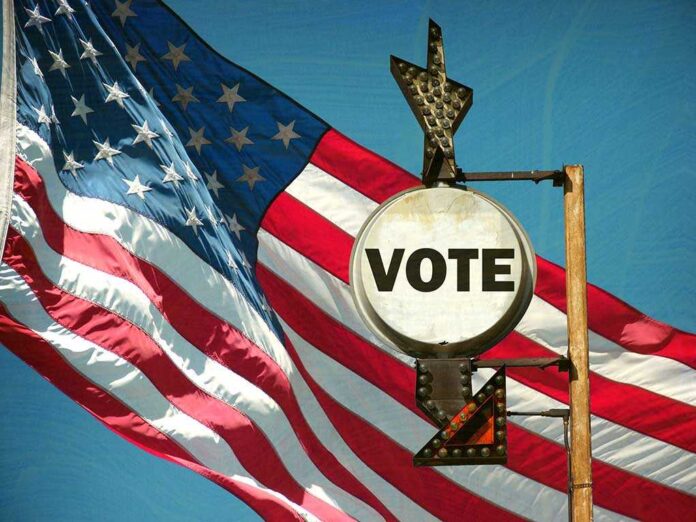
President Trump’s bold executive action to eliminate mail-in voting represents the most significant federal intervention in election integrity since the founding, directly challenging decades of liberal voting policies that have undermined confidence in American elections.
Story Highlights
- Trump announces executive order to end mail-in voting nationwide ahead of 2026 midterms
- President targets “highly inaccurate” voting machines, promising to restore election integrity
- Liberal advocacy groups launch immediate lawsuits to block constitutional election reforms
- Courts already striking down provisions requiring proof of citizenship for voter registration
Trump Takes Direct Action Against Election Vulnerabilities
President Trump announced on August 18, 2025, his intention to lead a nationwide movement eliminating mail-in voting through executive action. Trump’s social media declaration promises to “bring honesty” to the 2026 midterm elections by targeting both mail-in ballots and voting machines he describes as “seriously controversial.” This represents the culmination of Trump’s March 2025 executive order that began restricting federal election procedures and requiring documentary proof of citizenship.
Constitutional Authority Versus Federal Overreach Concerns
The executive order directly challenges traditional state and congressional authority over election administration, creating immediate constitutional tensions. Legal scholars argue Trump’s approach exceeds presidential powers, while supporters contend federal intervention is necessary to ensure uniform election integrity standards. The Election Assistance Commission faces new mandates to enforce voter registration requirements, fundamentally altering decades of established election protocols across all fifty states.
Liberal Groups Launch Coordinated Legal Resistance
The ACLU and League of Women Voters immediately filed lawsuits challenging Trump’s executive authority over elections, successfully blocking several provisions including documentary citizenship requirements. These organizations claim the reforms threaten voter access, particularly targeting elderly, disabled, and rural Americans who rely on mail-in voting options. Federal courts have already demonstrated willingness to restrict Trump’s election reforms, setting up inevitable Supreme Court battles over presidential authority.
Election Security Versus Accessibility Debate Intensifies
Trump’s initiative directly addresses conservative concerns about mail-in ballot security while facing fierce opposition from those prioritizing voting accessibility. The president’s targeting of voting machines reflects longstanding conservative skepticism about electronic voting systems, though critics note the absence of evidence supporting widespread inaccuracy claims. State election officials find themselves caught between federal mandates and constitutional responsibilities, creating unprecedented administrative challenges ahead of crucial midterm elections.
The legal and political battle over Trump’s election reforms will likely determine whether executive authority can override traditional state control of voting procedures, with implications extending far beyond the 2026 midterms and potentially reshaping American election administration permanently.
Sources:
ACLU, League of Women Voters Education Fund v. Trump
Bloomberg Government, “Trump Floats Order to End Mail-In Ballots, Voting Machines”
ABC News, “Trump says he will lead ‘movement’ to end mail-in voting”