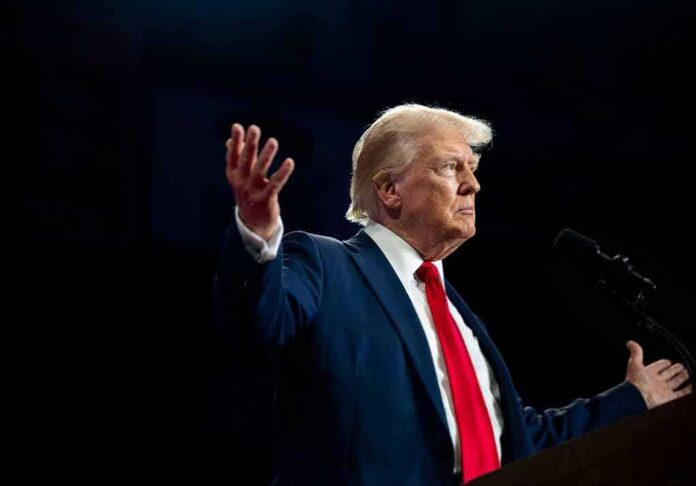
President Donald Trump’s threat to invoke the Insurrection Act amid escalating immigration protests in Minnesota is a stark reminder of the tensions between federal and local authorities.
Story Snapshot
- Trump threatens Insurrection Act due to Minnesota protests.
- Protests sparked by ICE shootings in the Twin Cities.
- Federal agents significantly outnumber local police forces.
- State and local leaders accused of “terrorism” by a federal deputy.
Trump’s Bold Threat: Insurrection Act on the Horizon
President Trump took to Truth Social to threaten the invocation of the Insurrection Act, a rare move that would authorize the use of military force within the United States. This came in response to protests in Minnesota against aggressive ICE raids that have roiled the Twin Cities. The protests were initially sparked by two ICE-related shootings, leading to widespread unrest and accusations of federal overreach. Trump’s threat underscores a growing federal-state conflict over immigration enforcement.
The Insurrection Act, dating back to 1807, empowers the president to deploy military forces domestically in situations of rebellion or significant unrest. Historically, it has been used sparingly, often in the context of enforcing civil rights or at the request of state governors. Trump’s current stance marks a notable deviation from these norms, reflecting his administration’s hardline immigration policies. The Twin Cities protests have escalated to the point where federal agents now outnumber local law enforcement, leading to violent clashes and raising questions about federal authority.
Federal vs. Local: A Clash of Authorities
The situation in Minnesota highlights a significant clash between federal and local authorities. Governor Tim Walz and Minneapolis Mayor Jacob Frey have been vocal in their opposition to the federal approach, accusing the Trump administration of excessive force and organized brutality. The conflict intensified following the January 8 fatal shooting of Renee Nicole Good, a U.S. citizen, and the subsequent shooting of a Venezuelan man on January 14. These incidents have fueled protests and inflamed tensions between different levels of government.
Deputy Attorney General Todd Blanche’s accusations of “terrorism” against Walz and Frey have only added fuel to the fire, as local leaders grapple with maintaining order while opposing federal tactics. This federal-local tension reflects broader national debates over immigration enforcement and the balance of power between state and federal governments. The protests continue unabated, with Minneapolis officials urging restraint and highlighting the unsustainable nature of the current situation.
Legal Battles and Judicial Oversight
The legal landscape surrounding the protests and federal actions is in flux, with significant implications for future immigration enforcement. A federal judge recently denied a temporary restraining order on ICE tactics, with a ruling on potential restrictions expected soon. This legal scrutiny underscores the contentious nature of the federal response and the potential for judicial intervention to shape the outcome of this standoff.
Judge Kate Menendez is set to rule on the appropriateness of ICE’s use of force, a decision that could curtail or endorse the federal government’s current approach. Her ruling will be closely watched as it has the potential to set a precedent for how immigration enforcement is conducted in the face of state opposition. The ongoing legal battles highlight the complexity of balancing immigration policy with civil liberties and state sovereignty.
Potential Implications and National Ramifications
The potential invocation of the Insurrection Act could have far-reaching implications for both Minnesota and the nation. Short-term, it could escalate the already volatile situation, leading to further clashes and unrest. Long-term, it could set a precedent for using military force in domestic immigration enforcement, raising concerns about civil liberties and federal overreach.
This situation also has significant political ramifications, reflecting the deep divisions between the Trump administration’s hardline stance and the more progressive policies of Democratic-led states. As the nation watches these events unfold, questions about the appropriate use of federal power and the role of military force in domestic affairs loom large. The outcome of this conflict will likely influence future immigration policies and the broader relationship between federal and state governments.