
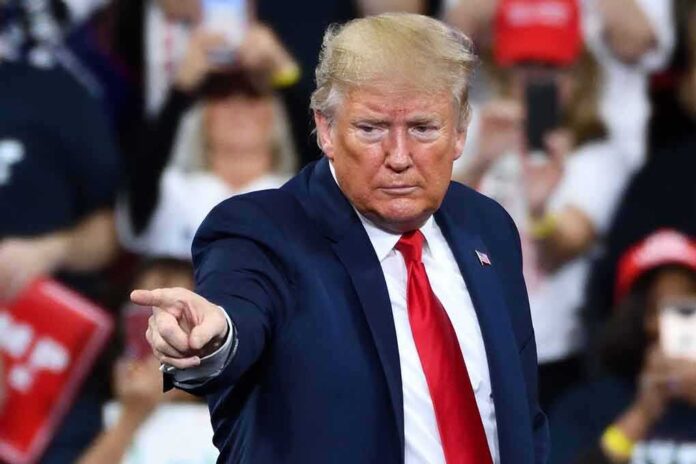
President Trump’s stark warning to Iran signals a regime on the brink, where 2,000 protesters lie dead and U.S. airstrikes loom as the spark for potential collapse.
Story Snapshot
- Anti-government protests rage into week 3 across Iran, with 2,000 killed and over 10,000 arrested amid brutal crackdowns.
- Trump urges protesters to seize institutions, slaps 25% tariffs on nations trading with Iran, and reviews military strikes.
- Regime accuses U.S. and Israel of orchestration while security forces suffer 133 deaths.
- Exiled Reza Pahlavi calls for overwhelming security forces, echoing revolutionary fervor.
- U.S. prioritizes diplomacy but confirms airstrikes as viable option per White House.
Protests Ignite from Economic Despair
Protests erupted in late December 2025 in Tehran over skyrocketing inflation and the rial’s collapse. Demonstrations spread to 606 locations across 187 cities in all 31 provinces within 16 days. Chants turned explicitly anti-regime as economic hardship fueled demands for change. HRANA reports 2,000 deaths, including children, and 10,721 arrests by January 13, 2026. Strikes and civil disobedience paralyzed key areas, defying internet blackouts and live fire from security forces.
Regime’s Ruthless Crackdown Escalates Violence
Iranian authorities arrested over 10,000, imposed nationwide internet outages, and deployed forces killing 2,000 protesters. Security personnel lost 133 lives, per HRANA data. Ayatollah Khamenei and Foreign Minister Abbas Araghchi labeled unrest a U.S.-Israel “terrorist war,” staging pro-government rallies in Tehran. Private regime signals acknowledge Trump’s resolve, according to U.S. officials and expert Dr. Mordechai Kedar. Crackdowns failed to quell widespread defiance.
Armed groups reportedly incited violence, complicating the uprising. State Department urged Americans to flee Iran amid chaos. Protests persisted into week 3, marking a scale beyond 2022’s Mahsa Amini unrest, which claimed 500 lives.
Trump’s Multifront Offensive Targets Tehran
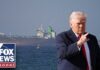
On January 12-13, 2026, President Trump posted on social media: “Iranian Patriots, KEEP PROTESTING… HELP IS ON ITS WAY.” He announced immediate 25% tariffs on countries trading with Iran, hitting partners like China. Trump canceled meetings with Iranian officials and warned against underestimating U.S. military readiness. White House Press Secretary Karoline Leavitt confirmed airstrikes under review, though Vice President J.D. Vance pushed negotiations first. This blends economic warfare, public endorsement, and strike threats.
These moves align with American conservative values of strength against tyranny and economic leverage for security. Facts show Trump’s prior actions crippled Iran’s nuclear program, proving resolve works where weakness invites aggression. Common sense dictates supporting genuine uprisings against oppressive regimes.
Key Players Push Competing Visions
Exiled Crown Prince Reza Pahlavi urged protesters to overwhelm security forces and seize cities, invoking 1979 Revolution tactics. He appealed directly to Trump for backing a monarchy restoration. Iran’s regime rallied supporters while accusing foreign plots. China decried tariffs as having no winners. U.S. national security team convened on intervention options, balancing diplomacy with force.
Dr. Mordechai Kedar highlighted U.S. destruction of Iran’s nuclear facilities as a deterrent, noting Tehran’s private recognition of American might. Power dynamics favor U.S. military and economic superiority over Iran’s internal security apparatus.
Implications Threaten Regional Upheaval
Short-term, tariffs disrupt Iran trade, worsening economic collapse and fueling unrest. Violence escalates with potential U.S. strikes risking direct confrontation. Long-term, regime fall could reshape Middle East alliances, boost dissidents, and strain U.S.-China ties. Iranian civilians face outages, arrests, and deaths; global energy markets brace for sanctions. This tipping point tests whether external pressure topples dictatorships.