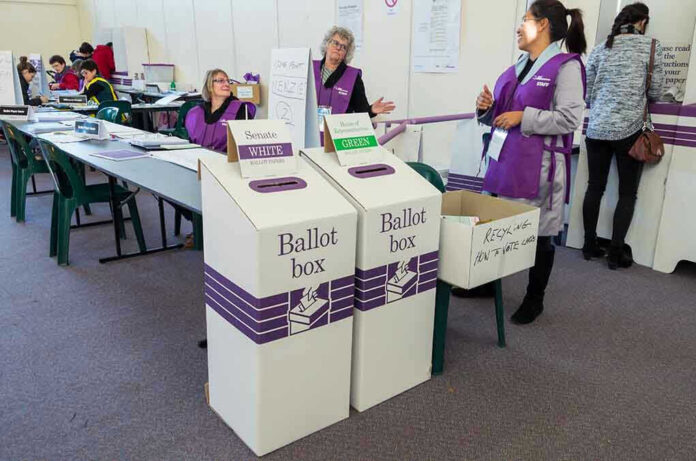
Imagine a world where teenagers, just old enough to drive, are deciding the future of our country at the ballot box.
At a Glance
- Liberal MP Nathaniel Erskine-Smith leads a new push to lower the voting age to 16 in Canada.
- Advocacy groups argue for youth inclusion and equality under the Canadian Charter of Rights and Freedoms.
- Critics question the maturity and political knowledge of 16-year-olds.
- International examples show mixed results on the impact of a lower voting age.
The Push to Lower the Voting Age
In July 2025, Liberal MP Nathaniel Erskine-Smith reignited a contentious debate by introducing a petition in the House of Commons to lower the federal voting age to 16. This move has been met with both support and skepticism. It’s a classic battle between youthful enthusiasm and seasoned wisdom. The advocates, including Vote16 Canada and other youth organizations, argue that 16-year-olds already contribute significantly to society and deserve a voice in shaping its future. But let’s pause and think for a moment. Do these teenagers have the maturity and life experience necessary to make informed decisions that affect us all?
This initiative isn’t new. Bill S-222, known as the Vote16 Act, has been floating around the Senate thanks to Senator Marilou McPhedran. But so far, it hasn’t gained the traction needed to pass. Why? Because the idea of letting teenagers, many of whom can’t even vote in a local school election, decide the fate of a nation is, frankly, absurd. Yet, the push persists, buoyed by international cases like Austria and Scotland, where such measures have been implemented. But just because something is done overseas doesn’t mean it’s right for Canada.
Arguments For and Against
Proponents claim that lowering the voting age will enhance democratic participation and reflect the capabilities of today’s youth. They argue that young people are engaged, informed, and already shouldering adult responsibilities like working and paying taxes. They see this as an issue of equality, arguing that the Canadian Charter of Rights and Freedoms supports their cause. But let’s not get carried away. The Charter also emphasizes the importance of informed decision-making, something that comes with age and experience.
Opponents, on the other hand, voice legitimate concerns. They question whether 16-year-olds possess the necessary maturity, judgment, and political awareness to make informed choices at the ballot box. These are not just baseless claims; these are questions of common sense. Many argue that this is yet another ploy by the left to manipulate the electorate by pandering to younger, more impressionable voters who might not fully grasp the long-term implications of their choices.
The Political Chess Game
The political parties are playing a strategic game. While some see an opportunity to gain new supporters, others recognize the potential backlash from their existing voter base. Recent trends indicate that younger voters are gravitating towards conservative values, which complicates the narrative for liberal parties pushing this agenda. It’s a risky move that could backfire if not handled delicately.
The government has treaded carefully on this issue. Its responses to previous petitions have been cautious, emphasizing the need for widespread public support before implementing major electoral reforms. They understand that this is not just about numbers; it’s about the future direction of the country. The stakes are high, and any misstep could have lasting consequences for Canadian democracy.
The Road Ahead
As the debate rages on, the focus shifts to the provinces and territories, with places like British Columbia and Yukon considering similar reforms at the local level. This grassroots movement could gain momentum and eventually force the hand of federal lawmakers. But until then, the issue remains in limbo, with both sides digging in their heels.
The implications of lowering the voting age are profound. If passed, it would enfranchise approximately 800,000 new voters. This could shift the political landscape, forcing parties to rethink their strategies and address issues that resonate with younger voters, such as climate change and education reform. However, the long-term effects remain uncertain, and the risk of unintended consequences looms large.