Passengers and crew helped stop a midair cockpit attack on a Flydubai flight, averting disaster and forcing an emergency landing in Saudi Arabia.
Story Snapshot
- Israeli officials say one pilot stabbed another and tried to crash a Flydubai jet; passengers and crew intervened.
- The plane made an emergency landing in Tabuk, Saudi Arabia, and Flydubai paused flights to and from Israel during the probe.
- President Trump called the passenger intervention “an incredible story,” praising those who acted.
- The event highlights how post-2001 security stops outside threats, while insiders remain a risk.
What Happened Aboard Flight FZ1073
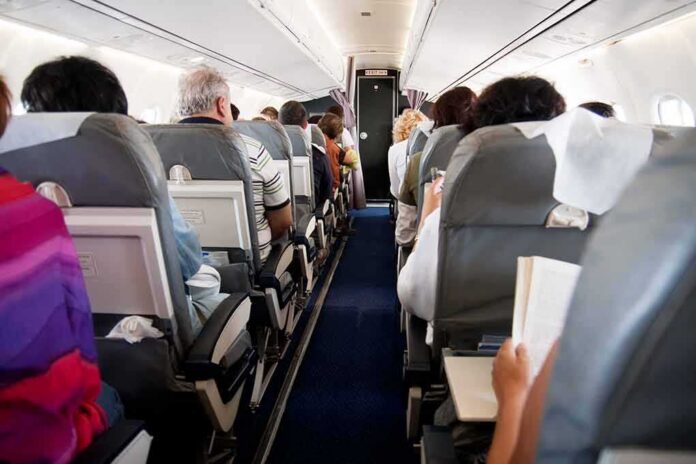
Israeli Prime Minister Benjamin Netanyahu said a pilot on a Flydubai flight from Dubai to Tel Aviv stabbed another pilot and “apparently tried to crash the plane.” Passengers and at least one crew member rushed the cockpit and helped subdue the attacker as the jet descended quickly. The aircraft diverted and landed safely in Tabuk, Saudi Arabia, after issuing an emergency alert. Airline officials confirmed an onboard incident and the emergency diversion during the investigation.
Flydubai temporarily suspended all flights to and from Israel while authorities reviewed what happened and checked crew readiness and security procedures. A Flydubai spokesperson said the aircraft landed safely and that company teams were supporting passengers and staff. Reports from passengers described a chaotic scene, a rapid descent, and a struggle near or inside the cockpit before control was secured and the jet leveled out for landing in Tabuk.
Reactions From Leaders and Why They Matter
President Trump told reporters the incident was “an incredible story,” praising the passengers and crew who intervened. His comments echoed the focus on citizen action in emergencies, a theme that resonates with people who feel institutions move too slowly when seconds count. Netanyahu publicly credited the wounded pilot and the civilians who helped, framing the response as a shared effort that saved lives and prevented a mass-casualty crash.
These reactions matter because they validate a blunt fact about modern aviation security. After the September 11 attacks, airlines hardened cockpit doors and trained crews for outside threats. But experts warn that insider threats, like a violent crew member, fit a different risk profile. Reports on this event stress that passengers and crew were the only people in position to act quickly enough to stop the attack and stabilize the flight before landing.
How This Fits a Larger Aviation-Security Pattern
Aviation safety history shows that most inflight crises end because crew and nearby passengers step in fast. Cockpit doors are strong against intruders, but that strength does not stop someone already inside from doing harm. Analysts note that when a cockpit breach or assault happens, the first responders are almost always inside the plane, not on the ground. That is why training, alert passengers, and clear chain of command often make the difference in tight windows of time.
This Flydubai incident also tracks with the post-2001 base rate: violent events on board are rare but can escalate in seconds. When they do, the odds of a safe outcome go up when people act with purpose. That is what the public record shows here. The crew called an emergency, passengers helped restrain the attacker, and the jet diverted to the nearest runway. The airline then paused routes linked to the event while investigators worked.
Public Trust, Institutional Gaps, and Next Steps
Many Americans across the political spectrum worry that big systems fail in real time. They see leaders protect their status while frontline people carry the load. This event underscores that feeling. The people who saved the day were not committees or distant agencies. They were a wounded pilot, flight crew, and nearby passengers who moved without delay. Their actions beat the clock and overcame the limits of rules designed for a different kind of threat.
The next steps are clear and practical. Investigators must document the sequence of events, confirm motive, and test whether policies, training, or staffing need upgrades. Airlines can review cockpit access protocols, crew fitness checks, and ways to alert strong, willing passengers without causing panic. Leaders can support fast fixes and avoid spin. The goal is simple and shared: keep crews safe, keep cockpits secure from all threats, and make sure everyday people do not have to be the last line of defense.
Sources:
news18.com, irishtimes.com, airguide.info
© patriotsunited.org 2026. All rights reserved.