
Israel’s strike on a Syrian airbase and a swift Turkey-Israel war of words pulled a NATO member and a close U.S. partner into the same danger zone, raising real-world-war stakes without a formal declaration.
Story Highlights
- Israel hit Syria’s Abu al-Duhur airbase; Turkey rejected Israel’s claims as “untenable”.
- A U.S. envoy said Washington is building a deconfliction channel for Israel, Turkey, and Syria.
- Commentary argues today’s linked crises may be an early phase of a wider war.
- Experts counter there is no direct major-power combat, so “World War III” has not begun.
What Triggered Fresh Fears of a Wider War
Israeli jets struck Syria’s Abu al-Duhur airbase near Aleppo on August 18. Syrian state media reported several strikes and no casualties. Israel said the attack aimed to block a Turkish troop deployment in northern Syria. Turkey rejected that premise and called Israel’s claims “untenable.” The dispute pulled two powerful militaries into a sharp exchange, with Syria denying any Turkish buildup at the base. The facts on the ground remain contested, but the escalation risk is clear.
The United States moved to lower the risk of miscalculation. A U.S. special envoy said Washington is working on a deconfliction mechanism among Israel, Turkey, and Syria. Such channels help forces share warnings and avoid accidental clashes. The step signals that American officials see real danger of spillover. Deconfliction does not prove a war has started. It does show multiple actors operating in tight spaces where one wrong move could draw in allies and rivals.
How Ukraine and the Middle East Feed the WWIII Debate
Russia’s full-scale invasion of Ukraine in 2022 continues to drive major-power tension. Western nations send funds, weapons, and training to Kyiv while Moscow leans on partners for support. That war, plus fresh shocks in the Middle East, has revived arguments that a broader conflict may already be taking shape. Opinion pieces in leading outlets ask if we are in an early phase of a third world war, even without a formal declaration or a single command structure linking the fronts.
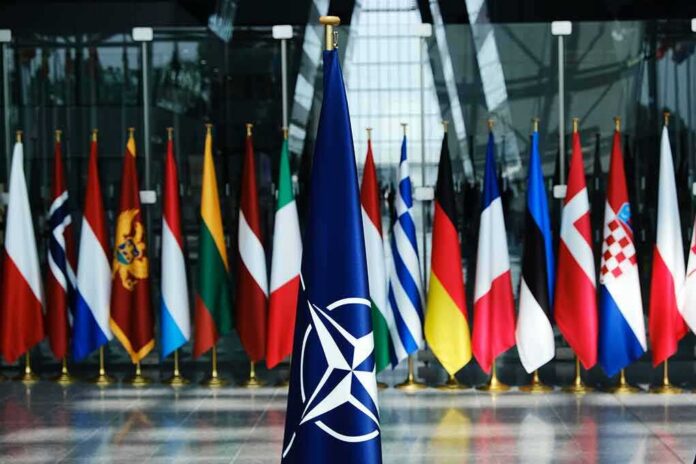
Proponents point to alliance ties and overlapping risks. Israel faces threats from groups backed by regional states. Turkey, a North Atlantic Treaty Organization (NATO) member, operates in Syria. Russia backs the Syrian government. The United States is tied to Israel and Turkey. When strikes and troop moves bring these actors into close contact, the chance of missteps grows. Support chains, sanctions, and proxy fights can fuse local wars into something larger in practice, even if leaders avoid the “world war” label.
Why Many Experts Still Say “Not World War III”
Scholars and analysts warn against jumping to the world-war label. They define a world war as direct, large-scale combat among major powers across regions. By that standard, they say, we are not there. The United States, Russia, and China are not openly fighting each other across continents. Formal declarations and mass mobilization are absent. These guardrails, plus nuclear deterrence, still hold, even as violence and spending on arms rise.
That skeptical view does not deny the danger. It shifts the key question. The focus becomes whether today’s linked conflicts cross new lines that force great powers into direct combat. If they do, the label may follow. If they do not, we remain in a hard era of proxy warfare, deterrence tests, and crisis management. Words matter because labels can drive policy. Overstating the threat can fuel panic, while understating it can breed complacency.
What This Means for Americans Tired of Endless Crises
Americans on the right and left see a pattern: more wars, higher costs, and leaders who seem to react late. People worry that elites play power games while families face inflation, energy shocks, and broken borders at home. The Syria-Turkey-Israel flare-up fits that worry. A single strike forced a scramble to prevent a bigger fight. Each scramble carries risk and a bill. Voters ask who is planning ahead and who is just managing the next fire.
Clear steps could cut risk. Transparent deconfliction helps. Plain-language updates from the White House and Congress build trust. Narrow war aims reduce drift. Strong oversight tracks weapons flows so aid does not widen conflicts. These basics do not settle the “World War III” debate. They do show whether leaders are serious about keeping today’s wars from merging into something far worse, while honoring the public’s demand for accountability and restraint.
Sources:
feedpress.me, nytimes.com, reuters.com, jpost.com, theguardian.com, globalissues.org
© patriotsunited.org 2026. All rights reserved.