A hijab-wearing U.S. Army soldier’s viral video declaring she would refuse lawful orders to fight Muslims has ignited a firestorm over military readiness and insider threats—yet the Army remains silent while troops are dying in Iran.
Story Snapshot
- Soldier publicly states she’ll disobey orders targeting Muslims, confirmed with thumbs-up gesture in uniform
- Conservative commentators cite UCMJ violations for failure to obey orders and potential mutiny
- Incident echoes 2010 case of Naser Abdo, who refused deployment then plotted terror attack
- No confirmed Army response despite viral spread amid active Iran war operations
Public Oath Betrayal Caught on Camera
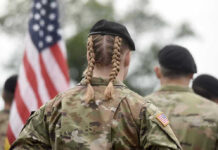
A U.S. Army soldier wearing a hijab appeared in a viral video clip stating she would refuse orders if they involved fighting Muslims, punctuating her declaration with a thumbs-up gesture. The unidentified soldier made the statement while in uniform, creating an on-camera admission that directly contradicts the military oath requiring obedience to lawful orders from the President and officers. Every service member swears to support and defend the Constitution against all enemies, foreign and domestic, with no carve-outs for religious solidarity. This public refusal raises immediate questions about her fitness for duty during active combat operations against Iran-backed forces.
The video spread rapidly through conservative commentary channels, with analysts invoking Uniform Code of Military Justice Articles 92 and 94. Article 92 addresses failure to obey orders, while Article 94 covers mutiny and sedition—both carrying severe penalties including court-martial and imprisonment. The soldier’s statement wasn’t a private conversation leaked by accident; she deliberately recorded and shared her position while representing the U.S. military. For troops currently engaged in firefights with Hezbollah militants and Iranian proxies, this creates legitimate concerns about who has their back when bullets start flying.
Dangerous Precedent From 2010 Still Haunts Military
This incident mirrors the 2010 case of Private First Class Naser Abdo, who refused deployment to Afghanistan citing religious objections to fighting fellow Muslims. Abdo’s refusal didn’t end with a simple discharge—he was later arrested for plotting a terror attack against Fort Hood, the same installation where Major Nidal Hasan murdered 13 soldiers in 2009. These cases aren’t theoretical exercises in religious accommodation; they represent a documented pattern of divided loyalties that has already cost American lives. The DoD’s own insider threat definitions explicitly include personnel with religiously motivated conflicts, yet here we are again watching the same scenario unfold on social media.
Islamic war ethics prohibit Muslims from fighting other Muslims in what scholars call fitna, or civil strife among believers. Some interpretations also forbid alliances with non-Muslims against Muslim forces. While millions of Muslim-Americans serve honorably without conflict, this soldier’s public declaration suggests she’s placed religious identity above her sworn duty. That’s not bigotry to point out—it’s a basic assessment of operational reliability. When you’re clearing buildings in Tehran or calling in airstrikes on Iranian positions, you need absolute certainty that every team member will execute their role. One person hesitating or, worse, sabotaging operations can get entire units killed.
Army’s Silence Speaks Volumes About Broken Priorities
Despite the video’s viral spread and urgent calls for investigation, Army leadership has issued no public response regarding potential UCMJ violations or discharge proceedings. This silence is deafening for service members who’ve watched their peers killed by insider attacks and green-on-blue incidents throughout the Middle East wars. The Pentagon spent years pushing diversity initiatives and inclusion programs while recruitment collapsed and readiness declined. Now we’re at war with Iran—the conflict Trump promised to avoid—and a soldier openly declares conditional loyalty while brass apparently looks the other way.
The short-term operational risks are clear: eroded unit trust, hesitation in combat, potential for compromised missions if she’s assigned to intelligence or logistics roles involving operations against Muslim adversaries. Long-term implications include setting precedent for religious refusals that could cascade across the force, particularly as conflicts continue in Muslim-majority regions. Fellow soldiers will compensate for unreliable personnel, increasing their own danger. This isn’t about discriminating against Muslim service members—it’s about ensuring every person in uniform can be counted on to follow lawful orders regardless of the enemy’s faith. The Constitution doesn’t include an asterisk saying “defend America except against people who share your religion.”
Sources: