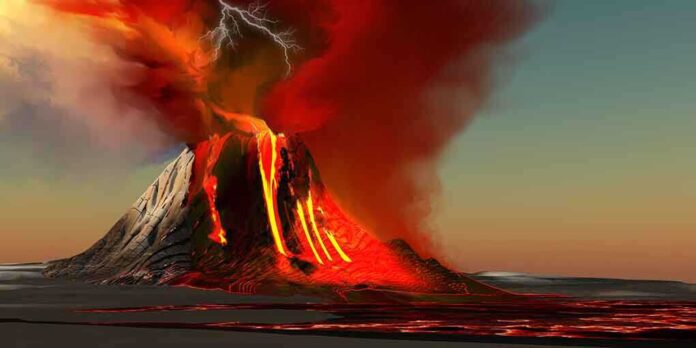
The eruption of an Ethiopian volcano after 12,000 years has stunned the geological community and left the world watching in awe.
Story Snapshot
- A dormant Ethiopian volcano erupts after 12,000 years, creating a significant geological event.
- The eruption produced smoke plumes reaching 14 kilometers into the atmosphere.
- The event is unprecedented in the region, which has been tectonically active but historically dormant.
- Immediate environmental and societal impacts are being assessed by local authorities.
Volcano Awakens After Millennia
In late November 2025, a long-dormant volcano in Ethiopia’s northeastern region erupted, surprising experts who had not predicted such an event. The eruption broke a 12,000-year silence, releasing smoke plumes that soared 14 kilometers into the sky. This unexpected geological occurrence underscores the unpredictable nature of volcanic activity, particularly in areas where tectonic plates are diverging, like the East African Rift System.
The eruption’s scale and suddenness have triggered a flurry of activity among scientists and local authorities. In a region known for its arid landscapes and sparse population, the immediate focus has been on assessing the impact on local communities and the environment. This rare event offers a unique opportunity for researchers to study the processes underlying volcanic dormancy and reactivation.
The Region’s Geological Context
The East African Rift System is a hotbed of tectonic activity, with plates constantly shifting and creating conditions for both dormant and active volcanoes. Despite this, many volcanoes in the region have remained inactive for millennia. The recent eruption is a stark reminder of the volatile nature of Earth’s geology, challenging scientists to better understand the mechanisms that drive such sudden geological changes.
Situated in a sparsely populated area, the volcano poses less immediate risk to human life. However, the ash clouds and potential lava flows could disrupt local agriculture and infrastructure. The Ethiopian government, in coordination with geological institutes, is closely monitoring the situation to ensure public safety and manage any necessary evacuations.
Impact on Local and Global Communities
The eruption’s immediate effects include deteriorated air quality and potential health risks for local residents. The plumes of smoke and ash can travel great distances, impacting air travel and posing a threat to respiratory health. Emergency services are on high alert, ready to respond to any escalating threats.
Ethiopian volcano erupts for first time in 12,000 years – The Guardian https://t.co/ngvAnvAOwo via @GoogleNews
— TheUrbanNewz (@TheUrbanNewz) November 24, 2025
In the long term, the eruption may alter the local landscape and prompt a reevaluation of regional volcanic risk. For scientists, the event provides a rare chance to gather data on volcanic activity after such a prolonged dormancy, potentially leading to advancements in predictive models and early warning systems.
Scientific and Environmental Significance
Volcanologists are particularly interested in studying this eruption due to its rarity and the insights it may offer into Earth’s geological processes. Understanding why some volcanoes remain dormant for thousands of years, only to suddenly awaken, is crucial for improving prediction and preparedness strategies.
The eruption has also captured the attention of the international scientific community, prompting discussions about the need for enhanced monitoring of dormant volcanoes. While predicting volcanic eruptions remains challenging, events like this highlight the importance of continuous research and investment in geological sciences.
Sources:
This volcano just erupted for the 1st time in 10,000 years