Two stranded climbers were plucked from a 600-foot Big Sur cliff by a helicopter hoist crew in a precise twilight rescue that showed why these high-risk missions exist.
Story Snapshot
- California Highway Patrol crew found two climbers 600 feet below the road near Hurricane Point.
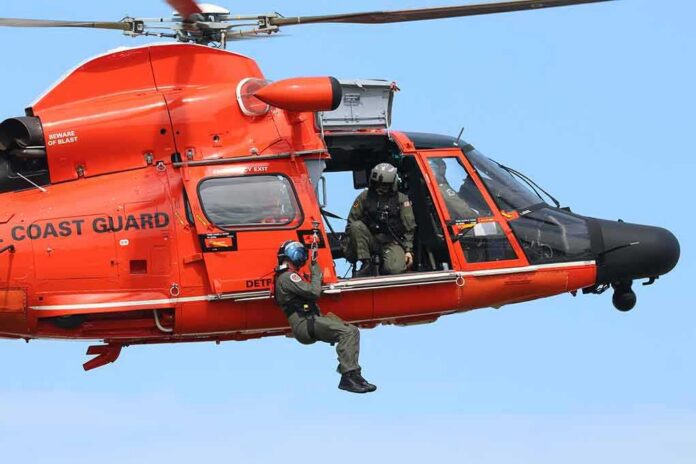
- Pilot held a steady hover while a rescuer used a hoist and harness to lift each climber.
- Hoist rescues are used when landing or hiking in is not safe or fast enough.
- Big Sur’s steep, slick slopes and fast-changing winds make ground access dangerous.
Rescuers Locate Two Climbers On A Steep Chute
California Highway Patrol air operations launched helicopter H-70 after a call for a technical rescue near Hurricane Point on August 22, 2026. The crew located two climbers stranded on a steep chute about 600 feet below the roadway. The cliff sits above pounding surf and loose rock, which can shift underfoot. The helicopter team set up a hover because no safe landing zone existed on the narrow slope. Ground teams could not reach the pair in time.
The air crew coordinated by radio with responders on the highway. The flight officer prepared the hoist while the pilot managed winds off the ocean. The rescuer rode the cable down with a Pelican-style harness designed for tight spaces. The rescuer secured the first climber, then signaled the lift. The team repeated the process for the second climber. The crew flew both to a safe area above the cliff for evaluation by local medics.
Why A Hoist Was The Only Practical Option
Steep terrain, crumbling rock, and shifting winds along Big Sur often block ground access. A hoist lets rescuers reach victims when a landing is impossible. Medical studies and training guides describe hoist missions as the tool of choice when hiking in would take too long or add risk to patients and crews. The approach reduces exposure on unstable slopes and can cut total rescue time when minutes matter in coastal terrain.
Helicopter hoist operations carry real risk, which is why crews drill on strict checklists. Reviews of hoist rescues highlight hazards like rotor wash, cable swing, and harness errors. Safety briefs stress slow, deliberate actions and clear signals between pilot, hoist operator, and rescuer. Agencies teach that mission goals never outrank crew and patient safety. This is why teams select hoist only when other routes are not safe or are too slow to prevent harm.
Big Sur Pattern: Rugged Terrain, Limited Access, Airborne Saves
Rescues along Highway 1 and the Ventana cliffs follow a pattern. Visitors push into risky spots with sheer drop-offs and no trails. When they get stuck or hurt, responders call for air help. Recent cases include hoists for injured hikers and a stranded crash victim on remote slopes. These events show why local agencies keep helicopter teams ready and trained for high-angle work along the Central Coast’s dangerous edges.
Two climbers stranded 600 feet down a Big Sur cliff… absolute high-stakes rescue operation. Incredible work by the first responders getting them out safely.
— Trend Rover (@TrendRoverHQ) August 25, 2026
The August 22 operation fits that pattern. The crew used a hover, hoist, and harness to beat failing light and rough terrain. The job demanded tight teamwork and gear checks to manage cable angles and cliff spray. The outcome was a clean lift of both climbers with no reported injuries to patients, bystanders, or crew. The rescue underscores a simple truth: when nature blocks every other path, the hoist becomes the lifeline off the wall.
Sources:
nypost.com, pulptastic.com, youtube.com, facebook.com
© patriotsunited.org 2026. All rights reserved.