patriotsunited.org — As European elites brand Donald Trump a “threat to peace,” they are watching him quietly shift American power to the one frontline ally that actually spends on defense: Poland.
Story Snapshot
- Polling shows Europeans increasingly view Trump and the United States as an “enemy” and a threat to peace.
- At the same time, Trump has reversed Pentagon cuts and announced 5,000 U.S. troops for Poland, Europe’s eastern frontline.
- NATO officials call the decision “confusing,” but still admit the United States remains a strong ally and welcome the move.
- European leaders demand more “autonomy” from Washington while still relying on American security guarantees and taxpayers.
European Public Opinion Turns Sharply Against Trump’s America
Recent polling across Europe shows how far continental opinion has drifted from the instincts of many American conservatives. A survey cited by foreign policy analysts reports that about half of respondents now call Donald Trump an “enemy of Europe,” with levels exceeding fifty percent in countries like France, Spain, and Italy, while only a minority view the United States as a friendly nation or ally.[1][2][3] Another YouGov poll found roughly three-quarters of Europeans see Trump as a threat to peace and security on their continent.[2]
Commentators link this hostility to Trump’s skepticism of global institutions and the old multilateral order. Analysts note that European opinion soured as Washington pulled out of agreements like the Paris climate accord and distanced the United States from liberal transnational bodies, which many on the left treat almost like a secular religion.[2] European publics, especially in Western capitals, now say they prefer “European autonomy” over preserving the traditional transatlantic alliance, even though their governments still rely heavily on American power.[3]
Europe Wants “Autonomy” While Counting On U.S. Power
Polling from Western Europe shows a growing desire to put “European independence” ahead of the relationship with the United States, with majorities in most surveyed countries saying autonomy should be the priority.[3] At the same time, Europe faces a grinding war in Ukraine and deep anxiety about Russian aggression, and many Europeans admit their countries cannot defend themselves without outside help.[1][2] This contradiction—demanding distance from Washington while needing its security guarantees—defines the current mood.
Policy experts warn that Europeans now take a more transactional, pessimistic view of the United States, seeing Trump’s America less as a long-term partner and more as an unpredictable power pursuing its own interests.[5] Yet when asked who should actually provide security, respondents still look primarily to the European Union and the North Atlantic Treaty Organization, institutions that in practice depend on American troops, money, and military technology. That reality collides with rhetoric portraying Trump as a greater danger to peace than the adversaries those forces deter.[1][2][5]
Trump’s Poland Troop Reversal: Confusion or Targeted Support?
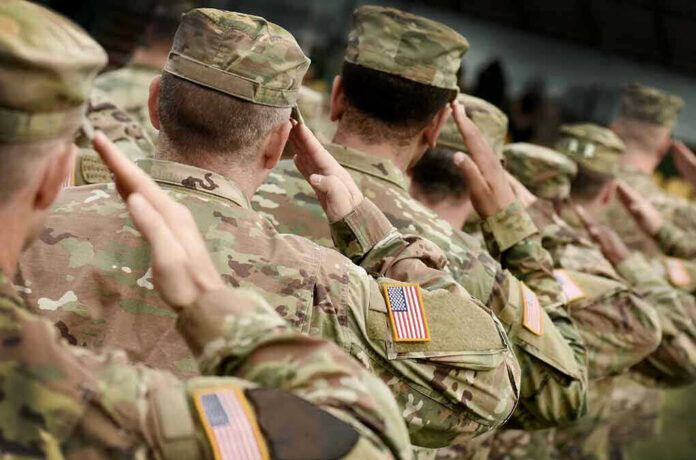
Against this skeptical backdrop, Trump’s recent decision to restore and expand a Poland deployment shows how different his priorities are from Brussels talking points. After the Pentagon abruptly canceled a planned 4,200-soldier Army brigade bound for Poland, Trump publicly announced that the United States would instead send 5,000 troops to the country, describing the move as tied to his support for Poland’s conservative president and their relationship.[1] That sequence, confirmed by multiple outlets, created an appearance of a rapid policy about-face.[1][3][5]
Reporters and allied officials immediately complained that the messaging was confusing. Coverage noted that it was unclear whether the 5,000 troops were new, additive forces, replacements for the canceled brigade, or a reshuffled package pulled from elsewhere in Europe, possibly Germany.[1][3][5] European ministers were quoted calling the communications “perplexing” and “confusing indeed,” and commentators leaned hard into a narrative of unpredictability.[3][4] What the public record does not yet show is clear force-accounting data proving any net weakening of the U.S. presence on the eastern flank.[1][3][5]
Frontline Allies Welcome U.S. Troops While Critics Fixate On Optics
On the ground in Central and Eastern Europe, the reaction looked very different from the outrage in Western media. Polish officials publicly welcomed Trump’s troop announcement, as did other allies on the front line with Russia, who stressed that having American boots on Polish soil is in the United States’ own interest and strengthens deterrence.[3][5] Reports describe the deployment discussion occurring alongside Poland’s ongoing purchase of American F-35 fighter jets, part of a multi-billion-dollar defense deal that tightens the security relationship.[5]
TRUMP DEPLOYS 5,000 ADDITIONAL TROOPS TO POLAND — ABRUPT REVERSAL OF PENTAGON CUT
Trump announced the deployment on Truth Social, linking it to his endorsement of Poland's President Nawrocki. Comes days after the Pentagon cancelled a planned 4,000-troop deployment as part of a…
— STOCK DUTY (@stock_duty) May 22, 2026
North Atlantic Treaty Organization leadership, while asking for clearer consultation, still underscored that the United States remains a “strong ally” and framed the troop reshuffling as part of a broader effort for Europeans to step up more on defense.[4] That admission cuts against the louder narrative that Washington is abandoning Europe. In reality, the ambiguity lies not in whether American forces will defend the eastern flank, but in how European capitals interpret any Trump move that does not fit their preferred script of quiet checks and blank American checks.[1][3][4]
What This Means For Conservatives Watching From Home
For American conservatives, this episode highlights a pattern that has defined Trump’s foreign policy fights from the start. European elites and their media allies attack Trump as a danger to peace when he questions bloated international structures or insists allies share more of the burden, yet those same leaders quietly breathe easier when U.S. soldiers and advanced jets show up to secure their borders.[1][2][5] They resent his rhetoric, but they rely on the hard power that flows from American taxpayers and service members.
Instead of chasing the approval of hostile foreign poll respondents, Trump has signaled that he will back allies who actually invest in their own defense and stand against aggression. The Poland reversal may not have been rolled out with perfect Pentagon choreography, and the lack of transparent troop math understandably raises questions.[1][3][5] But the substantive outcome—a reinforced eastern flank, welcomed by frontline allies—runs directly counter to the caricature of an American president walking away from Europe. For readers worried about globalism and endless commitments, the real debate is not whether Europe approves of Trump, but whether Europe is finally willing to carry its share of the load.
Sources:
[1] Web – In apparent reversal, Trump says he’s sending 5,000 troops to Poland
[2] Web – NATO allies perplexed as Trump restores US troop levels in Poland
[3] Web – NATO allies welcome Trump’s Poland troop announcement, but say …
[4] YouTube – NATO allies react to Trump’s sudden reversal on Poland …
[5] YouTube – Poland Welcomes Trump’s New Troop Promise After NATO Questions
© patriotsunited.org 2026. All rights reserved.